Illustration of Vikukshi

Vishnu Purana / Solar Genealogy

Vikukshi

Also Called Shashada

Vikukshi is an early king of the Ikshvaku dynasty, remembered for eating a hare intended for an ancestral offering and receiving the name Shashada. He later succeeded Ikshvaku and became the father of Puranjaya, also called Kakutstha.

View LineageExplore Connections
Original Suvarnaveda painted interpretation

THE LIVING ARCHIVE

About Vikukshi

Vikukshi belongs to the first generation after Ikshvaku in this solar genealogy. Nimi and Danda are named among his brothers. His second name, Shashada, refers to the hunting episode that changed his relationship with his father; it is not a different king.

AT A GLANCE

Identity & Context

Identity
King
Form
Ikshvaku Dynasty
Tradition
Puranic Solar Genealogy
Also Known As
Vikukṣi · Shashada

Family & Relationships

THE STORY

Life & Stories

The Ancestral Offering

Ikshvaku ordered Vikukshi to bring game for an ancestral ceremony. The prince hunted successfully, but grew tired and hungry. Before taking the animals home, he ate a hare. The remaining meat was therefore no longer treated as an untouched offering when the family priest Vasistha examined it.

Vasistha declared the food unsuitable for the rite. Ikshvaku rejected his son, and the prince acquired the name Shashada, meaning hare-eater. The incident concerns the requirements of this particular ritual and Vikukshi’s failure to preserve the offering; it does not describe a general ban on every kind of hunting or food.

From Exile to the Royal Succession

The rejection did not permanently remove Vikukshi’s branch from the dynasty. After Ikshvaku’s death, Shashada inherited the kingdom. His son Puranjaya then succeeded him. The genealogy thus carries one person through disgrace, a changed name and eventual kingship, rather than replacing Vikukshi with an unrelated ruler.

Puranjaya’s later alliance with the gods explains the title Kakutstha: Indra took the form of a bull and carried him into battle. That famous victory belongs to Vikukshi’s son. Keeping the two generations separate makes clear why Vikukshi is a royal ancestor while Kakutstha is the participant in the divine war.

ROLE & ESSENCE

Attributes & Significance

His episode introduces the tension between princely responsibility, bodily appetite and ritual duty. His restored succession also explains why the main Ikshvaku line continues through Shashada despite the earlier breach with his father.

Role

Vikukshi is an early king of the Ikshvaku dynasty, remembered for eating a hare intended for an ancestral offering and receiving the name Shashada. He later succeeded Ikshvaku and became the father of Puranjaya, also called Kakutstha.

TRADITION & MEANING

Traditions & Interpretations

The account uses Vikukshi and Shashada for the same person, while Puranjaya and Kakutstha identify his son. These paired names should not create four generations in the family tree.

From the Sacred Texts

Explore the sacred texts behind these stories in the Suvarnaveda library.

FOLLOW THE THREADS

Connected Cards

2 connected profiles. Every path leads to an original record.

Characters & Cosmic Entities2
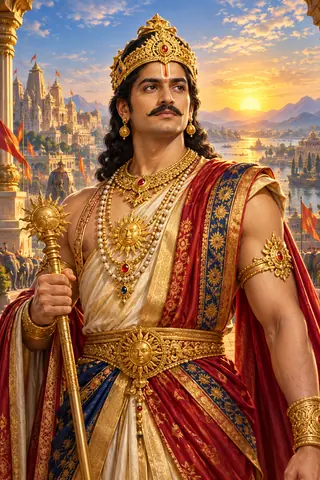
ParentIkshvakuFoundational solar-dynasty ruler

Ikshvaku is named as the parent of Vikukshi in this succession.
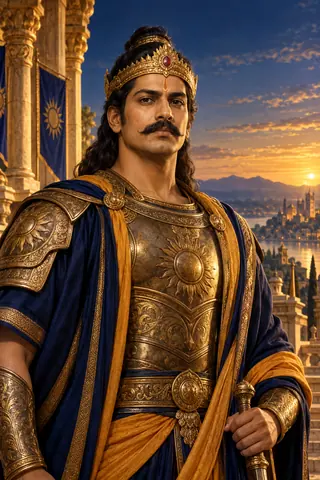
ChildKakutsthaSolar king-name/epithet associated with Puranjaya in dynasty traditions

Vikukshi is named as the parent of Kakutstha in this succession.