Kakbhushundi is the crow sage who teaches Garuda about Rama in Tulsidas’s Ramcharitmanas. A devotee and narrator, he lives through vast spans of cosmic time while remaining devoted to Rama. His story joins a difficult apprenticeship, a crow’s body and an overwhelming vision of divine reality.
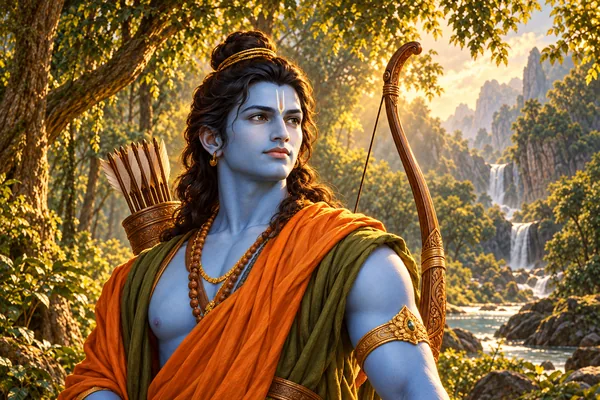
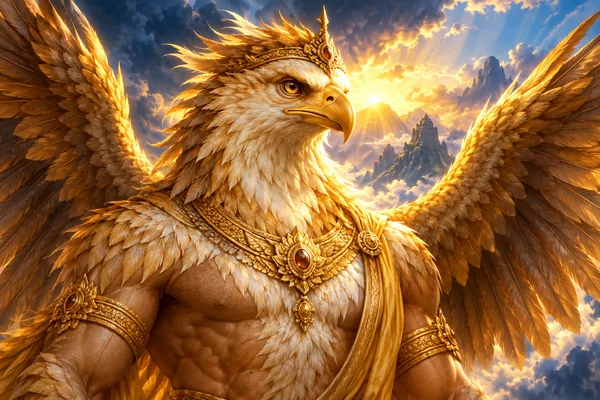
In the Uttara Kanda, the final book of the Ramcharitmanas, Kakbhushundi lives on the northern blue mountain called Nilagiri and continually tells Rama’s story to an assembly of birds. Rama is the prince of Ayodhya whom the poem worships as the divine Lord. Garuda, Vishnu’s great bird companion, becomes the sage’s questioning listener. Kakbhushundi’s authority rests on devotion, understanding and experience; the humble appearance of a crow does not prevent him from teaching a celestial being.
Northern blue mountain, Nilagiri, in the Ramcharitmanas account
Family Context
His story follows his teachers, devotional life and dialogue with Garuda rather than a royal or household lineage.
THE STORY
Life & Stories
01
A Dispute with Lomasha
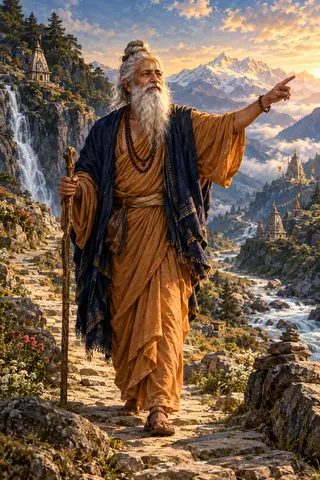
When Kakbhushundi recounts how he acquired his crow form, he describes studying with the sage Lomasha. His teacher explains the divine as without form or attributes, an approach called nirguna. The pupil longs instead to see and worship Rama personally, following saguna devotion, which approaches the divine through a recognizable form and qualities. Repeated disagreement becomes an angry dispute. Lomasha curses him to become a crow. Kakbhushundi accepts the transformation, bows to his teacher and flies away remembering Rama, without answering the curse with hostility.
02
The Curse Becomes a Blessing
Seeing his pupil’s humility and trust in Rama, Lomasha calls him back and regrets his anger. He gives Kakbhushundi Rama’s mantra, a sacred formula for remembrance, and teaches meditation on Rama as a child. He also tells him Rama’s story and blesses him with enduring devotion, knowledge, freedom to assume a desired form and the ability to choose his death. Kakbhushundi later says that twenty-seven kalpas, immense cosmic periods, have passed at his hermitage. He cherishes the crow body because in it he gained devotion and the sight of his Lord.
03
Why Garuda Seeks a Crow’s Instruction
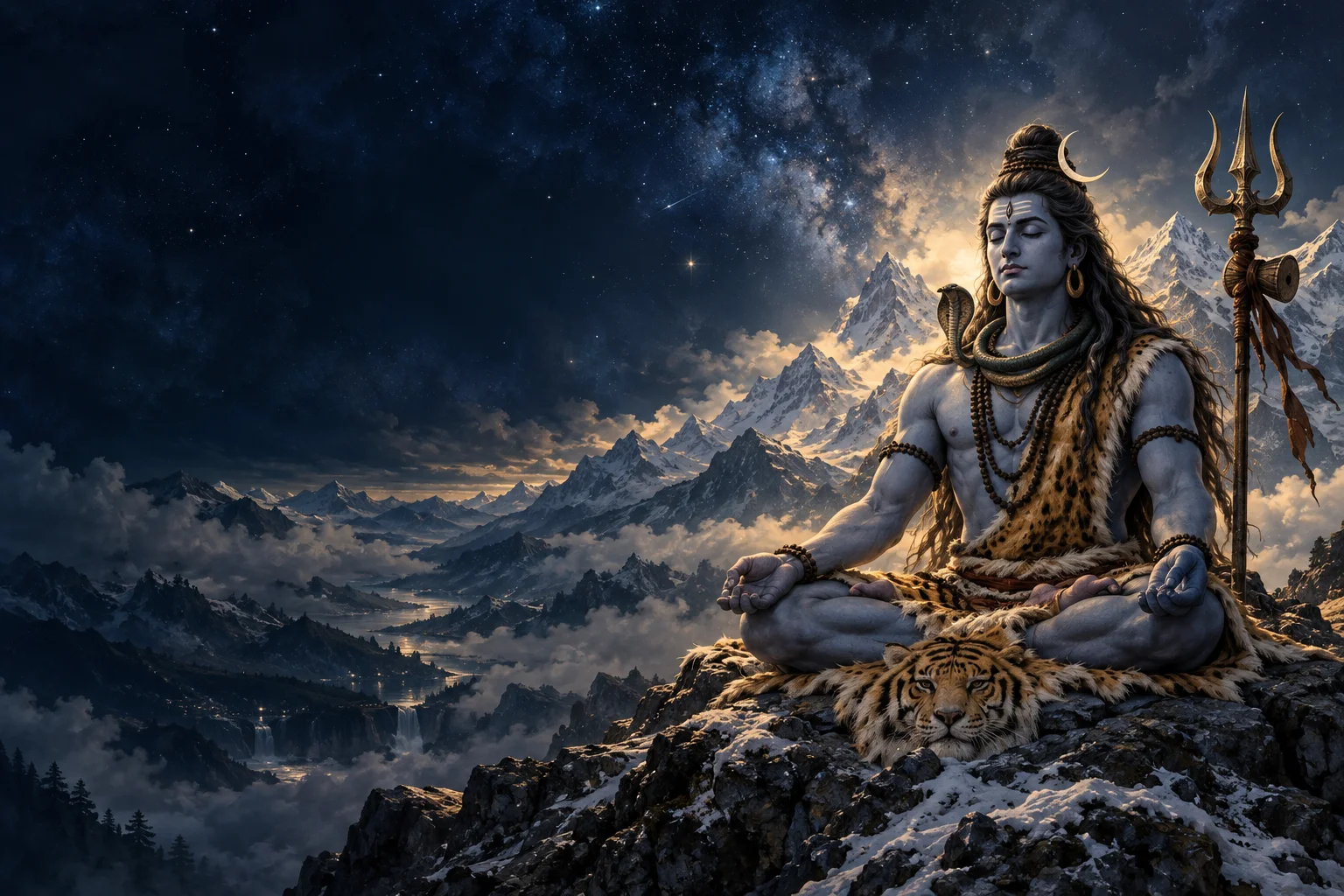
Garuda’s difficulty begins during Rama’s war against Ravana. Indrajit, Ravana’s son, binds Rama with serpent bonds, and Garuda comes to release him. The rescue troubles the rescuer: how can the divine Lord, whose name frees others from bondage, need his help? Eventually Shiva directs Garuda toward sustained satsanga, the company of those who live and speak in devotion. He sends him to Kakbhushundi’s gathering to hear Rama’s story. Their dialogue answers doubt through patient narration and questions. The teacher is a crow and the listener a celebrated celestial bird, so spiritual understanding crosses the apparent difference in their standing.
04
Worlds Within the Child Rama
Kakbhushundi has himself experienced bewilderment before Rama’s childhood play. When the child reaches toward him, he flies away, but Rama’s arm remains close even as he reaches Brahmaloka and passes the cosmic coverings. Returning to Ayodhya, he enters Rama’s mouth and sees innumerable universes within him. Their worlds and inhabitants differ, yet Rama remains the same. Vast stretches of experienced time fit within a brief interval outside. Even after emerging, the sage needs reassurance. When Rama offers blessings, Kakbhushundi asks for pure, uninterrupted devotion; Rama grants it and freedom from delusion. The vision reveals Rama’s greatness and changes the devotee who receives it.
Kakbhushundi brings his own experience of uncertainty to Garuda’s questions. His knowledge is inseparable from bhakti, loving devotion, and from the humility with which he receives correction and grace. His extraordinary longevity makes him a witness across cosmic time, while his continuing role is to remember and tell Rama’s story. Seeing universes within Rama expresses the Lord’s divine scope; it does not make the witnessing sage their creator.
Role
Long-lived crow sage and Rama devotee; teacher and narrator to Garuda in Tulsidas’s Ramcharitmanas.
Attributes & Abilities
Knowledge retained through repeated births and unhindered movement through Shiva’s earlier-life blessing
Freedom to assume a desired form and choose death in Lomasha’s blessing
Long life measured in kalpas
Devotional understanding and freedom from delusion through Rama’s grace
Objects & Emblems
His role centres on spiritual teaching and devotion rather than weapon-bearing combat.
Visual Identity
A dark-feathered crow represents the humble form in which Kakbhushundi teaches Garuda and remembers Rama.
TRADITION & MEANING
Traditions & Interpretations
This account follows Tulsidas’s Ramcharitmanas. The Yoga Vasistha also presents a crow named Bhusunda, described as exceptionally long-lived, tranquil and knowledgeable, living in a tree on Mount Meru and visited by Vasistha. That text gives its crow sage a philosophical narrative setting. The shared name and crow motif invite comparison, but the Meru setting should not replace the Nilagiri hermitage or be inserted into the Manas account of Lomasha’s curse.
FOLLOW THE THREADS
Connected Cards
4 connected profiles. Every path leads to an original record.
In the earlier-life account Shiva preserves his knowledge through repeated births and grants unhindered movement; Shiva also directs Garuda toward the crow sage’s teaching.