THE SACRED LIBRARY
About Devi Mahatmya
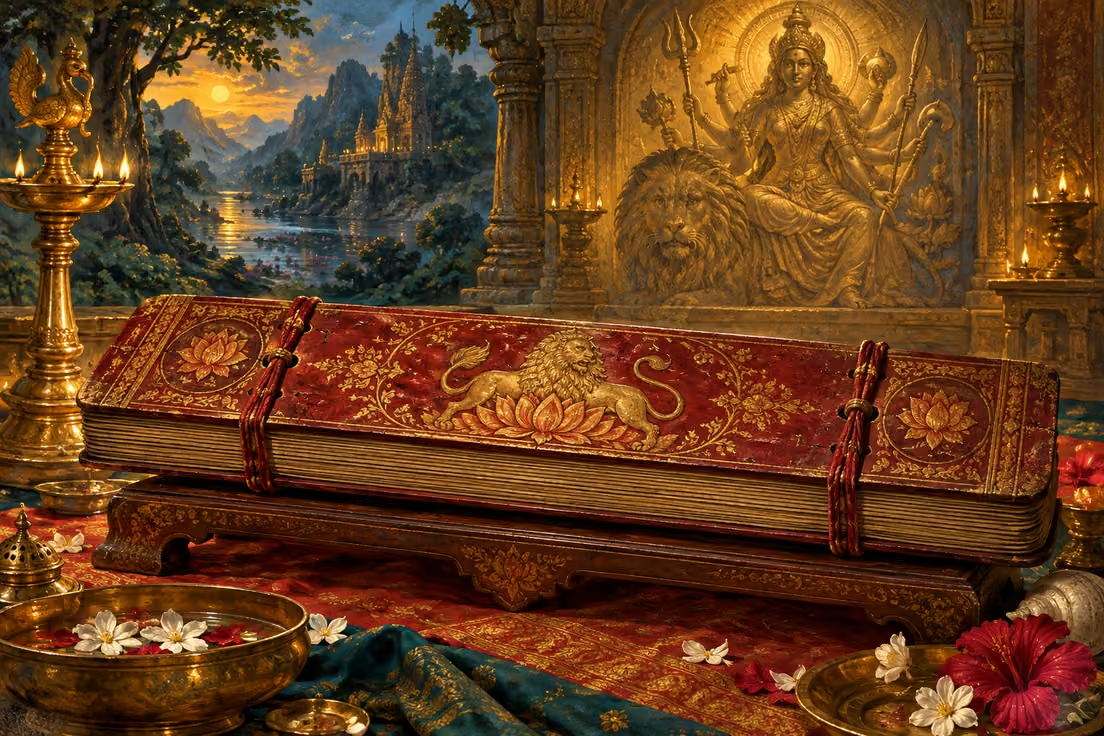
Also known as the Durga Saptashati or Chandi, the work consists of thirteen chapters and is transmitted within the Markandeya Purana. Its recitation tradition counts seven hundred mantras. The narrative and hymns form a distinct work within that larger Purana, not a replacement for all of its contents.
King Suratha has lost his kingdom, and the merchant Samadhi has been rejected by his family. Both remain emotionally bound to what they have lost. The sage Medhas explains the power of Mahamaya through the Goddess’s deeds.
More About Devi Mahatmya
The Goddess’s battles and praise appear as a distinct sacred text within the Markandeya Purana.
AT A GLANCE
Identity & Context
- Identity
- Text
- Form
- Puranas
- Tradition
- Hindu religious traditions
INSIDE THE TEXT
Stories & Teachings
ROLE & ESSENCE
Themes & Meaning
Its battles and its human frame address related forms of danger. The Goddess protects the worlds against overwhelming enemies, while the teaching explains attachment that survives betrayal and loss. Suratha’s and Samadhi’s different final requests show the distinction between restored worldly success and knowledge that releases possessiveness.
Library Category
Form / Textual Family
Embedded Shakta scripture
Traditional Attribution
An inherited textual tradition; no single historical author is established here.
Subject & Teachings
The Goddess’s battles and praise appear as a distinct sacred text within the Markandeya Purana.
Associated Deities / Figures
Durga; Kali; Mahishasura; Markandeya Purana
Textual Relationships
Historical Context
Composition, transmission and redaction must be distinguished; no unsupported exact date is assigned.
Reading Notes
Read the Sanskrit with an identified translation. Commentary is presented by its own school, not as the only interpretation.
Tradition Notes
Names and accounts can vary by recension, region and commentary. This entry distinguishes attested details from identifications still requiring a passage-level source.
Archive Classification Notes
Original archive annotations are retained here. The current playable classification is shown in the side panel.
- Tradition Dependence
- High — compare the identified textual or regional account.
- Structure
- Consult the identified edition for chapters, recension and numbering.
TRADITION & MEANING
Traditions & Interpretations
The work presents the Goddess through its own Shakta vision. Ritual editions can also include preliminary and supplementary hymns, which are distinct from its thirteen narrative chapters.
The conclusion returns directly to the two listeners. Suratha seeks rule and a lasting royal destiny, whereas Samadhi asks for knowledge that removes the attachment to I and mine. The Goddess grants each request, preserving their different aims rather than treating every devotee as asking for the same reward.
Names and accounts can vary by recension, region and commentary. This entry distinguishes attested details from identifications still requiring a passage-level source.
From the Sacred Texts
Explore the sacred texts behind these stories in the Suvarnaveda library.
FOLLOW THE THREADS
Connected Cards
27 connected profiles. Every path leads to an original record.
The Sacred Library2

The Devi Mahatmya is transmitted within the Markandeya Purana.

Characters & Cosmic Entities25
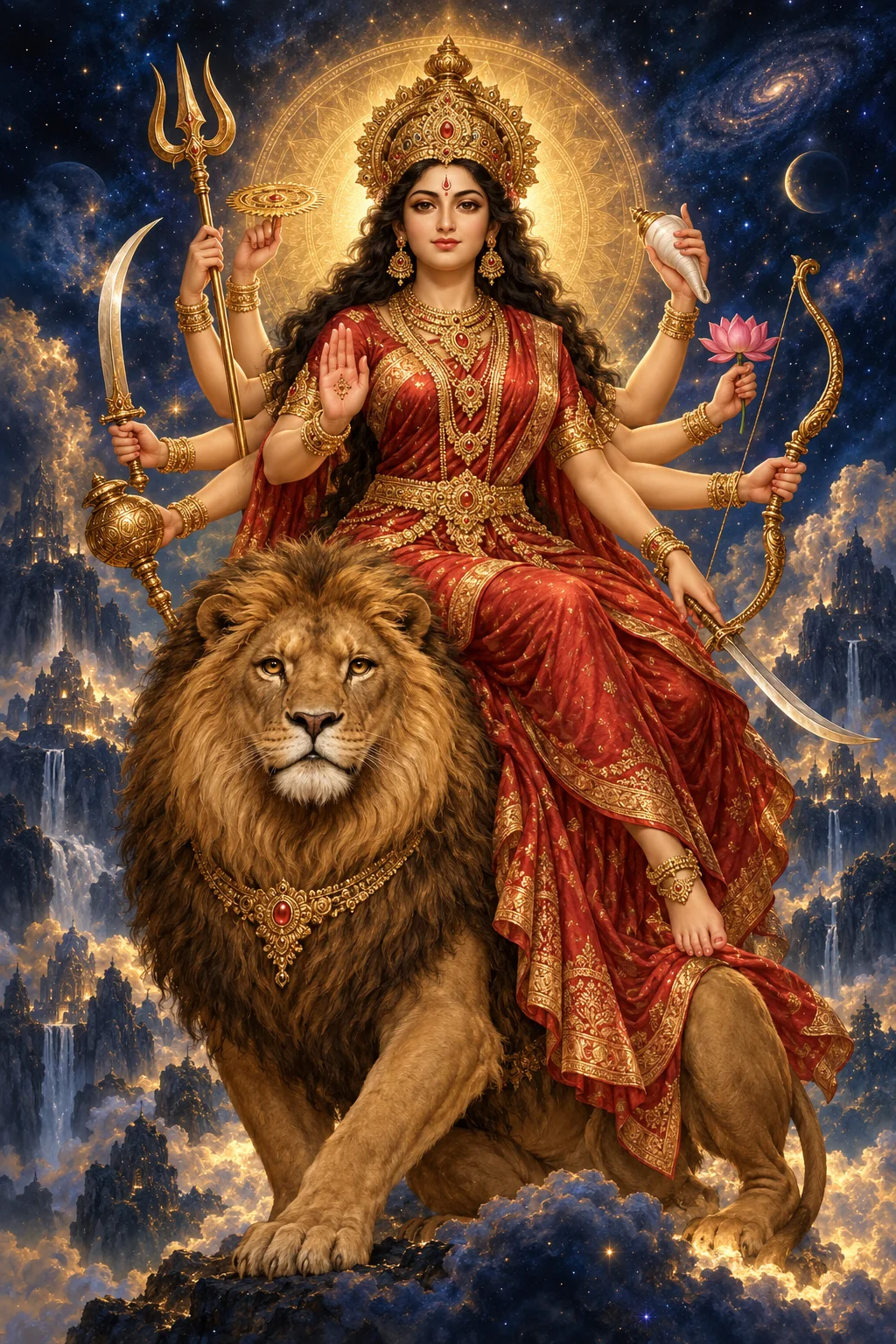
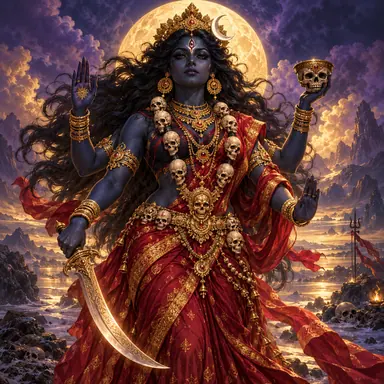
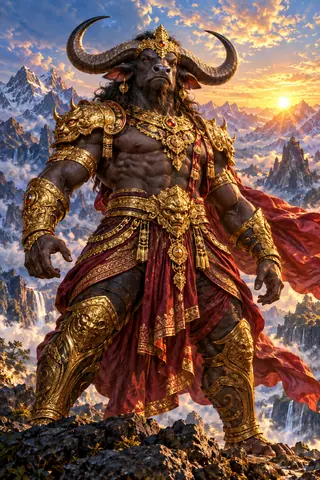
Mahishasura’s defeat forms the central battle sequence.
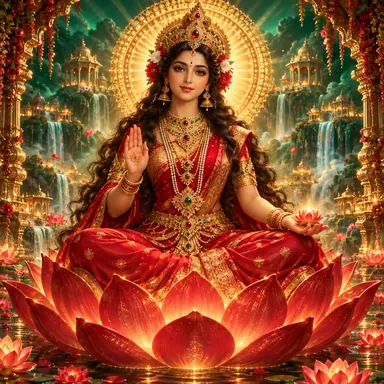
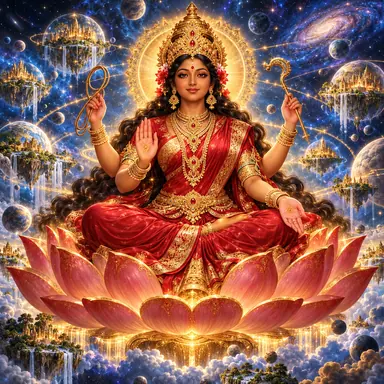
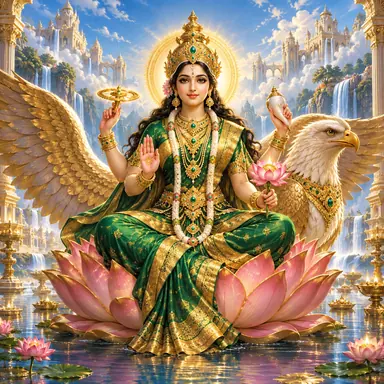
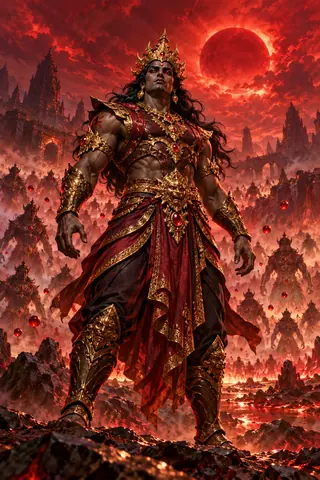
Raktabija’s multiplying blood requires a distinctive response.
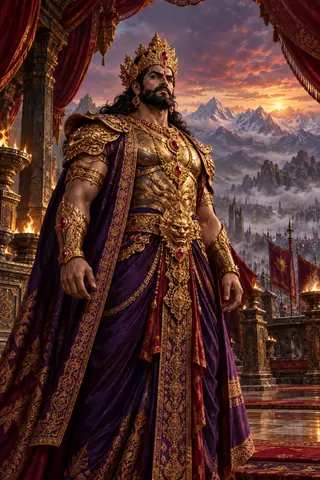
Shumbha confronts the Goddess after the other powers return into her.