01Cooperation Turns into a Dispute Over Possession
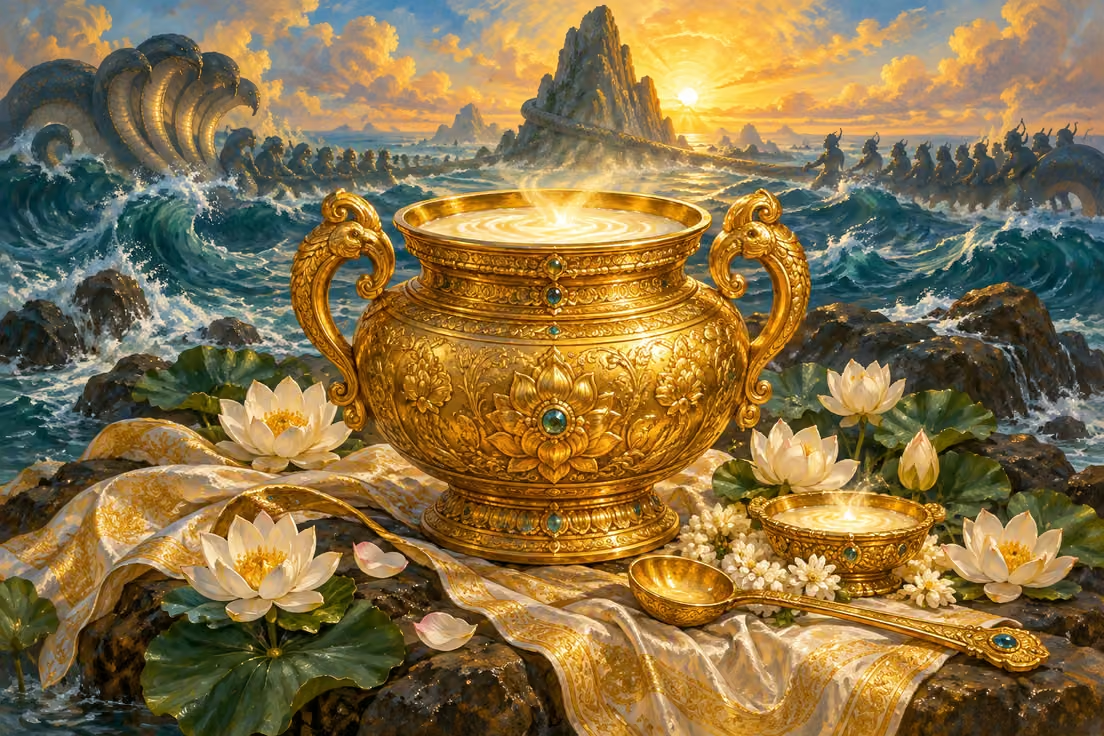
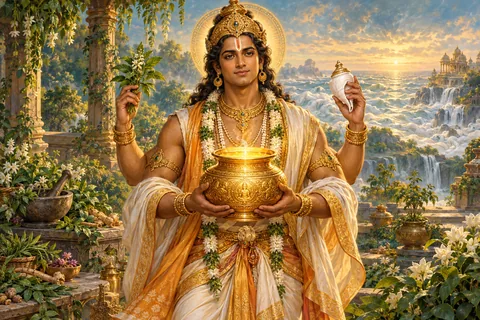
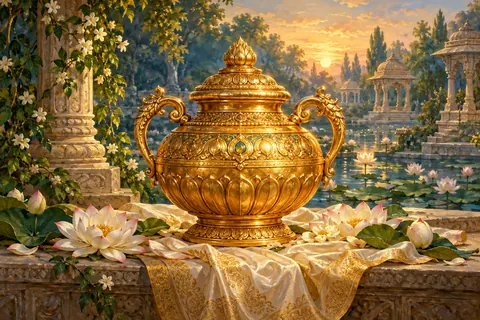
The Mahabharata describes the churning as an effort beyond the participants’ ordinary capacity. When their strength fails before nectar appears, they seek divine assistance and resume the task. The work brings forth multiple wondrous beings and objects. In the Bhagavata telling, the appearance of Dhanvantari’s nectar-pot immediately shifts attention from the shared labour to the question of who will possess its reward.
02Mohini and the Distribution of Nectar
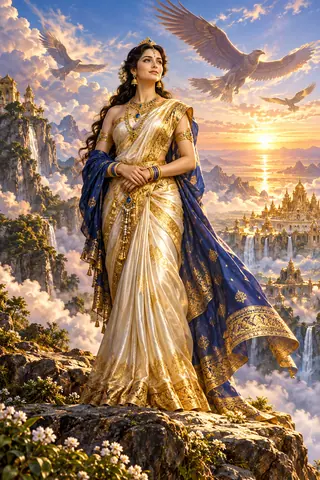
In the Bhagavata Purana, the quarrelling asuras entrust the vessel to Mohini after agreeing to accept her decision. She arranges devas and asuras in separate groups and gives the nectar to the devas. The narrative presents this as Vishnu’s intervention on their behalf, not as a neutral settlement acceptable to both parties. Attraction, misplaced trust and the distribution of power become central to the episode.
03Rahu’s Interrupted Drink
The Mahabharata recounts Rahu entering the devas’ company in disguise. Surya, the Sun, and Soma, the Moon, recognize him as he drinks, and Narayana severs his head with the discus before the nectar passes beyond his throat. The surviving head’s hostility toward the Sun and Moon explains the eclipses within this narrative. Amrita thus links the churning to an enduring celestial conflict; this is a sacred explanation of eclipses rather than a scientific account.
04Garuda Obtains Amrita for Vinata’s Freedom
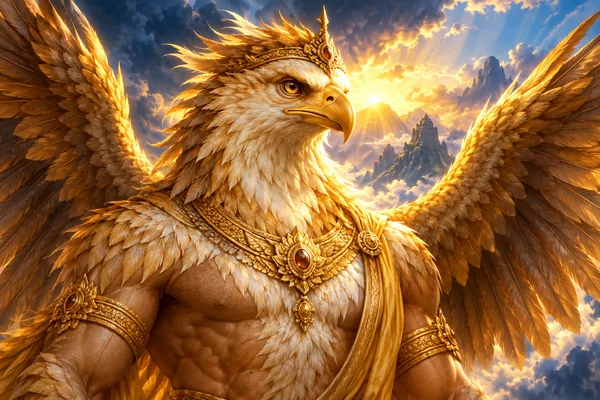
A different episode concerns the great bird Garuda’s attempt to free his mother, Vinata, from the snakes’ bondage. After carrying away the nectar, he reaches an understanding with Indra: he will set it down for the snakes, but will not allow them to drink it. He places it on kusa grass and sends the snakes to purify themselves. Indra then retrieves the amrita before they return.
The snakes lick the grass where the vessel stood, and their tongues are split; the grass becomes sacred through contact with the nectar. Garuda has fulfilled the condition for his mother’s release without giving the snakes the immortality they expected. Here amrita is the object of a negotiated rescue and a reversal of deception, rather than a prize consumed by the story’s hero.