01Ravana’s Boon Becomes Gokarna’s Shrine
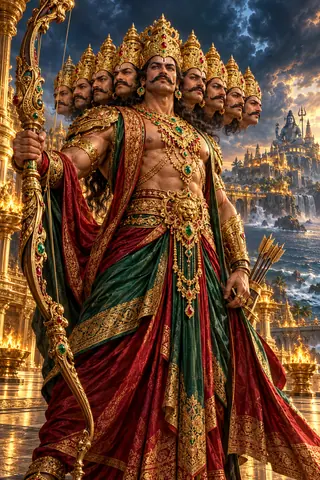
In the local account, Shiva grants Ravana the Atmalinga on condition that he must not put it on the ground before reaching Lanka. The gods do not want him to carry it away. When Ravana stops for his evening prayers, Ganesha appears as a boy and agrees to hold the sacred object for him.
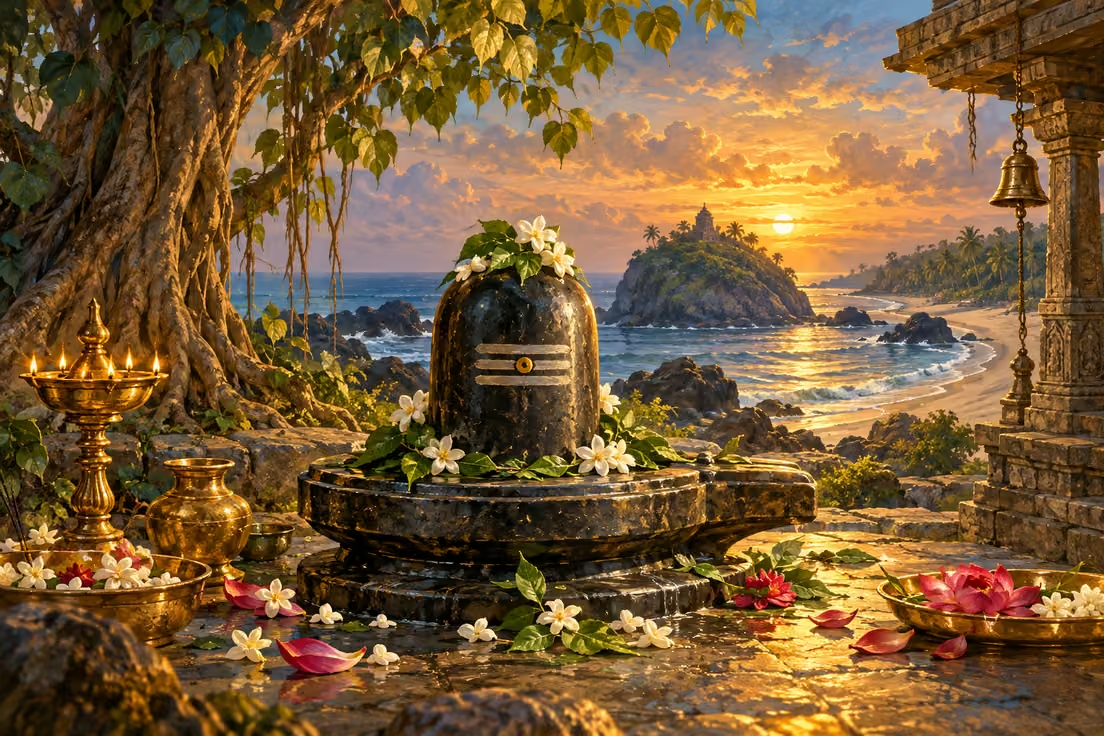
The boy sets it down, and the linga becomes immovable. The temple is understood to stand at that place. The story moves from a boon sought by an individual devotee to a divine presence established in a particular landscape, where subsequent worshippers can approach it.
02Mahabala as a Place of Release
The Shiva Purana also tells of King Mitrasaha, cursed to become a man-eating being after a deceitful cook serves human flesh to his teacher. While under the curse he kills a brahmin. Restored to human form, he remains tormented by that killing and cannot find relief through the rites he first tries.
The sage Gautama directs him to Gokarna, telling him to bathe in its sacred waters and worship Mahabala. The king follows that counsel and is released from his burden. In this account the linga’s importance lies in the possibility of refuge and expiation for someone who believes ordinary remedies have failed.