THE LIVING ARCHIVE
About Krishna’s Venu
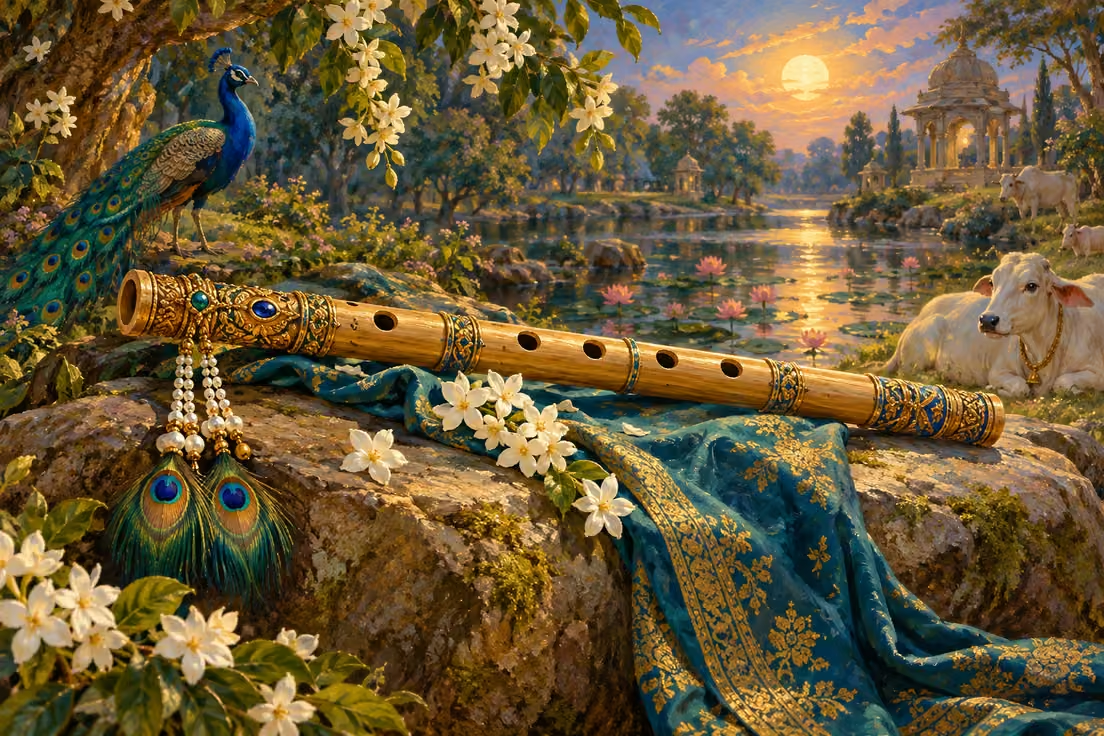
Venu means flute. The accounts describe Krishna holding the instrument at his lips and covering its holes with his fingers. It belongs to his life in the forest with his friends and their cattle, and is one of the features by which this youthful form of Krishna is recognized.
The gopis speak about the flute as though it were a fortunate companion. Because it touches Krishna's lips, it enjoys a closeness they desire for themselves. Their descriptions give the instrument a place in their love for Krishna and make the surrounding trees, rivers and animals participants in that affection.
More About Krishna’s Venu
Krishna’s flute is central to pastoral and devotional accounts of Vrindavana.
AT A GLANCE
Identity & Context
- Identity
- Artifact
- Form
- Flute
- Tradition
- Epic / Puranic traditions
- Also Known As
- Murali · Krishna’s flute · Krishna's Venu
THE STORY
Origins & Stories
ROLE & ESSENCE
Attributes & Significance
The flute expresses Krishna's ability to draw devotion through music and companionship. The accounts explain that attraction through particular responses: friends sing, animals stop grazing and the gopis imagine the flute as a rival for his affection. Its importance comes from these relationships with Krishna rather than from a separate adventure of the instrument.
Object Class
Flute
Origin / Narrative Setting
Vrindavana devotion
Owner or Associated Figure
Associated Deity
Properties & Abilities
Krishna’s flute is central to pastoral and devotional accounts of Vrindavana.
Stories & Events
Vrindavana devotion
Traditional Location
Vrindavana, as narrative association.
Tradition Notes
Names and accounts can vary by recension, region and commentary. This entry distinguishes attested details from identifications still requiring a passage-level source.
Archive Classification Notes
Original archive annotations are retained here. The current playable classification is shown in the side panel.
- Tradition Dependence
- High — compare the identified textual or regional account.
- Previous Owners
- Not established in the passage; no additional claim is made here.
- Symbolic Significance
- Not established in the passage; no additional claim is made here.
- Editorial Rarity
- Sacred archive — no claim of surviving physical possession.
TRADITION & MEANING
Traditions & Interpretations
The gopis' praise makes separation part of the flute's meaning. Remembering the instrument also means remembering the beloved person who plays it, so the same music is associated with happiness in his company and longing during his absence.
The listening animals make the effect of the music concrete. Their interrupted feeding and raised ears show attention spreading through the forest, extending the scene beyond Krishna's human companions.
Devotional traditions describe different kinds and names of Krishna's flutes. The forest scenes here identify the instrument through his playing and its listeners, without specifying one set of dimensions for every account.
Names and accounts can vary by recension, region and commentary. This entry distinguishes attested details from identifications still requiring a passage-level source.
From the Sacred Texts
Explore the sacred texts behind these stories in the Suvarnaveda library.
FOLLOW THE THREADS
Connected Cards
3 connected profiles. Every path leads to an original record.
Characters & Cosmic Entities1
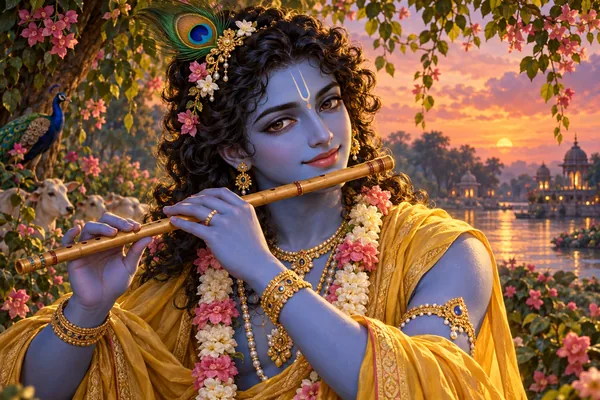
Krishna plays the Venu in his pastoral life.
Earthly Sacred Locations1

Artifacts, Divine Treasures & Relics1

The Vaijayanti garland appears with the flute in Krishna’s forest-entry scene.