THE LIVING ARCHIVE
About Vaijayanti Mala
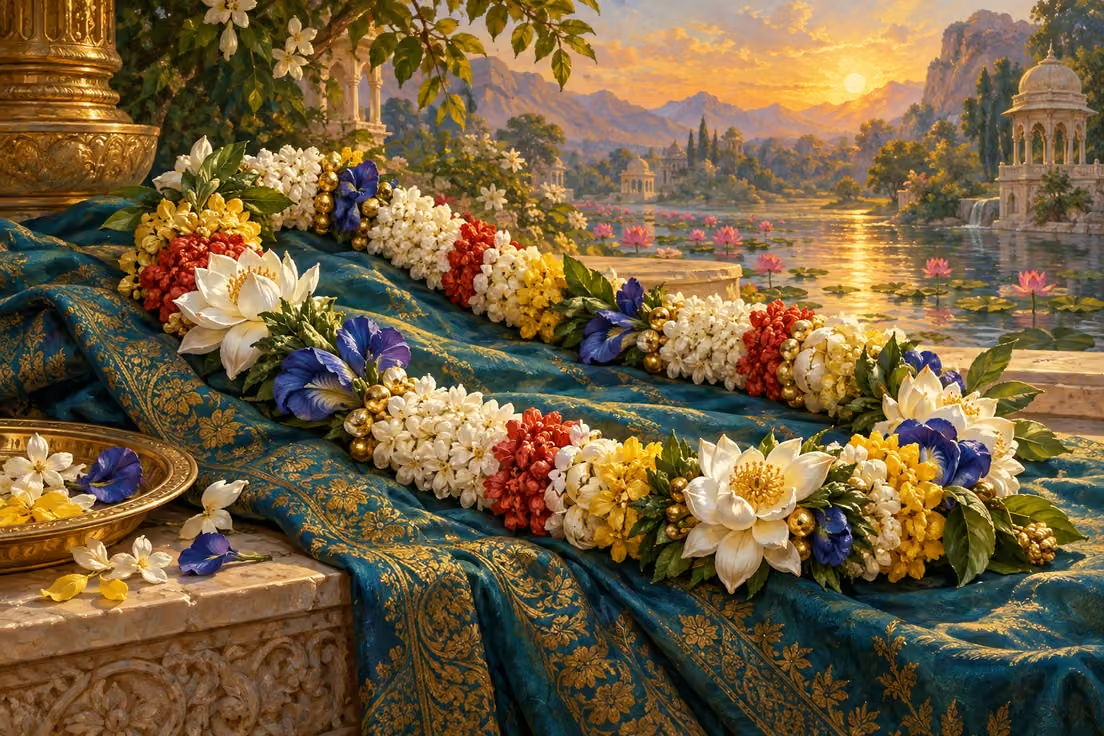
Mala means a garland or necklace. Vaijayanti is the name of this particular adornment, but its appearance and meaning depend on the account describing it. A scene of Krishna among the cowherds and a teaching about Vishnu's cosmic form use it for different purposes.
In the Vishnu Purana's explanation, the five precious gems stand for the elemental foundations from which material things develop. Other ornaments and weapons represent such principles as mind, intellect and the senses. Together they present the world as something sustained by Vishnu.
AT A GLANCE
Identity & Context
- Identity
- Artifact
- Form
- Garland
- Tradition
- Epic / Puranic traditions
THE STORY
Origins & Stories
ROLE & ESSENCE
Attributes & Significance
Vaijayanti helps a devotee recognize the deity while also providing a subject for reflection. In Krishna's forest appearance it belongs to the beautiful form his companions see. In Parashara's teaching it directs attention from a visible necklace to the elements that make up the world and their dependence on Vishnu.
Object Class
Garland
Origin / Narrative Setting
Vaishnava iconography
Properties & Abilities
The Vaijayanti garland is an attribute of Vishnu and Krishna in devotional iconography.
Stories & Events
Vaishnava iconography
Tradition Notes
Names and accounts can vary by recension, region and commentary. This entry distinguishes attested details from identifications still requiring a passage-level source.
Archive Classification Notes
Original archive annotations are retained here. The current playable classification is shown in the side panel.
- Tradition Dependence
- High — compare the identified textual or regional account.
- Previous Owners
- Not established in the passage; no additional claim is made here.
- Symbolic Significance
- Not established in the passage; no additional claim is made here.
- Traditional Location
- No verified present-day custody asserted.
- Editorial Rarity
- Sacred archive — no claim of surviving physical possession.
TRADITION & MEANING
Traditions & Interpretations
The five-gem explanation forms part of a larger interpretation of Vishnu's whole appearance. Reading the necklace alongside the other ornaments makes clear why a decorative object is being discussed in a teaching about the world's fundamental principles.
The Krishna scene preserves another use of the name: the garland is worn during music and companionship in Vrindavana. This setting explains its contribution to the remembered beauty of Krishna without adding a separate tale about its manufacture or powers.
Vaijayanti and Vanamala are closely associated names for divine garlands. Their descriptions can overlap, while particular passages give them different forms or symbolic explanations.
Names and accounts can vary by recension, region and commentary. This entry distinguishes attested details from identifications still requiring a passage-level source.
From the Sacred Texts
Explore the sacred texts behind these stories in the Suvarnaveda library.
FOLLOW THE THREADS
Connected Cards
5 connected profiles. Every path leads to an original record.
Characters & Cosmic Entities2
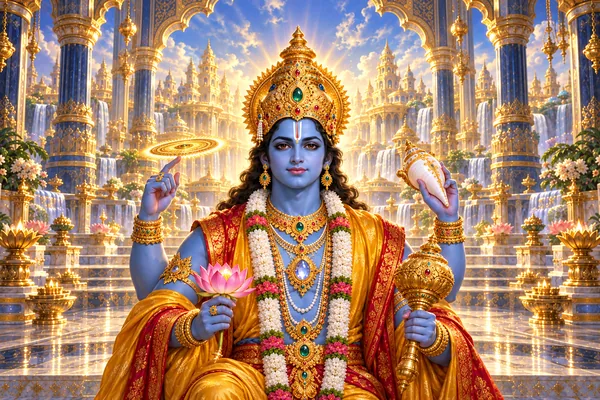
Vishnu bears Vaijayanti in the cosmological interpretation of his insignia.
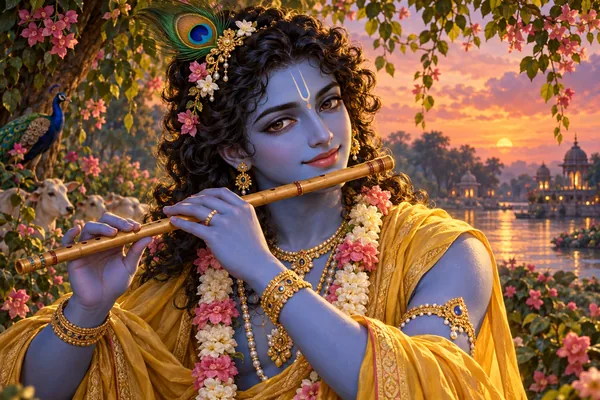
Krishna wears the garland when entering Vrindavana.
Artifacts, Divine Treasures & Relics3

The Vaijayanti garland appears with the flute in Krishna’s forest-entry scene.
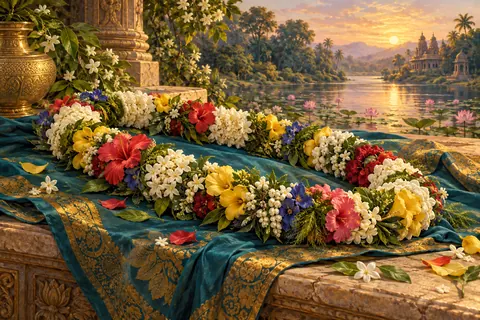
Vanamala is another closely associated divine-garland designation.
Vaijayanti likewise participates in the interpretation of Vishnu’s form.