
THE LIVING ARCHIVE
About Sanjivani
The healing plants include names such as Sanjivakarani, associated with restoring life, alongside herbs for removing lodged weapons, restoring the body's appearance and joining injuries. The familiar name Sanjivani is often used in retellings for the medicine at the centre of Hanuman's mountain-bearing rescue.
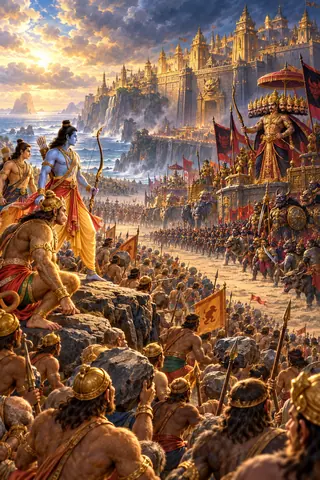
The Ramayana describes more than one mission for these herbs. In one, many warriors need restoration after a devastating attack. Another focuses on Lakshmana, Rama's brother, who lies gravely wounded. Their advisers and immediate circumstances differ, even though Hanuman's journey is essential to both.
More About Sanjivani
The life-restoring herb belongs to the account of Hanuman’s search for medicine for the wounded warriors.
AT A GLANCE
Identity & Context
- Identity
- Artifact
- Form
- Medicinal herb
- Tradition
- Epic / Puranic traditions
THE STORY
Origins & Stories
ROLE & ESSENCE
Attributes & Significance
The healing mission keeps wounded companions alive and allows the campaign to continue. It depends on different kinds of ability: Jambavan knows where help can be found, Hanuman can bring it across the distance, and Sushena can recognize and administer the treatment needed by Lakshmana. The carried mountain makes Hanuman's strength serve that work of rescue.
Object Class
Medicinal herb
Origin / Narrative Setting
Lanka war
Properties & Abilities
The life-restoring herb belongs to the account of Hanuman’s search for medicine for the wounded warriors.
Stories & Events
Lanka war
Tradition Notes
Names and accounts can vary by recension, region and commentary. This entry distinguishes attested details from identifications still requiring a passage-level source.
Archive Classification Notes
Original archive annotations are retained here. The current playable classification is shown in the side panel.
- Tradition Dependence
- High — compare the identified textual or regional account.
- Previous Owners
- Not established in the passage; no additional claim is made here.
- Symbolic Significance
- Not established in the passage; no additional claim is made here.
- Traditional Location
- No verified present-day custody asserted.
- Editorial Rarity
- Sacred archive — no claim of surviving physical possession.
TRADITION & MEANING
Traditions & Interpretations
The two episodes preserve different forms of recovery. The wounded army is restored through the herbs' fragrance, while Lakshmana receives a remedy selected by Sushena. Keeping these details distinct explains the particular need each mission answers.
Hanuman's inability to identify the plants does not end the rescue. Bringing the summit places the needed herbs within reach of the person who can use them, resolving the difficulty through cooperation between the rescuer and the healer.
The legendary plants are not securely identified as a particular modern species. The Ramayana's extraordinary restorations belong to its sacred narrative and do not establish the medical properties of a plant now sold under the name Sanjivani.
Names and accounts can vary by recension, region and commentary. This entry distinguishes attested details from identifications still requiring a passage-level source.
From the Sacred Texts
Explore the sacred texts behind these stories in the Suvarnaveda library.
FOLLOW THE THREADS
Connected Cards
5 connected profiles. Every path leads to an original record.
Characters & Cosmic Entities3

Hanuman brings the herb-bearing mountain.

The healing mission restores Lakshmana after his grave injury.
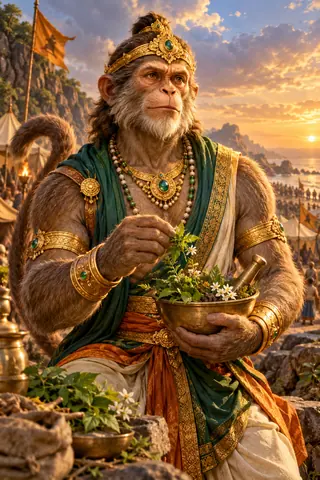
Sushena identifies and uses the required herbs.
Stories & Events1
Artifacts, Divine Treasures & Relics1

Sanjivani names the best-known life-restoring member of this legendary healing tradition.