
THE LIVING ARCHIVE
About Hayagriva
This Hayagriva is an antagonist, not the divine horse-headed manifestation of Vishnu who bears the same name in other accounts. The distinction matters because both figures are connected with Vedic knowledge, but their actions are opposite: the asura takes it away, while the divine manifestation is described as embodying and expressing it.
AT A GLANCE
Identity & Context
- Identity
- Asura
- Form
- Daitya / Danava / Asura antagonist
- Tradition
- Vedic · Puranic
- Also Known As
- Hayagriva (asura)
- World & Associations
- Primordial waters
Hayagriva Asura — Asura named Hayagriva associated with theft of sacred knowledge in some flood narratives; distinguish the divine form.
Family Context
The available reference record does not establish a complete family genealogy. No parents, consorts, or descendants are inferred from the name alone.
Hayagriva
Shared or similar name does not establish the same identity.
THE STORY
Life & Stories
Story Connections
- Matsya and stolen Vedas traditions
ROLE & ESSENCE
Attributes & Significance
The asura’s brief but decisive role makes the preservation of knowledge part of cosmic protection. Flood and sleep threaten continuity; theft intensifies the interruption; recovery allows Brahma’s work to resume. The point is clearer when the antagonist and the divine namesake remain distinct.
Role
Asura named Hayagriva associated with theft of sacred knowledge in some flood narratives; distinguish the divine form.
Attributes & Abilities
- Sacred-knowledge theft in associated account
TRADITION & MEANING
Traditions & Interpretations
Other texts organise the recovery of the Vedas differently. This profile follows the explicitly named Hayagriva of the Bhagavata’s flood account and does not substitute another demon’s name or merge separate divine appearances.
From the Sacred Texts
Explore the sacred texts behind these stories in the Suvarnaveda library.
Artwork & Archive Notes
Objects & Emblems
No named weapon or artifact is specified in this profile’s reference record. This does not establish that the figure never used one.
Visual Identity
Where artwork is shown, it is a contemporary illustrative interpretation. This reference record does not establish a fixed portrait, colour scheme, or complete set of iconographic attributes for this figure.
Tradition Note
The accounts belong to Vedic / Puranic. Genealogy, theological interpretation, and portrayal can differ between texts and regional retellings.
FOLLOW THE THREADS
Connected Cards
5 connected profiles. Every path leads to an original record.
The Sacred Library2


Characters & Cosmic Entities3
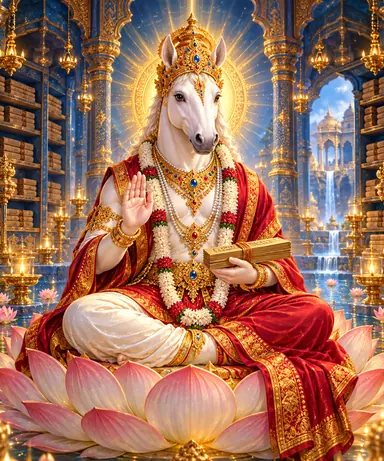
The divine horse-headed manifestation is distinct from this asura.

The asura takes the Vedas as Brahma falls asleep.
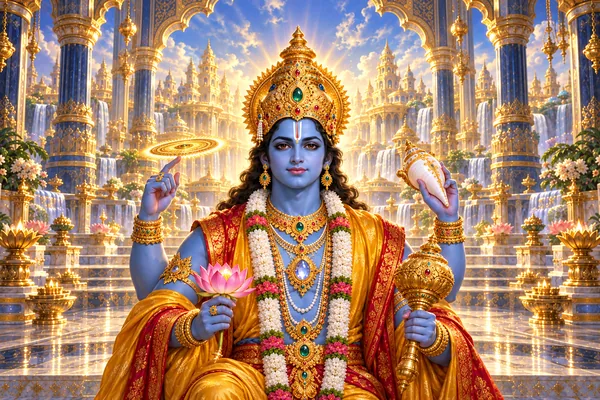
Hari kills the asura and restores the Vedas.