शेष
NagaCosmic serpent associated with support of the world and Vishnu
Shesha
Cosmic serpent associated with support of the world and Vishnu; overlaps with Ananta.
#118 / 700
Powerful figures across narratives.
148 original profiles · 1 categories
Cosmic serpent associated with support of the world and Vishnu
Cosmic serpent associated with support of the world and Vishnu; overlaps with Ananta.
Endless serpent form commonly identified with Shesha
Endless serpent form commonly identified with Shesha; preserve the separate entry.
Serpent king serving as churning rope in ocean-churning narratives
Serpent king serving as churning rope in ocean-churning narratives.
 Asura
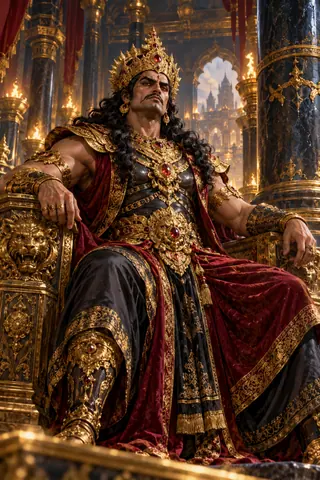
AsuraDaitya ruler and father of Prahlada
Hiranyakashipu — Daitya ruler and father of Prahlada, whose conditional boon is overcome by Narasimha.
 Asura
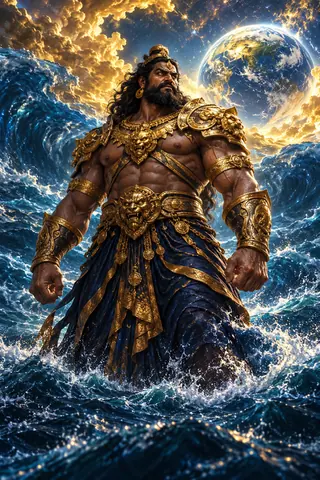
AsuraDaitya associated with the earth's displacement and defeated by Varaha
Hiranyaksha — Daitya associated with the earth's displacement and defeated by Varaha.
 Asura
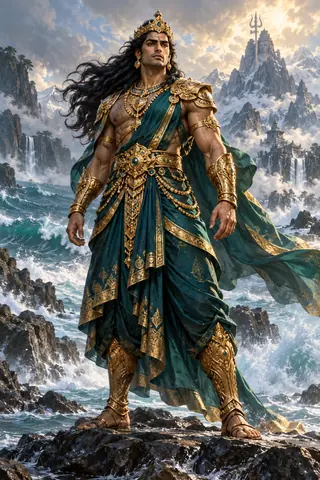
AsuraPowerful asura in Shaiva traditions
Powerful asura in Shaiva traditions, associated with Vrinda and conflict with Shiva.
 Asura
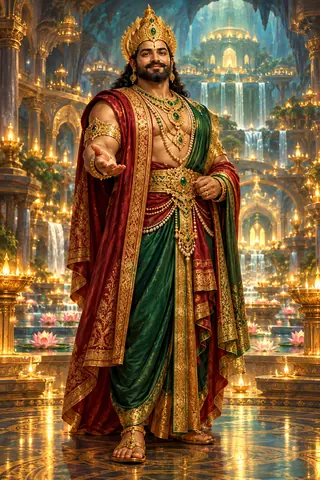
AsuraDaitya king
Mahabali — Daitya king, Virochana's son, known for generosity and surrender in the Vamana narrative.
 Asura
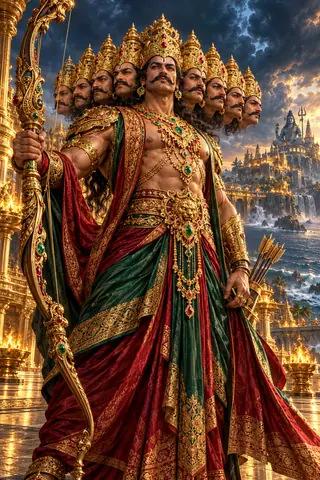
AsuraRakshasa king of Lanka
Ravana — Rakshasa king of Lanka, scholar and Shiva devotee in many accounts, and Rama's principal antagonist.
 Asura
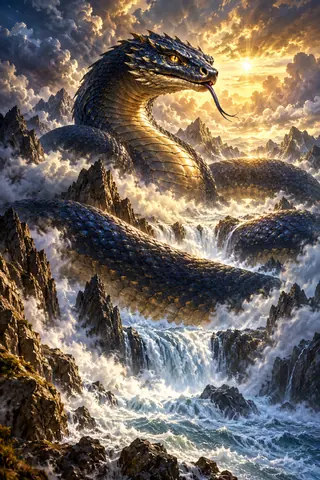
AsuraVedic/Puranic adversary overcome by Indra
Vritra — Vedic/Puranic adversary overcome by Indra; serpent, drought, and devotional interpretations differ.
 Asura
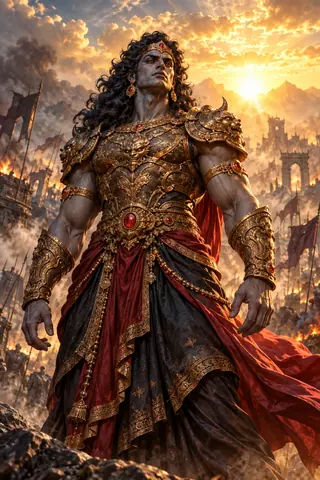
AsuraAsura defeated by Skanda in traditions explaining the divine warrior's birth
Tarakasura — Asura defeated by Skanda in traditions explaining the divine warrior's birth.
 Asura
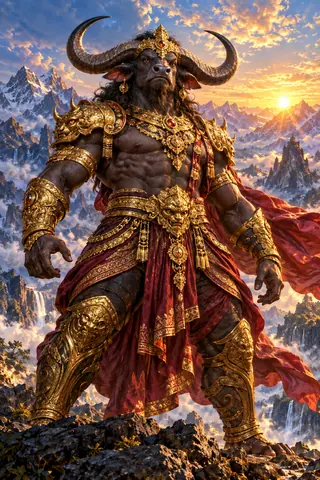
AsuraBuffalo-associated asura defeated by the goddess in the Devi Mahatmya
Buffalo-associated asura defeated by the goddess in the Devi Mahatmya.
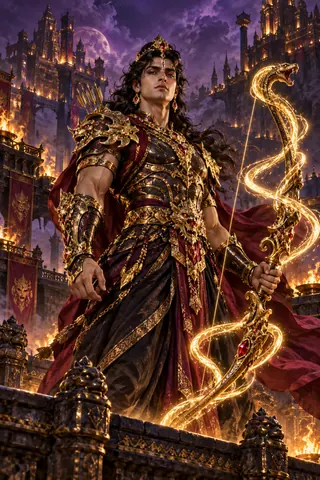 Rakshasa
Ravana's son
Ravana's son, also named Meghanada, renowned for celestial weaponry and deceptive battle tactics.
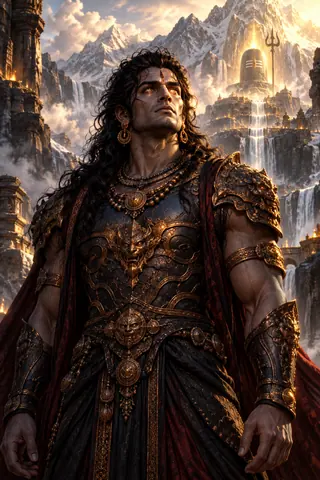 Asura
AsuraAsura defeated and transformed in Shaiva accounts
Andhaka — Asura defeated and transformed in Shaiva accounts; origin and later status vary.
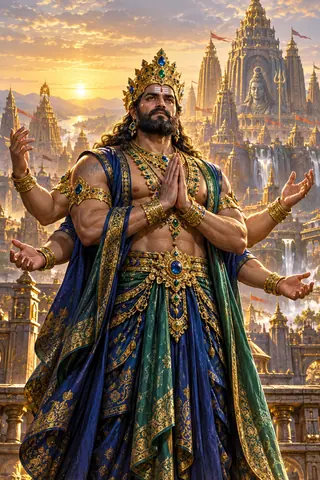 Asura
AsuraMany-armed asura ruler
Many-armed asura ruler, devotee of Shiva, and father of Usha.
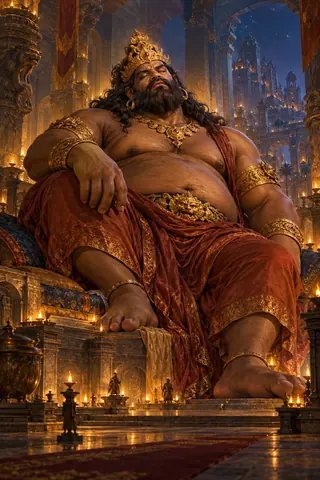 Rakshasa
Ravana's brother
Ravana's brother, known for immense strength and prolonged sleep in epic accounts.
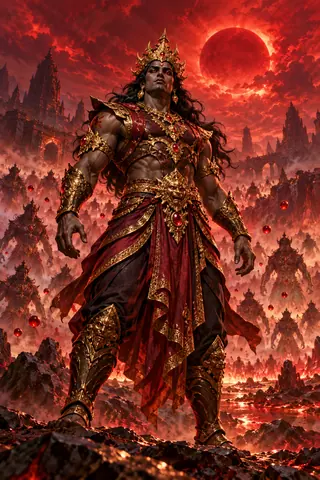 Asura
AsuraAsura whose fallen blood generates further combatants
Raktabija — Asura whose fallen blood generates further combatants, countered by the goddess and Kali.
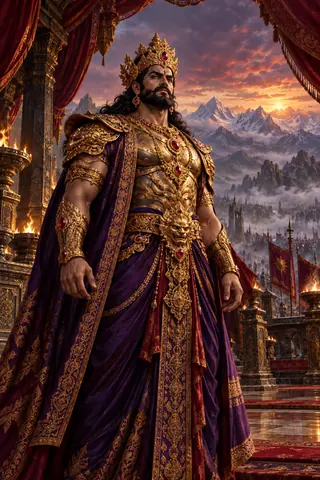 Asura
AsuraAsura king who challenges the goddess and is defeated in the Devi Mahatmya
Shumbha — Asura king who challenges the goddess and is defeated in the Devi Mahatmya.
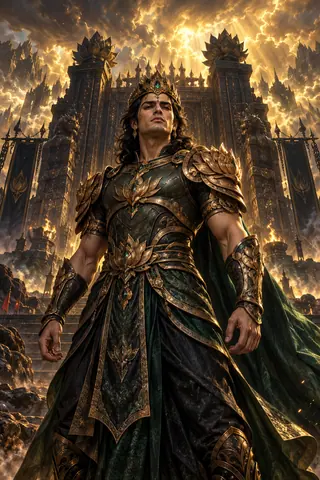 Asura
AsuraShumbha's brother and fellow antagonist in the goddess's battle cycle
Shumbha's brother and fellow antagonist in the goddess's battle cycle.
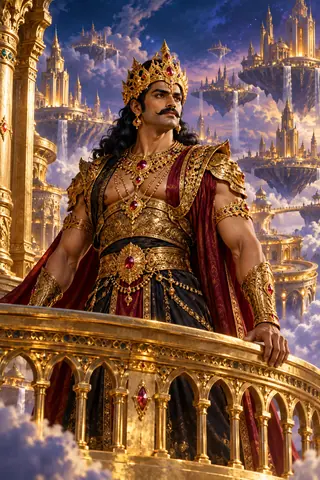 Asura
AsuraOne of the three Tripurasura brothers associated with fortified cities
One of the three Tripurasura brothers associated with fortified cities.
 Asura
AsuraTripurasura brother associated with one of the three cities
Tripurasura brother associated with one of the three cities.
 Asura
AsuraTripurasura brother associated with one of the three cities
Tripurasura brother associated with one of the three cities.
 Asura
AsuraDaitya ruler
Virochana — Daitya ruler, Prahlada's son and Mahabali's father in common genealogy.
 Asura
AsuraAsura opponent of Indra
Namuchi — Asura opponent of Indra, protected by conditions concerning means and timing of death in later stories.
 Asura
AsuraPrimordial asura paired with Kaitabha in Vishnu narratives
Primordial asura paired with Kaitabha in Vishnu narratives; distinguish other figures called Madhu.
 Asura
AsuraAsura paired with Madhu in cosmogonic conflict with Vishnu
Kaitabha — Asura paired with Madhu in cosmogonic conflict with Vishnu.
 Asura
AsuraMohini and the fatal dance
Bhasmasura — Asura of boon-and-enchantment retellings whose destructive touch rebounds on himself.
 Asura
AsuraNaraka or Bhauma
Naraka or Bhauma, ruler defeated by Krishna; Satyabhama's role varies by tradition.
 Asura
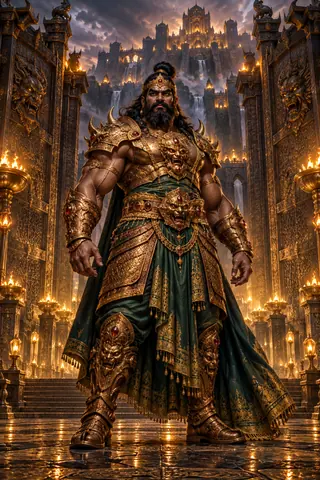
AsuraAsura associated with Naraka and defeated by Krishna
Mura Asura — Asura associated with Naraka and defeated by Krishna.
 Asura
AsuraAsura name used in multiple traditions
Shambara Asura — Asura name used in multiple traditions; this entry follows the Pradyumna antagonist context provisionally.
Donkey-form antagonist defeated by Balarama in the palm grove
Donkey-form antagonist defeated by Balarama in the palm grove.
Bull-form antagonist defeated by Krishna
Bull-form antagonist defeated by Krishna.
Asura who joins the cowherds in disguise and is defeated by Balarama
Pralambasura — Asura who joins the cowherds in disguise and is defeated by Balarama.
Serpent-form antagonist who attempts to swallow Krishna and the cowherds
Serpent-form antagonist who attempts to swallow Krishna and the cowherds.
Bakasura entry provisionally identified with Krishna's crane-form antagonist
Bakasura entry provisionally identified with Krishna's crane-form antagonist; distinguish Bhima's man-eating Baka.
Putana's encounter with Krishna
Female antagonist who attempts to poison infant Krishna while disguised as a nurse.
Calf-disguised antagonist defeated by Krishna
Calf-disguised antagonist defeated by Krishna.
Antagonist concealing cowherd children during a game in Krishna narrative
Antagonist concealing cowherd children during a game in Krishna narrative.
Asura appearing in deva-asura warfare
Kalanemi — Asura appearing in deva-asura warfare; later identifications with Kamsa vary.
Asura paired with Vatapi in a deceptive hospitality story ended by Agastya
Ilvala — Asura paired with Vatapi in a deceptive hospitality story ended by Agastya.
Ilvala's companion/brother
Ilvala's companion/brother, consumed and digested by Agastya in the story.
Asura name associated with Shachi's ancestry
Puloman — Asura name associated with Shachi's ancestry; distinguish Puloma and other genealogical names.
Danava chief prominent in genealogies and deva-asura accounts
Viprachitti — Danava chief prominent in genealogies and deva-asura accounts.
Danava architect linked with the Pandavas' assembly hall and Tripura traditions
Maya Danava — Danava architect linked with the Pandavas' assembly hall and Tripura traditions.
Shumbha's commander destroyed by the goddess in the Devi Mahatmya
Shumbha's commander destroyed by the goddess in the Devi Mahatmya.
Asura-name with multiple textual contexts
Ruru Asura — Asura-name with multiple textual contexts; exact narrative intended by this entry is unresolved.
Asura commander paired with Munda
Chanda Asura — Asura commander paired with Munda, whose defeat leads to the name Chamunda.
Asura commander paired with Chanda in the goddess's battle cycle
Munda Asura — Asura commander paired with Chanda in the goddess's battle cycle.
Asura in goddess accounts of drought
Durgamasura — Asura in goddess accounts of drought, sacred knowledge, and Shakambhari.
Asura in the Dhundhumara royal narrative
Dhundhu — Asura in the Dhundhumara royal narrative; individual variants need a selected text.
Asura of Madhura defeated by Shatrughna in Ramayana Uttara Kanda traditions
Lavanasura — Asura of Madhura defeated by Shatrughna in Ramayana Uttara Kanda traditions.
Matsya and stolen Vedas traditions
Hayagriva Asura — Asura named Hayagriva associated with theft of sacred knowledge in some flood narratives; distinguish the divine form.
Elephant-associated asura in Shaiva accounts
Elephant-associated asura in Shaiva accounts; narratives with this name are not uniform.
Elephant-faced antagonist in Ganesha traditions
Elephant-faced antagonist in Ganesha traditions; distinguish Mushika-origin and other regional accounts.
Asura in Ganesha Purana-associated traditions
Sindurasura — Asura in Ganesha Purana-associated traditions; a specific passage for this account remains to be established.
Asura ruler defeated by Murugan in Tamil traditions
Surapadman — Asura ruler defeated by Murugan in Tamil traditions; peacock/rooster transformation belongs to specific accounts.
Asura associated with Surapadman and Murugan's campaign
Simhamukha — Asura associated with Surapadman and Murugan's campaign.
Asura/mountain-associated antagonist in Skanda traditions
Krauncha Asura — Asura/mountain-associated antagonist in Skanda traditions; exact identities vary.
Mahishasura's commander in the goddess battle cycle
Mahishasura's commander in the goddess battle cycle.
Daitya son of Hiranyaksha in Vishnu Purana I.21
Jharjhara is named among Hiranyaksha’s Daitya sons in Vishnu Purana I.21. The passage establishes a genealogical identity, rather than an individual combat story.
Daitya son of Hiranyaksha in Vishnu Purana I.21
Bhutasantapana is listed as a Daitya son of Hiranyaksha in Vishnu Purana I.21. His surviving context in this reference is genealogical.
Daitya son of Hiranyaksha in Vishnu Purana I.21
Mahanabha is a Daitya named among Hiranyaksha’s sons in Vishnu Purana I.21. The family list does not supply a separate battle biography.
Asura named Nikumbha
Nikumbha Asura — Asura named Nikumbha; distinguish Kumbhakarna's Rakshasa son at #423.
Asura brother of Upasunda
Sunda — Asura brother of Upasunda, destroyed through rivalry over Tilottama.
Asura brother of Sunda and co-antagonist in the Tilottama narrative
Upasunda — Asura brother of Sunda and co-antagonist in the Tilottama narrative.
Danava genealogical name meaning two-headed
Dwimurdha — Danava genealogical name meaning two-headed; individual combat biography is not asserted.
Danava named in genealogical accounts
Shankara Danava — Danava named in genealogical accounts; distinct from Shiva's epithet Shankara.
Danava genealogical name
Ayomukha Danava — Danava genealogical name; exact spelling and individual account require checking.
Danava genealogical name
Shankushiras — Danava genealogical name; individual powers are not established here.
Danava named Kapila
Kapila Danava — Danava named Kapila; distinct from the sage Kapila.
Danava genealogical name with epic incarnation-association traditions
Ekachakra Danava — Danava genealogical name with epic incarnation-association traditions; similarly named mortal figures have distinct contexts.
Vedic eclipse antagonist and later asura figure
Swarbhanu — Vedic eclipse antagonist and later asura figure; overlaps with Rahu only in specified later traditions.
Danava ruler associated with Devayani
Vrishaparvan — Danava ruler associated with Devayani, Sharmishtha, and Shukra in the Yayati narrative.
Danava son of Viprachitti and Simhika in Vishnu Purana I.21
Vyansa — Danava son of Viprachitti and Simhika in Vishnu Purana I.21; the passage records genealogy rather than an individual battle narrative.
Danava son of Viprachitti and Simhika in Vishnu Purana I.21
Nabha Danava — Danava son of Viprachitti and Simhika in Vishnu Purana I.21; the passage records genealogy rather than an individual battle narrative.
Danava son of Viprachitti and Simhika in Vishnu Purana I.21
Khasrima — Danava son of Viprachitti and Simhika in Vishnu Purana I.21; the passage records genealogy rather than an individual battle narrative.
Danava son of Viprachitti and Simhika in Vishnu Purana I.21
Anjaka — Danava son of Viprachitti and Simhika in Vishnu Purana I.21; the passage records genealogy rather than an individual battle narrative.
Danava son of Viprachitti and Simhika in Vishnu Purana I.21
Kalanabha — Danava son of Viprachitti and Simhika in Vishnu Purana I.21; the passage records genealogy rather than an individual battle narrative.
Danava son of Viprachitti and Simhika in Vishnu Purana I.21
Vaktrayodhi — Danava son of Viprachitti and Simhika in Vishnu Purana I.21; the passage records genealogy rather than an individual battle narrative.
Ravana's commander and adviser in the Lanka war
Ravana's commander and adviser in the Lanka war.
Ravana's powerful son defeated by Lakshmana in the war
Ravana's powerful son defeated by Lakshmana in the war.
Forest conflict
Akampana — Rakshasa linked with the attack on Rama's forest life and subsequent Lanka warfare; identify episode variants.
Rakshasa ruler of Janasthana and Rama's opponent
Khara — Rakshasa ruler of Janasthana and Rama's opponent.
Khara's commander/companion defeated by Rama
Khara's commander/companion defeated by Rama.
Rakshasa who appears as the golden deer to draw Rama away
Maricha — Rakshasa who appears as the golden deer to draw Rama away.
Rakshasa disrupting sacrifice and defeated by Rama under Vishvamitra's guidance
Subahu — Rakshasa disrupting sacrifice and defeated by Rama under Vishvamitra's guidance.
Rakshasi confronting Rama early in his forest training
Rakshasi confronting Rama early in his forest training; family and curse details vary.
Ravana-associated warrior in the Lanka war
Ravana-associated warrior in the Lanka war, often a son in genealogical accounts.
Ravana-associated warrior confronted by Angada
Ravana-associated warrior confronted by Angada; often a son in genealogical accounts.
Three-headed Rakshasa of the forest-war context
Three-headed Rakshasa of the forest-war context; distinguish other beings named Trishiras.
Ravana's commander defeated in the Lanka war
Ravana's commander defeated in the Lanka war.
Rakshasa commander in the Lanka war
Vajradamshtra — Rakshasa commander in the Lanka war.
Ravana's adviser and warrior
Ravana's adviser and warrior; his functions vary across episodes.
Ravana-associated adviser and warrior in the Lanka war
Ravana-associated adviser and warrior in the Lanka war.
Rakshasa Nikumbha
Nikumbha Rakshasa — Rakshasa Nikumbha, usually Kumbhakarna's son in the Lanka-war context; distinguish #391.
Rakshasa Kumbha
Kumbha Rakshasa — Rakshasa Kumbha, associated with Kumbhakarna's lineage and Sugriva's battle.
Khara's son who confronts Rama in the Lanka campaign
Khara's son who confronts Rama in the Lanka campaign.
Cursed
Cursed, distorted being defeated by Rama and Lakshmana who directs them toward Sugriva.
Rakshasa brother of Hidimbi
Hidimba — Rakshasa brother of Hidimbi, defeated by Bhima; distinguish the female name Hidimbi.
Rakshasa warrior in the Mahabharata who opposes Pandava forces
Alambusha — Rakshasa warrior in the Mahabharata who opposes Pandava forces.
Underworld antagonist in later Rama-Hanuman retellings
Underworld antagonist in later Rama-Hanuman retellings; often overlaps with Mahiravana.
Underworld antagonist in regional Rama narratives
Underworld antagonist in regional Rama narratives; the relationship with Ahiravana varies between regional accounts.
Shadow-catching opponent during Hanuman's ocean crossing
Shadow-catching opponent during Hanuman's ocean crossing; distinguish eclipse-genealogy Simhika contexts.
Guardian of Lanka whom Hanuman confronts at the city's entrance
Guardian of Lanka whom Hanuman confronts at the city's entrance.
Rakshasa defeated by Rama and Lakshmana in the forest and released from a curse
Viradha — Rakshasa defeated by Rama and Lakshmana in the forest and released from a curse.
Rakshasa sent against Hanuman in Lanka
Jambumali — Rakshasa sent against Hanuman in Lanka.
Ravana's son killed in combat with Hanuman
Ravana's son killed in combat with Hanuman.
Rakshasa patriarch
Sumali — Rakshasa patriarch, father of Kaikesi in common epic genealogy.
Elder Rakshasa and adviser whose counsel to Ravana urges caution
Elder Rakshasa and adviser whose counsel to Ravana urges caution.
Rakshasa brother in the Mali-Sumali-Malyavan grouping
Mali — Rakshasa brother in the Mali-Sumali-Malyavan grouping, opposed by Vishnu in ancestral accounts.
Rakshasa ancestor associated with Mali
Sukesha — Rakshasa ancestor associated with Mali, Sumali, and Malyavan.
Ravana's messenger or spy paired with Sarana in the war narrative
Ravana's messenger or spy paired with Sarana in the war narrative; distinguish the sage Shuka.
Ravana's spy paired with Suka
Ravana's spy paired with Suka; distinguish Yadava namesakes.
Rakshasa spy in the Lanka campaign
Shardula Rakshasa — Rakshasa spy in the Lanka campaign.
Named Rakshasa warrior in Lanka-war lists
Suptaghna — Named Rakshasa warrior in Lanka-war lists; individual episode requires passage verification.
Named Rakshasa warrior in Lanka-war lists
Yajnakopa is a Rakshasa warrior in the Lanka campaign. Valmiki Ramayana, Yuddha Kanda 43.26–27, names him among the archers attacking Rama.
Named Rakshasa warrior in Lanka-war lists
Suryashatru — Named Rakshasa warrior in Lanka-war lists.
Named Rakshasa warrior in Lanka-war lists
Agniketu is a Rakshasa archer in the Lanka campaign, named in Valmiki Ramayana, Yuddha Kanda 43.26–27.
Named Rakshasa warrior in Lanka-war lists
Rashmiketu is a Rakshasa archer in the Lanka campaign, named in Valmiki Ramayana, Yuddha Kanda 43.26–27.
Ravana-associated warrior
Ravana-associated warrior; distinguish the Kaurava named Durmukha.
Rakshasa warrior in Lanka-war traditions
Vajramushti — Rakshasa warrior in Lanka-war traditions; shared-name and spelling context needs a selected edition.
Rakshasa warrior in the Lanka campaign
Prajangha — Rakshasa warrior in the Lanka campaign.
Rakshasa Kampana in the Lanka-war context
Kampana Rakshasa — Rakshasa Kampana in the Lanka-war context; distinguish similarly named divine or mortal figures.
Rakshasa warrior name used in forest and/or Lanka episodes depending on edition
Praghasa — Rakshasa warrior name used in forest and/or Lanka episodes depending on edition; exact context needs review.
Rakshasa warrior in the Lanka campaign
Sonitaksha — Rakshasa warrior in the Lanka campaign; Sonitaksha/Shonitaksha spelling varies.
Rakshasa warrior in the Lanka campaign
Yupaksha — Rakshasa warrior in the Lanka campaign.
Naga associated with Parikshit's death and the serpent sacrifice
Takshaka — Naga associated with Parikshit's death and the serpent sacrifice.
Naga who bites Nala and alters his appearance in the Nala story
Karkotaka — Naga who bites Nala and alters his appearance in the Nala story.
Naga-name in prominent serpent group lists
Padma Naga — Naga-name in prominent serpent group lists; exact individual genealogy varies.
Naga-name in serpent group lists
Mahapadma Naga — Naga-name in serpent group lists; distinguish wealth-symbol and other usages.
Naga-name in prominent serpent lists
Kulika Naga — Naga-name in prominent serpent lists; Kulika/Kuliraka variants require checking.
Naga named Shankha
Shankha Naga — Naga named Shankha; distinguish the Matsya prince and weapon/shell terms.
Naga named Dhananjaya
Dhananjaya Naga — Naga named Dhananjaya; distinguish Arjuna's epithet.
Naga named Airavata
Airavata Naga — Naga named Airavata; distinguish Indra's elephant.
Naga associated with Matali's daughter in an epic narrative
Sumukha Naga — Naga associated with Matali's daughter in an epic narrative.
Naga who advises the serpents in Astika-cycle traditions
Elapatra — Naga who advises the serpents in Astika-cycle traditions.
Naga ruler associated with Ulupi's lineage
Kauravya Naga — Naga ruler associated with Ulupi's lineage.
Naga associated with Bhima's ancestry and revival episode in the Mahabharata
Aryaka Naga — Naga associated with Bhima's ancestry and revival episode in the Mahabharata.
Serpent surviving the Khandava fire and later seeking vengeance against Arjuna
Serpent surviving the Khandava fire and later seeking vengeance against Arjuna.
Naga princess and consort of Arjuna
Ulupi — Naga princess and consort of Arjuna, associated with Iravan and Arjuna's restoration.
Hanuman's test by Surasa
Serpent-associated mother/divine tester confronting Hanuman during the ocean crossing.
Naga-aspect entry of Manasa
Manasa Naga form — Naga-aspect entry of Manasa, not automatically a separate individual from #103.
Nahusha in his cursed serpent episode
Nahusha in his cursed serpent episode, linked to the royal figure at #597.
 Rakshasa
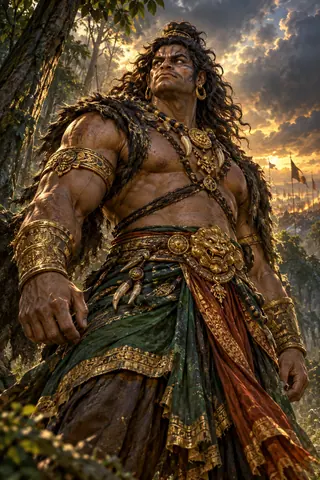
Son of Bhima and Hidimbi
Ghatotkacha — Son of Bhima and Hidimbi, a Rakshasa ally of the Pandavas.
 Rakshasa
Rakshasi allied with Bhima and mother of Ghatotkacha
Rakshasi allied with Bhima and mother of Ghatotkacha; distinguish her brother Hidimba.
 Rakshasa
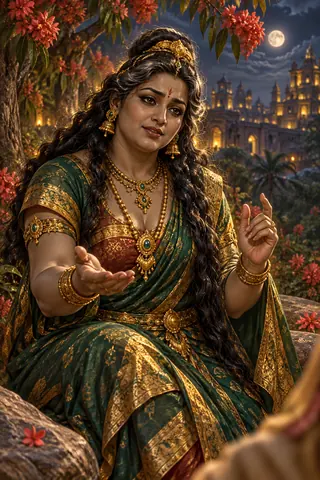
Rakshasi who comforts Sita and relates an auspicious dream
Rakshasi who comforts Sita and relates an auspicious dream; kinship differs by version.
 Rakshasa
Vishrava's consort
Vishrava's consort, daughter of Sumali, and mother of Ravana and his siblings in common genealogy.