THE LIVING ARCHIVE
About Adi Shakti
Adi Shakti is the primordial divine power revered as the Mother of the universe in Goddess-centred traditions. The name describes the Goddess as the source of creation and of the abilities of the gods. In the Devi Gita, she teaches that her essential nature is consciousness and that maya, her inherent power, makes the many forms of the world possible. Her divine nature is not limited to any one created form.
The Devi Bhagavata describes Brahma, Vishnu and Shiva recognizing their dependence on the Goddess. Their powers to create, preserve and dissolve the world come from her in this account. This explains Adi Shakti’s place in Shakta devotion, in which the Goddess is worshipped as supreme. The title overlaps with Mahashakti and Mahadevi; these names can emphasize different qualities of the same Goddess.
AT A GLANCE
Identity & Context
- Identity
- Cosmic Principle
- Form
- Primordial principle / power
- Tradition
- Shakta · Puranic · Tantric
- Also Known As
- Adyashakti · Adya Shakti
- World & Associations
- Tradition-specific supreme domain
Family Context
Human parentage, marriage, and descendants are not applicable to this principle.
Mahashakti
Adi Shakti and Mahashakti frequently overlap.
Mahadevi
Primordial power and Great Goddess may designate the same supreme reality.
THE STORY
The Idea Explained
Story Connections
- Goddess-centered creation accounts
ROLE & ESSENCE
Attributes & Significance
Adi Shakti’s importance is that she is worshipped as the source of the powers through which the cosmos operates. The great gods depend on the Mother in the Devi Bhagavata’s account. Her cosmic form shows that vastness, while her gentle form makes her approachable. Together these portrayals explain divine motherhood through both cosmic power and care.
Role
Primordial Shakti understood as the source of divine power, especially in Shakta traditions.
Attributes & Abilities
- Primordial divine energy
- Cosmic manifestation
TRADITION & MEANING
Traditions & Interpretations
Adi Shakti, Mahashakti and Mahadevi can refer to the same supreme Goddess, with different emphasis. They do not always represent separate beings appearing one after another. The Devi Bhagavata’s Goddess-centred creation account differs from accounts centred on another supreme deity.
The cosmic-form story presents the Goddess in two ways that her worshippers can understand: as the vast source containing the worlds and as a gentle Mother they can approach. Her return to a reassuring appearance is part of the story’s explanation of divine compassion.
Adi Shakti, Mahashakti, and Mahadevi can designate the same supreme Goddess with differing emphasis. Their names do not establish a universal sequence of separate beings. The Devi Bhagavata’s vision belongs to a Goddess-centered tradition and coexists with other Hindu accounts of ultimate divinity.
Weapon inventory is conceptually inapplicable to the principle as such.
From the Sacred Texts
Explore the sacred texts behind these stories in the Suvarnaveda library.
Artwork & Archive Notes
Objects & Emblems
Weapons and physical equipment are not applicable to this principle as such.
Visual Identity
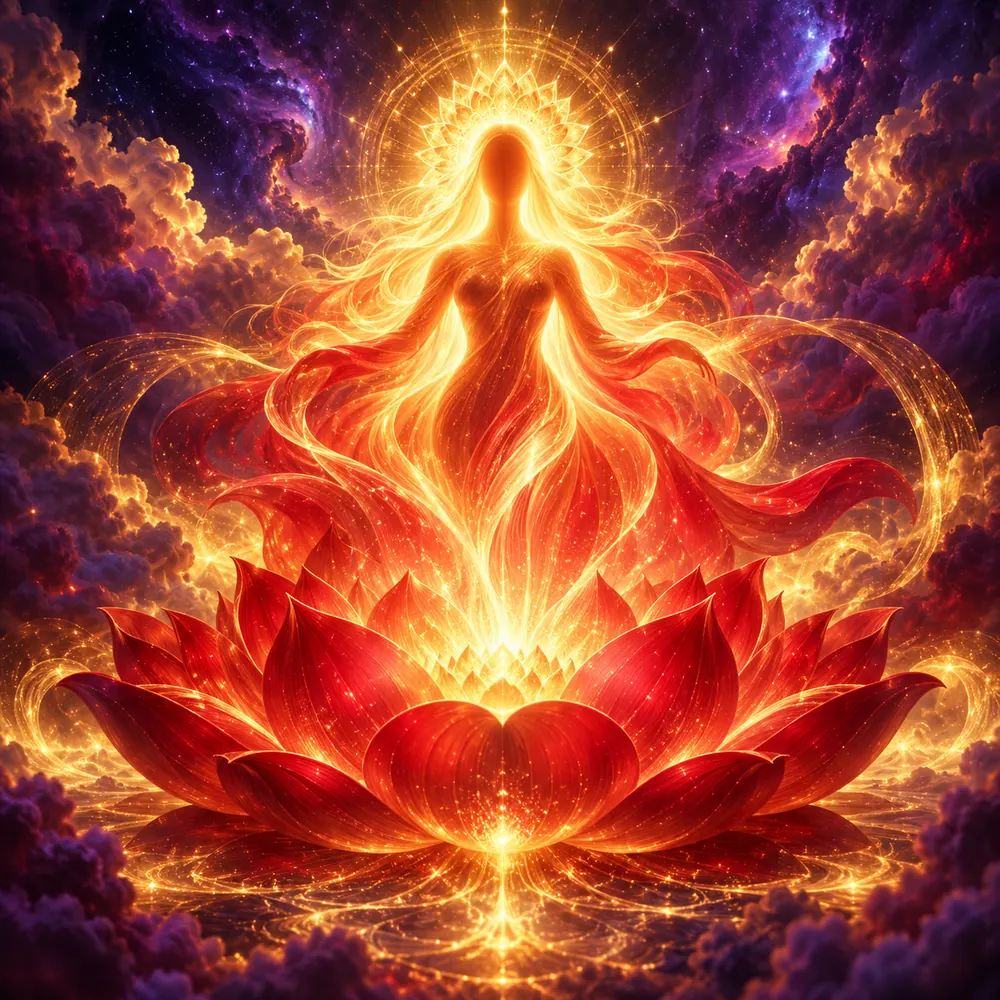
This entry concerns a philosophical or cosmic principle. A symbolic illustration does not imply a physical body or a single universal visual form.
FOLLOW THE THREADS
Connected Cards
7 connected profiles. Every path leads to an original record.
The Sacred Library1
Characters & Cosmic Entities6
Overlapping title emphasizing great divine power.
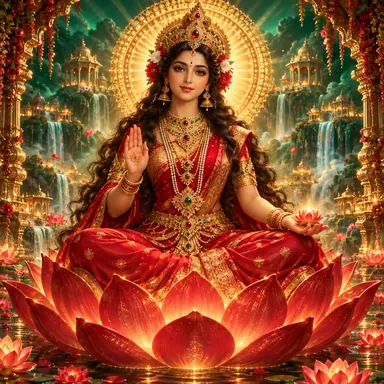
Related supreme-Goddess designation.
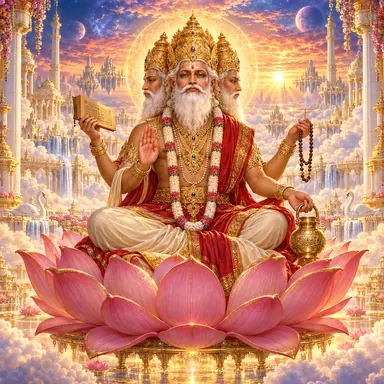
Recognizes dependence on the Goddess for creative power.
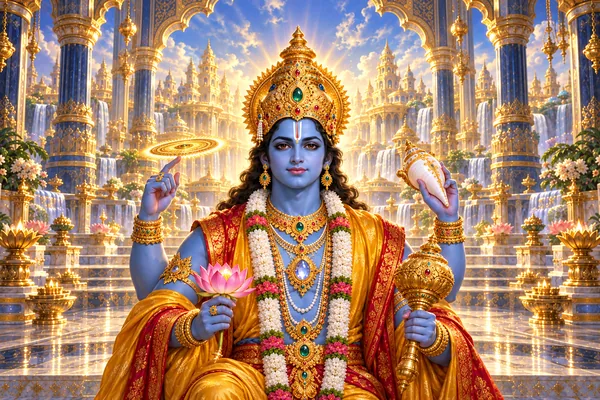
Preserving capacity depends upon Shakti in this account.
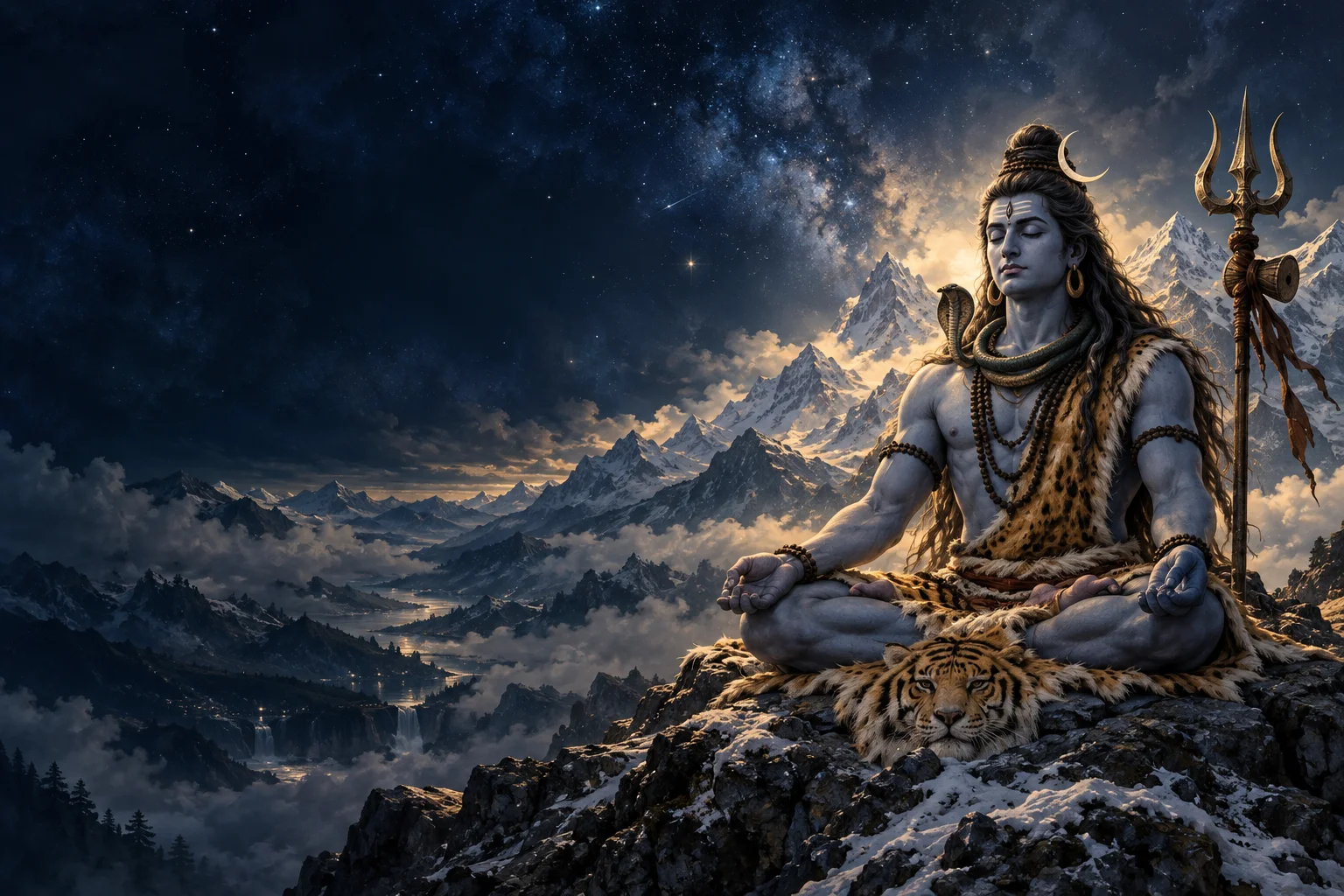
Dissolving capacity depends upon Shakti in this account.
Shakti accompanies the primordial manifestation.