
THE LIVING ARCHIVE
About Himavat
The Shiva Purana distinguishes Himavat’s immovable mountain form from his living divine form. The mountains are a region of forests, animals, minerals and places of austerity; the personal form allows their lord to act as a husband, devotee and father. These are two aspects of one mountain identity.
Himavat marries Mena in a ceremony attended by divine beings and sages. Their household subsequently becomes a setting for sustained worship of Shiva and the goddess. The relationship is not merely a royal pedigree: the family’s devotion leads directly into the story of Parvati’s birth.
AT A GLANCE
Identity & Context
- Identity
- Celestial Being
- Form
- Lord of the Himalaya and Father of Parvati
- Tradition
- Puranic and Epic Traditions
- Also Known As
- Himavan · Himalaya
THE STORY
Life & Stories
ROLE & ESSENCE
Attributes & Significance
Himavat gives a personal and familial form to the Himalaya’s sacred presence. The same mountain realm that shelters austerity becomes the home from which Parvati approaches her own ascetic path and marriage. Geography, devotion and divine family are connected through his identity.
TRADITION & MEANING
Traditions & Interpretations
The father of Parvati is a divine mountain being, not simply a mortal ruler of a Himalayan kingdom. A landscape entry for the Himalaya may describe the same sacred region, but it does not replace the personal relationships of Himavat’s family.
From the Sacred Texts
Explore the sacred texts behind these stories in the Suvarnaveda library.
FOLLOW THE THREADS
Connected Cards
4 connected profiles. Every path leads to an original record.
Characters & Cosmic Entities4

Himavat and Mena are the parents in Parvati’s birth account.
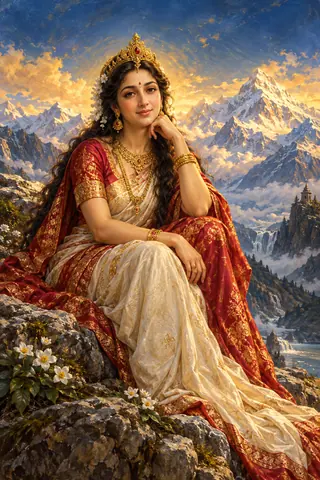
Parvati is his daughter and the goddess welcomed into his household.

Mainaka is named among his mountain children.
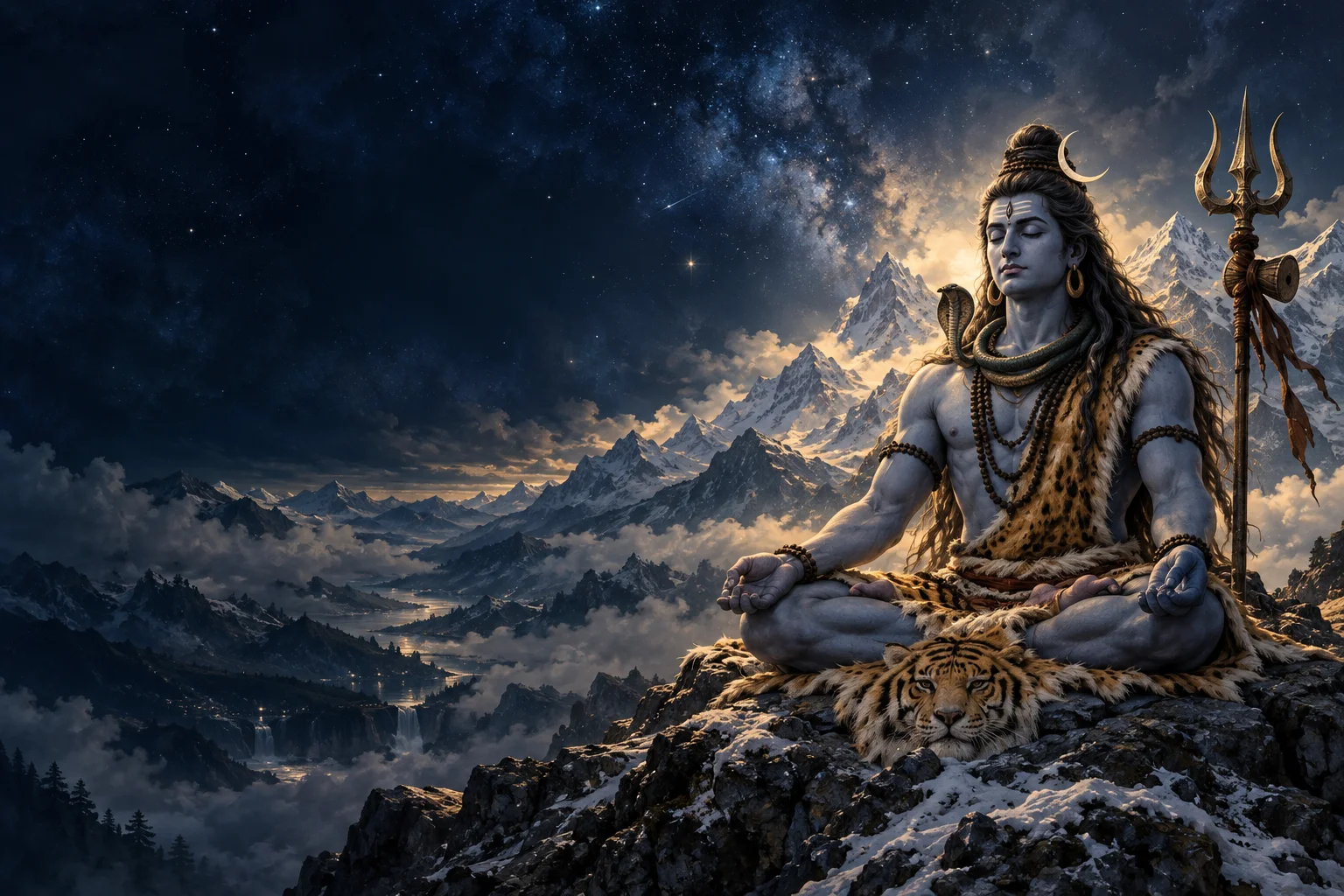
Shiva becomes his son-in-law through Parvati’s marriage.