THE LIVING ARCHIVE
About Tripura Destruction
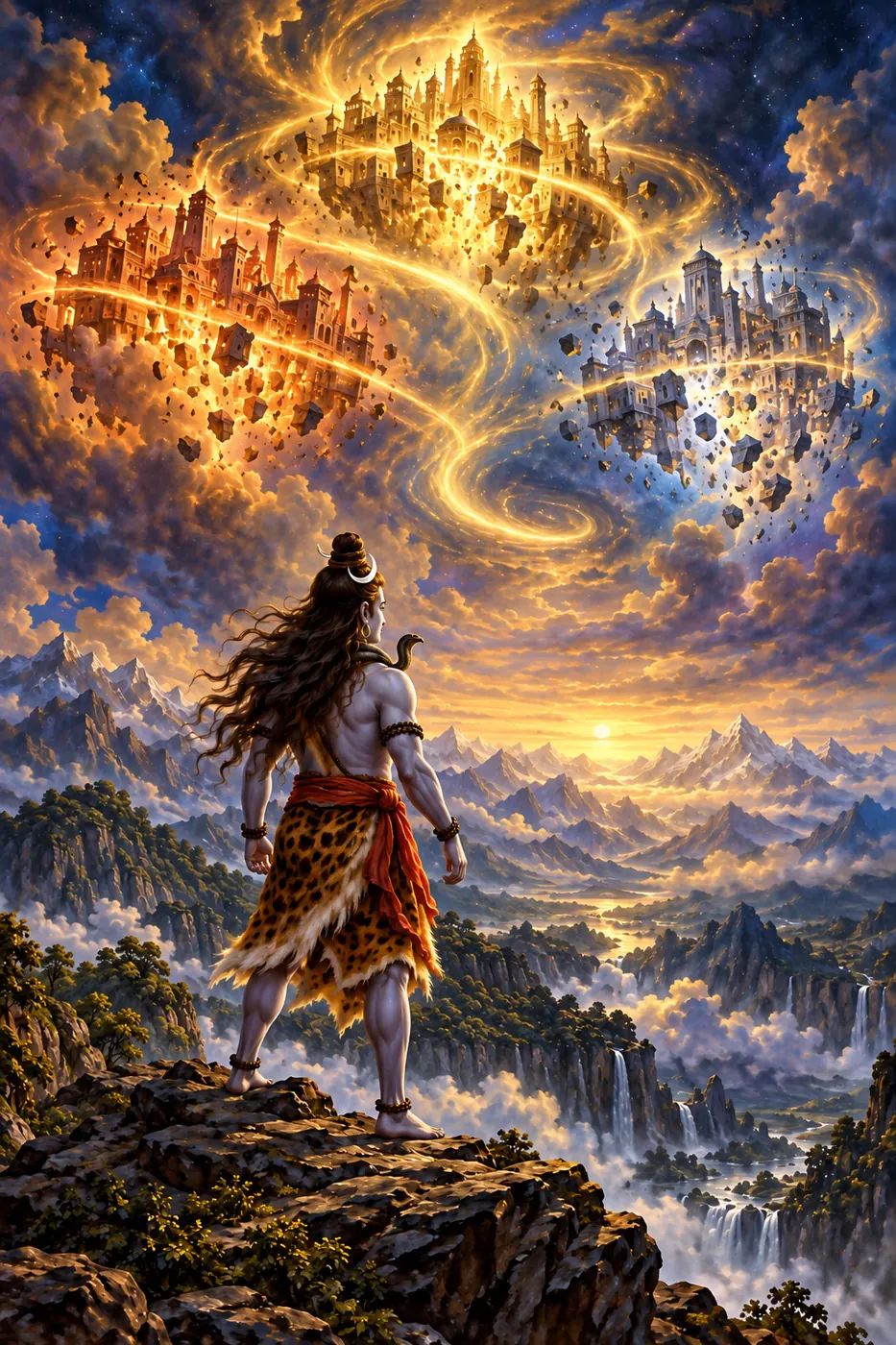
The three rulers are Tarakaksha, Kamalaksha and Vidyunmalin, sons of Taraka. After severe austerities they ask Brahma for invulnerability. When absolute immunity is refused, they choose a more elaborate protection: three mobile cities that will become vulnerable together only at a rare conjunction.
Maya, the accomplished Danava architect, constructs the cities in gold, silver and iron. He is the named craftsman in this story, distinct from Maya as a philosophical principle of cosmic appearance. The rulers occupy the cities and extend their power until the gods seek a means of ending their oppression.
More About Tripura Destruction
Shiva’s destruction of the three cities connects divine weapons, the asuras and Maya in Shaiva and epic traditions.
AT A GLANCE
Identity & Context
- Identity
- Event
- Tradition
- Hindu religious traditions
THE STORY
Life & Stories
ROLE & ESSENCE
Attributes & Significance
The imagery joins multiplicity and unity: three cities, many divine contributors and a single final arrow. Its drama lies in bringing dispersed forces into the precise relationship needed to overcome a power that ordinary attacks cannot reach.
Event Overview
Shiva’s destruction of the three cities connects divine weapons, the asuras and Maya in Shaiva and epic traditions.
Textual Setting
Epic / Puranic narrative; use the linked text and identified edition.
Participants, Objects & Places
The connected records below are grouped by category and link to their original canonical profiles.
Sequence & Chronology
Narrative sequence is distinct from an established modern historical date.
Tradition Notes
Retellings, details and emphasis differ. Follow the primary-text reference and distinguish its own commentary.
Archive Classification Notes
Original archive annotations are retained here. The current playable classification is shown in the side panel.
- Tradition Dependence
- High — compare the identified textual or regional account.
TRADITION & MEANING
Traditions & Interpretations
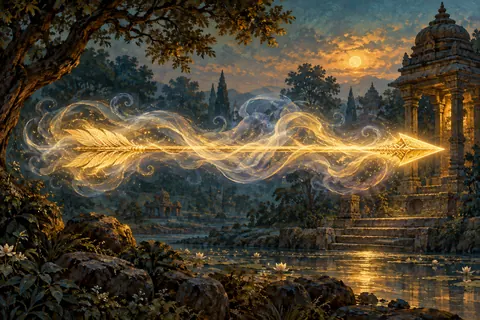
The account gives the gods distinct roles in the victory. Brahma drives the chariot, while Agni, Soma and Vishnu form the shaft, head and point of the arrow. The combined imagery presents Shiva’s decisive act through a world of divine cooperation.
The Mahabharata tells this story while discussing the value of a capable charioteer. Brahma's role at Shiva's reins therefore connects the divine victory to the human battlefield: the account presents the driver, vehicle and combined weapon as contributors to the decisive shot.
From the Sacred Texts
Explore the sacred texts behind these stories in the Suvarnaveda library.
FOLLOW THE THREADS
Connected Cards
11 connected profiles. Every path leads to an original record.
Characters & Cosmic Entities7
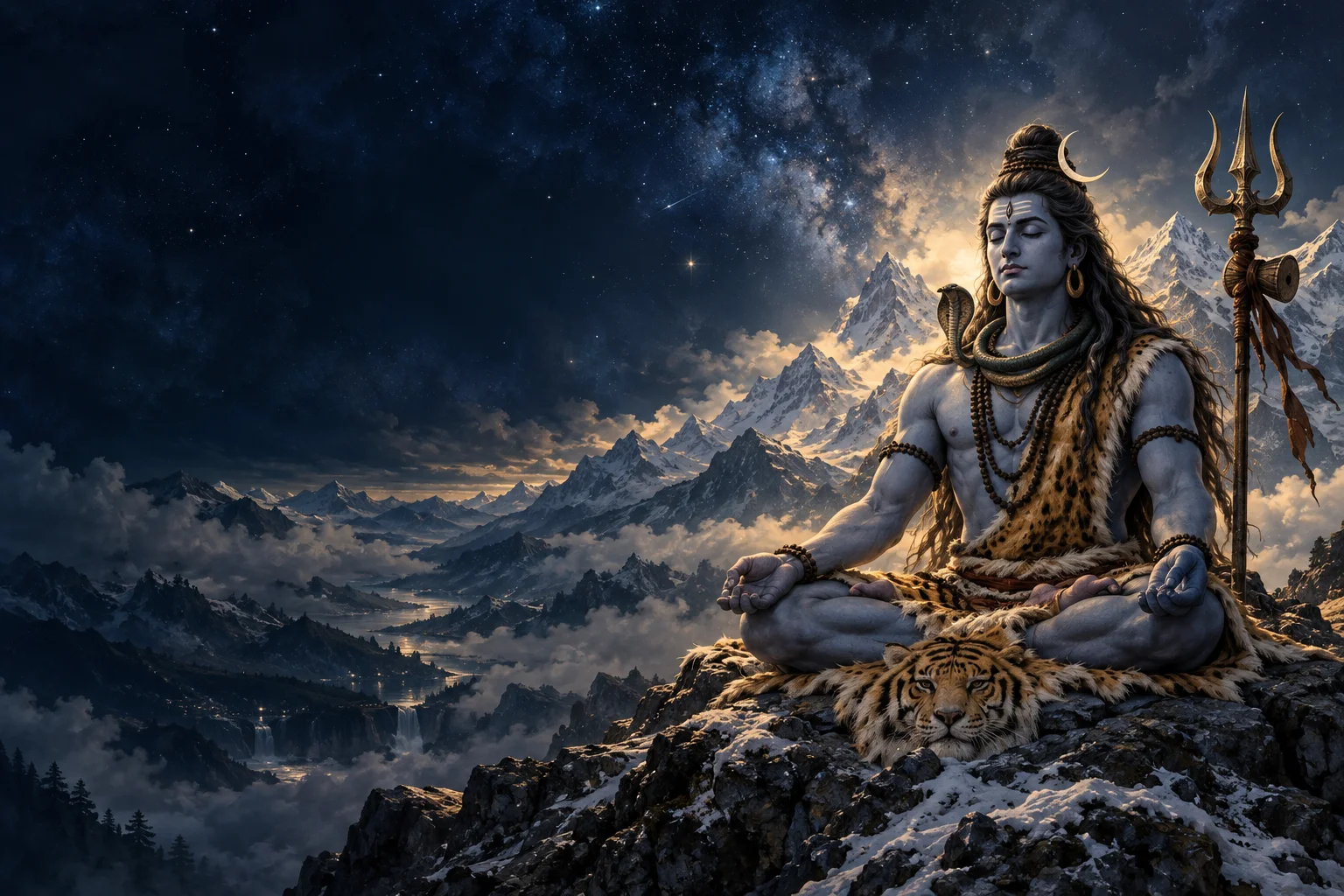
Shiva releases the decisive single arrow.

Maya constructs the three cities destroyed by Shiva.
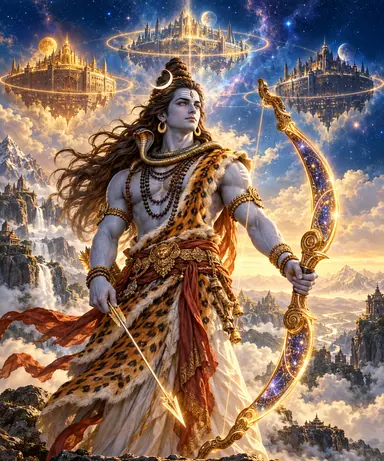
The manifestation belongs to Tripura’s destruction.
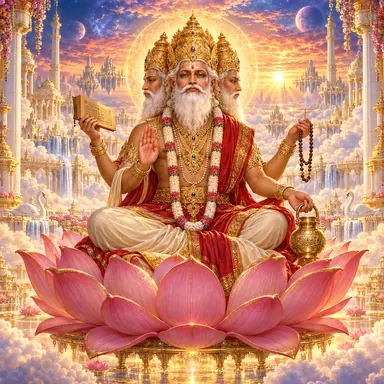
Brahma grants the protection around which the conflict is structured.
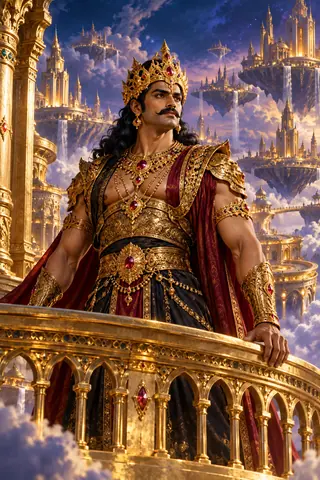
Tarakaksha rules the golden city in the three-city account.
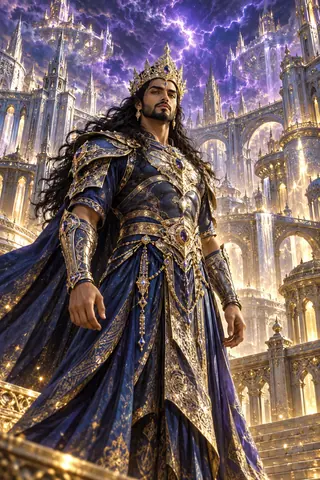
Vidyunmali rules the iron city; the Mahabharata spelling is Vidyunmalin.
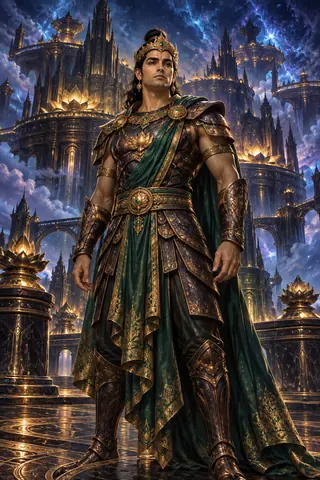
Kamalaksha rules the silver city.