 Event
Hindu religious traditions
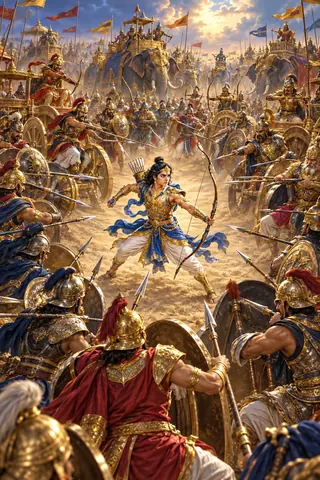
Abhimanyu and the Chakravyuha
Abhimanyu enters the battle formation and is killed amid the coordinated resistance of the opposing warriors.
Unranked
Preparing the next part of Suvarnaveda.
THE INTERCONNECTED ARCHIVE
One discovery leads to another. Find a deity, follow a story, or explore a collection.
Explore Families & Lineages →EventHindu religious traditions
Abhimanyu enters the battle formation and is killed amid the coordinated resistance of the opposing warriors.
 Event
Hindu religious traditions
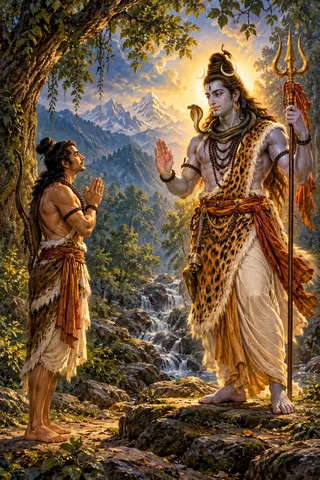
Arjuna’s ascetic effort, confrontation with Shiva and subsequent divine gifts form a connected sequence in Vana Parva.
 Event
Hindu religious traditions
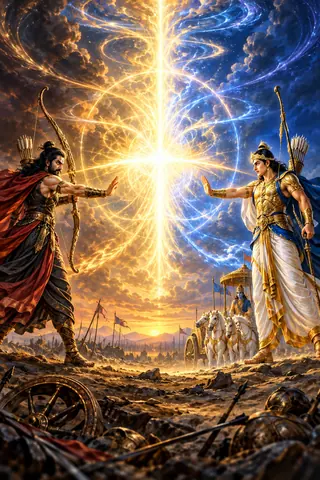
Ashwatthama and Arjuna deploy formidable Brahma weapons after the night attack; withdrawal, restraint and the threat to Uttara’s unborn child are central.
 Event
Hindu religious traditions
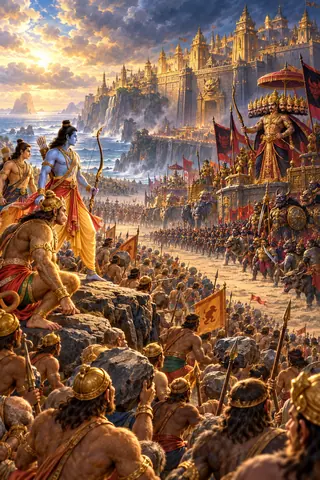
Rama’s forces and Ravana’s army meet in Lanka. The narrative brings Hanuman, Indrajit, divine weapons and the medicinal-herb journey together.
 Event
Hindu religious traditions
Arjuna’s crisis before battle opens the dialogue in which Krishna teaches action, devotion, knowledge and spiritual discipline.
 Event
Hindu religious traditions
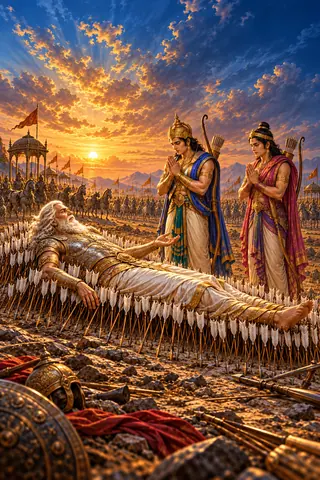
Bhishma falls in battle with Shikhandin and Arjuna central to the episode; his later teachings remain part of the Mahabharata.
 Event
Hindu religious traditions
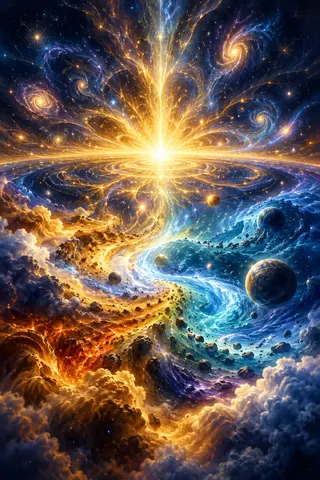
Cosmic creation has multiple accounts across Vedic and Puranic sources; this node links their shared themes without declaring one uniform sequence.
 Event
Hindu religious traditions
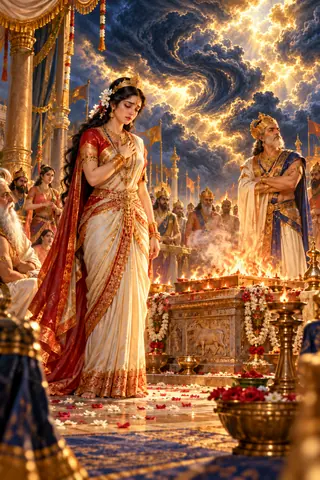
The sacrifice of Daksha, Sati’s response and its destruction form a major Shaiva narrative with varying accounts.
 Event
Hindu religious traditions
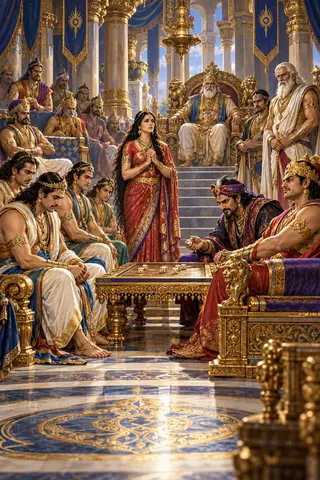
The dice game at the Kuru court leads to Draupadi’s ordeal and the Pandavas’ exile; it is a turning point in the epic’s ethical conflict.
 Event
Hindu religious traditions
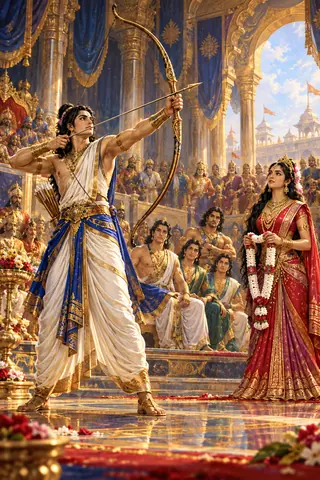
The contest for Draupadi’s marriage brings Arjuna and the Pandavas into the political world of Panchala.
 Event
Hindu religious traditions
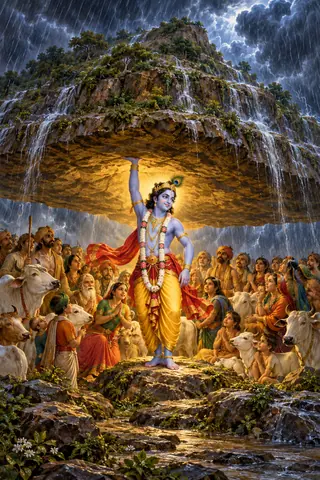
Krishna shelters the pastoral community beneath Govardhana in the account of Indra’s storm.
 Event
Hindu religious traditions
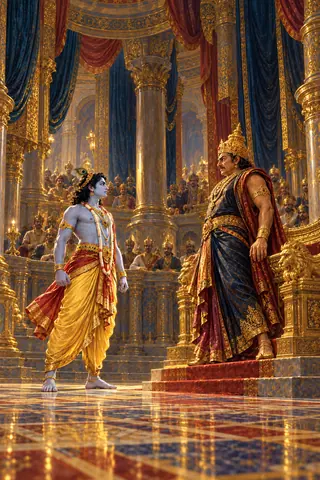
Krishna’s confrontation with Kamsa culminates the movement from the pastoral childhood narrative to Mathura.
 Event
Hindu religious traditions
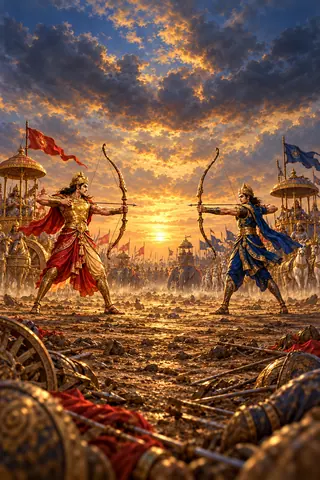
The final confrontation of Karna and Arjuna culminates in Karna’s death; the account must be read in its battlefield and ethical context.
 Event
Hindu religious traditions
The eighteen-day Kuru war joins epic characters, divine weapons, battlefield teachings and the consequences of kinship conflict.
 Event
Hindu religious traditions
Vishnu’s Narasimha manifestation confronts Hiranyakashipu and protects Prahlada in a central devotional narrative.
 Event
Hindu religious traditions
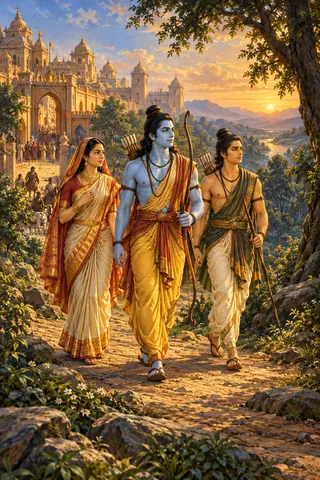
Rama leaves Ayodhya with Sita and Lakshmana; Bharata’s response and the forest journey shape the Ramayana’s central movement.
 Event
Hindu religious traditions
Gods and asuras churn the ocean seeking nectar. Kurma, Mandara and Vasuki, the arising treasures and the distribution of Amrita belong to this narrative.
 Event
Hindu religious traditions
Ravana abducts Sita after the events surrounding Maricha’s deer form; Jatayu’s resistance belongs to this narrative.
 Event
Hindu religious traditions
Shiva’s destruction of the three cities connects divine weapons, the asuras and Maya in Shaiva and epic traditions.
 Event
Hindu religious traditions
Vamana asks Mahabali for three paces of land; the account links cosmic sovereignty, devotion and Bali’s protected dwelling in Sutala.
 Event
Hindu religious traditions
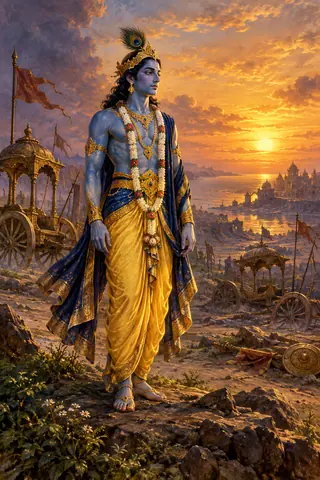
The destruction of the Yadavas and the departure of Krishna close a major era of the epic narrative.
Master Power Ranking is an editorial classification. Traditions and texts may offer different accounts of divine power.