THE LIVING ARCHIVE
About Badrinath
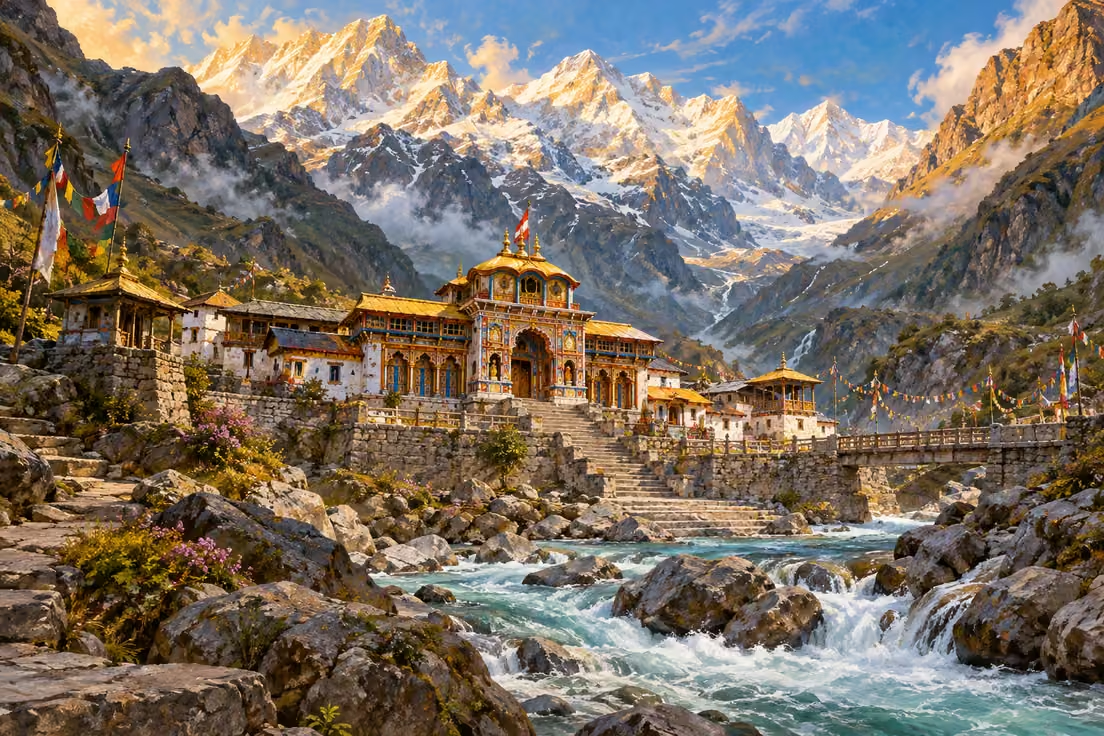
The temple’s principal black stone image has four arms: two hold the conch and discus, familiar emblems of Vishnu, while the others rest in meditation. Its inner sanctuary is approached through halls for ritual and assembly. Images of Nara-Narayana, Narada, Uddhava and Kubera place the central deity among figures connected with the shrine’s devotional traditions.
More About Badrinath
The Himalayan Vishnu pilgrimage centre is associated with Nara-Narayana and the northern Char Dham tradition.
AT A GLANCE
Identity & Context
- Identity
- Location
- Form
- Living sacred geography
- Tradition
- Hindu religious traditions
THE STORY
Origins & Stories
ROLE & ESSENCE
Attributes & Significance
For this reason the place is associated with both worship and disciplined reflection. Pilgrims approach a visible image of Vishnu, while the Uddhava narrative presents the same sacred region as a setting in which knowledge should become a settled way of life. Bathing, restraint and remembrance belong together in that account.
Ancient / Sacred Name
Badrinath
Modern Identification
Uttarakhand, India
Identification Confidence
Confirmed physical location
Country / Region
Uttarakhand, India
Associated Figures
Sacred Significance & Narrative
The Himalayan Vishnu pilgrimage centre is associated with Nara-Narayana and the northern Char Dham tradition.
Events / Battles
See the linked narrative records.
Historical / Archaeological Evidence
This overview does not identify a site-specific excavation report. A living physical place does not prove every event traditionally associated with it.
Textual Geography Notes
Ancient regions, literary geography and modern pilgrimage identifications are distinguished.
Tradition Notes
Names and accounts can vary by recension, region and commentary. This entry distinguishes attested details from identifications still requiring a passage-level source.
Archive Classification Notes
Original archive annotations are retained here. The current playable classification is shown in the side panel.
- Tradition Dependence
- High — compare the identified textual or regional account.
- Kingdom / Dynasty
- Not established in the passage; no additional claim is made here.
TRADITION & MEANING
Traditions & Interpretations
Nara-Narayana are divine sages, described as the sons of Dharma and Murti, whose appearance brings peace to the world. Their presence in Badrinath’s tradition connects the temple with a form of divinity expressed through sustained austerity and tranquillity.
Names and accounts can vary by recension, region and commentary. This entry distinguishes attested details from identifications still requiring a passage-level source.
From the Sacred Texts
Explore the sacred texts behind these stories in the Suvarnaveda library.
FOLLOW THE THREADS
Connected Cards
4 connected profiles. Every path leads to an original record.
Characters & Cosmic Entities3
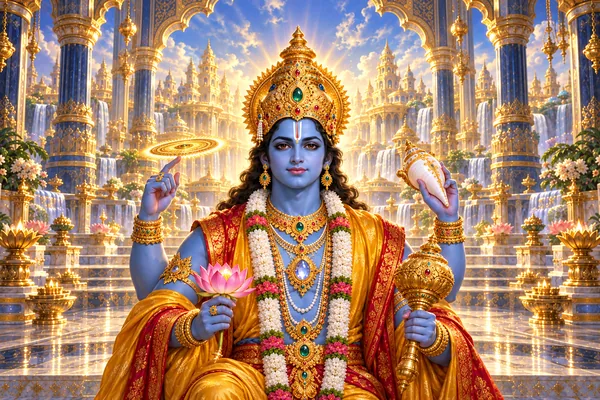
Vishnu is worshipped as the seated Badarinarayana.

The divine sages are closely associated with the shrine and its contemplative tradition.
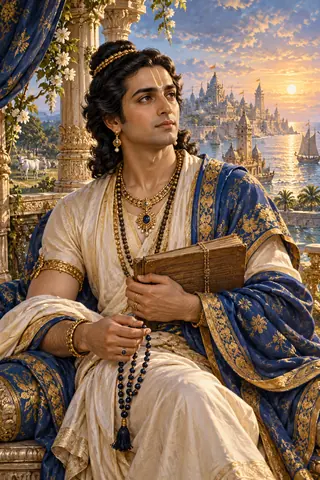
Krishna sends Uddhava to Badarika to practise his teaching.
Earthly Sacred Locations1

The Purana connects the worship of Kedareshvara with the sages of Badarika.