THE LIVING ARCHIVE
About Rajagriha
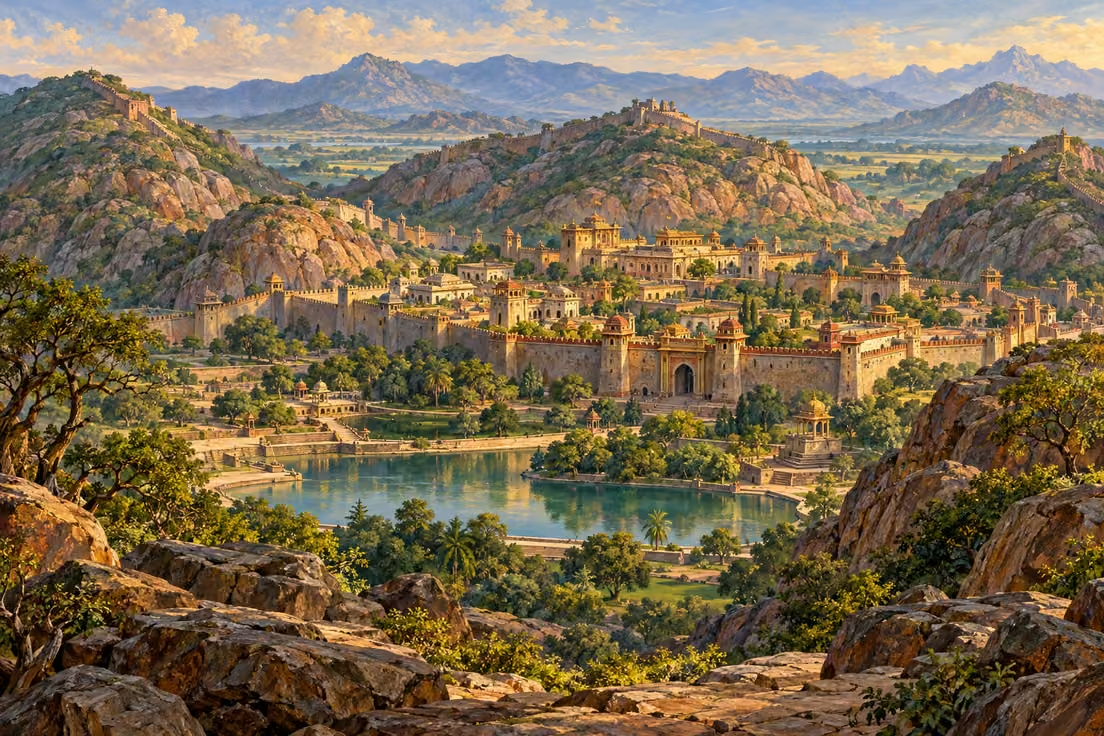
The capital is distinct from Magadha, the larger kingdom. Girivraja evokes an enclosure of hills, matching the city's setting. Its natural protection helps explain Jarasandha's confidence and gives the challengers a formidable place to enter before they confront him.
The description also presents an inhabited city. Krishna notices herds, a plentiful supply of water, well-arranged mansions and surrounding woods. Inside, shops offer food, flowers and other goods. These details give the capital a public life beyond the palace and the imprisoned rulers.
More About Rajagriha
The ancient Magadhan centre traditionally connected with Jarasandha’s royal city.
AT A GLANCE
Identity & Context
- Identity
- Location
- Form
- Mahabharata geography
- Tradition
- Hindu religious traditions
- Also Known As
- Rajgir
THE STORY
Origins & Stories
ROLE & ESSENCE
Attributes & Significance
Rajagriha provides the setting in which Jarasandha's power is challenged. Its hills protect him, its wealth supports his court, and its confinement holds the rival kings whom the visitors seek to free. Their release changes the capital's political role while its residents and royal administration remain after the duel.
Ancient / Sacred Name
Rajagriha
Modern Identification
Rajgir, Bihar, India
Identification Confidence
Strong traditional identification
Country / Region
Rajgir, Bihar, India
Kingdom / Dynasty
Magadha; Jarasandha in epic narrative
Associated Figures
Sacred Significance & Narrative
The ancient Magadhan centre traditionally connected with Jarasandha’s royal city.
Events / Battles
See the linked narrative records.
Historical / Archaeological Evidence
This overview does not identify a site-specific excavation report. A living physical place does not prove every event traditionally associated with it.
Textual Geography Notes
Ancient regions, literary geography and modern pilgrimage identifications are distinguished.
Tradition Notes
Names and accounts can vary by recension, region and commentary. This entry distinguishes attested details from identifications still requiring a passage-level source.
Archive Classification Notes
Original archive annotations are retained here. The current playable classification is shown in the side panel.
- Tradition Dependence
- High — compare the identified textual or regional account.
TRADITION & MEANING
Traditions & Interpretations
Jarasandha's welcome creates a particular difficulty for the visitors' disguise. He honours the role they appear to occupy while noticing bodily signs of another occupation, so the palace encounter develops through questioning before the challenge becomes combat.
The gathering after the victory includes both the released kings and the defeated ruler's son. It shows two immediate results in the same place: captivity ends, and arrangements are made for the kingdom's continued government.
Rajagriha's historical and archaeological importance extends beyond this episode. Ancient descriptions, later settlements and present-day Rajgir must be related through appropriate evidence; the epic is not a measured plan of the surviving remains.
Names and accounts can vary by recension, region and commentary. This entry distinguishes attested details from identifications still requiring a passage-level source.
From the Sacred Texts
Explore the sacred texts behind these stories in the Suvarnaveda library.
FOLLOW THE THREADS
Connected Cards
3 connected profiles. Every path leads to an original record.
Characters & Cosmic Entities2

Jarasandha receives the challengers at his court.
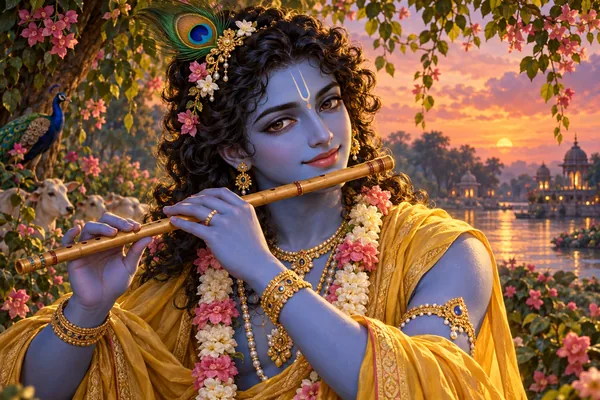
Krishna releases the confined rulers after Jarasandha’s defeat.
Earthly Sacred Locations1
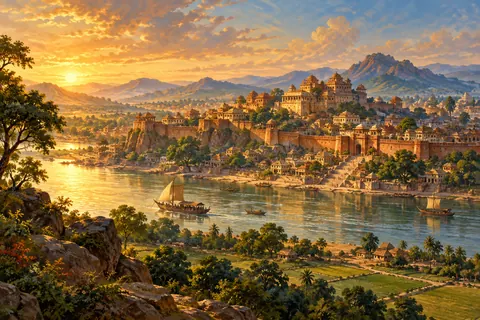
The narrative centres on the hill-protected capital Girivraja.