01Arjuna Is Welcomed by Indra
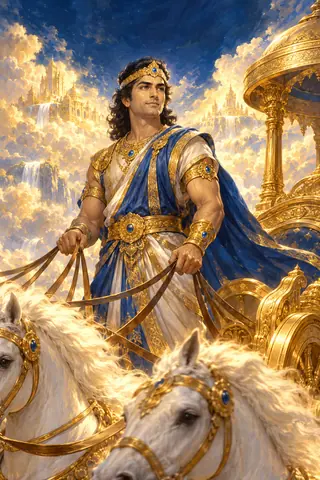
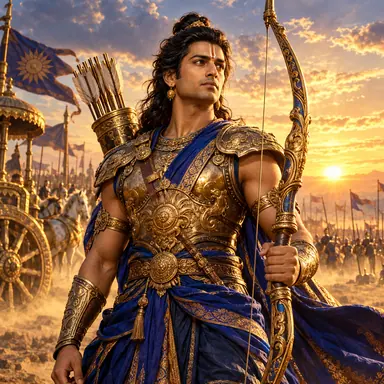
Arjuna greets the inhabitants of the celestial assembly and salutes Indra, his divine father. Indra embraces him and seats him beside himself on part of his own throne. Gandharvas perform music and Apsaras dance as the assembly welcomes the visitor. The honor is both a father’s welcome and a public reception at the divine court.
Indra touches and looks upon his son with delight while the surrounding company celebrates. The description of the city thus leads to a meeting with a clear personal purpose: Arjuna has come to see his father and is received among the beings of his court.
02Narada Describes the Celestial Assembly
Narada describes Indra’s assembly to Yudhishthira in the Mahabharata. Indra, also called Shakra, sits with his wife Sachi, attended by devas, the gods, and sages. The hall is free from fatigue, grief and fear. Its gathering includes many named inhabitants and personified qualities, giving the court a divine character beyond the ranks of an earthly royal household.
The assembly hall can move through the air. This mobility belongs to the hall itself, while Amaravati is the wider celestial capital. The descriptions concern related settings of different extent: a royal meeting place and the city around it.
03A Radiant Capital Under Threat
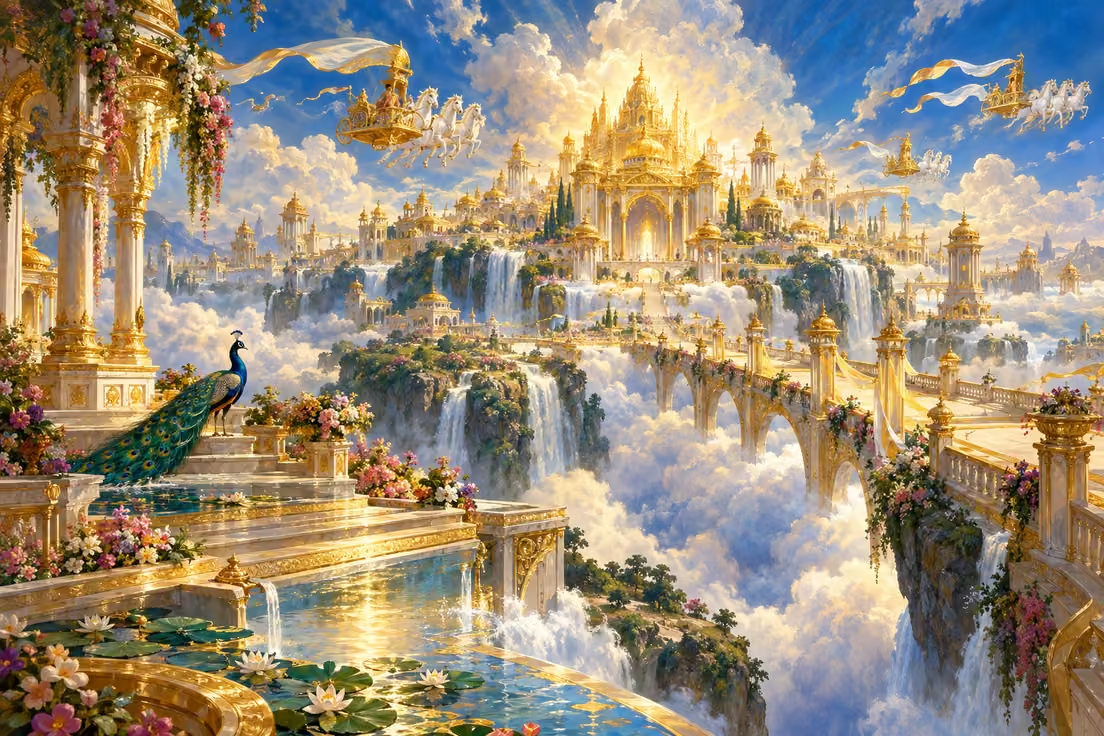
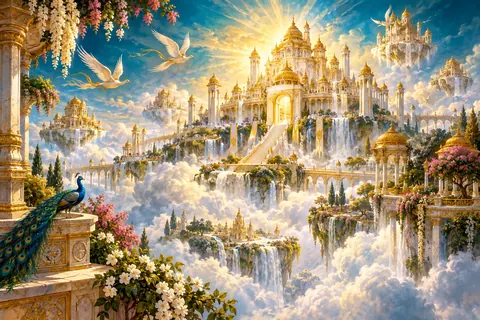
The Bhagavata Purana describes Indra’s capital as the asura king Bali approaches with his army. Gardens and lotus ponds stand among defensive walls, gates, broad roads, assembly houses, decorated palaces and banners. The divine craftsman Vishvakarma is named as its builder. Music, birds, Gandharvas, Apsaras and flower-scented breezes fill the inhabited city.
Bali’s army surrounds the capital, and Indra asks his adviser Brihaspati how to respond. The city’s defenses and abundance have not prevented the threat. Its detailed description establishes what is endangered when a rival ruler arrives at the center of Indra’s kingdom.