Hindu religious traditions
Bhringiभृङ्गी
The Shaiva attendant
Bhringi is a Shaiva attendant and devotee whose partiality toward Shiva is challenged by Parvati in a Skanda Purana narrative.
Bhringi at Veerabhadra Temple, Lepakshi — photograph by Bikash Raman Das (Bikashrd), Wikimedia Commons, CC BY-SA 4.0.STORY & TRADITION
The world of Bhringi.
Bhringi appears among Shiva’s attendants in Shaiva traditions. In the Kedara-khanda account of Shiva and Parvati’s dice dispute, he defends Shiva and Parvati challenges his perception of a division between the divine pair. The cited passage includes a curse making him fleshless. The well-known three-legged form belongs to his iconographic and regional narrative traditions. Those later visual expressions should be distinguished from each precise textual passage. His story offers a way to explore Shaiva accounts of devotion and the relationship of Shiva and Shakti. The site’s numerical rank is editorial and does not establish his standing in every Hindu tradition.
Characters & Cosmic Entities
Details & context.
- Tradition dependence
- High — compare the identified textual or regional account.
- Religious role
- Shaiva attendant and devotee.
- Realm association
- Kailasa
- Key narrative
- Skanda Purana, Kedara-khanda 34.96–114.
- Family
- No universal family account established in the cited passage.
- Iconography
- A three-legged skeletal ascetic in regional representations.
- Tradition notes
- Regional retellings expand the account in different ways.
FOLLOW THE THREADS
Connected worlds.
4 connected profiles. Every path leads to an original record.
Realms & Cosmic Worlds1
Characters & Cosmic Entities2
VISUAL ARCHIVE
Art & iconography.
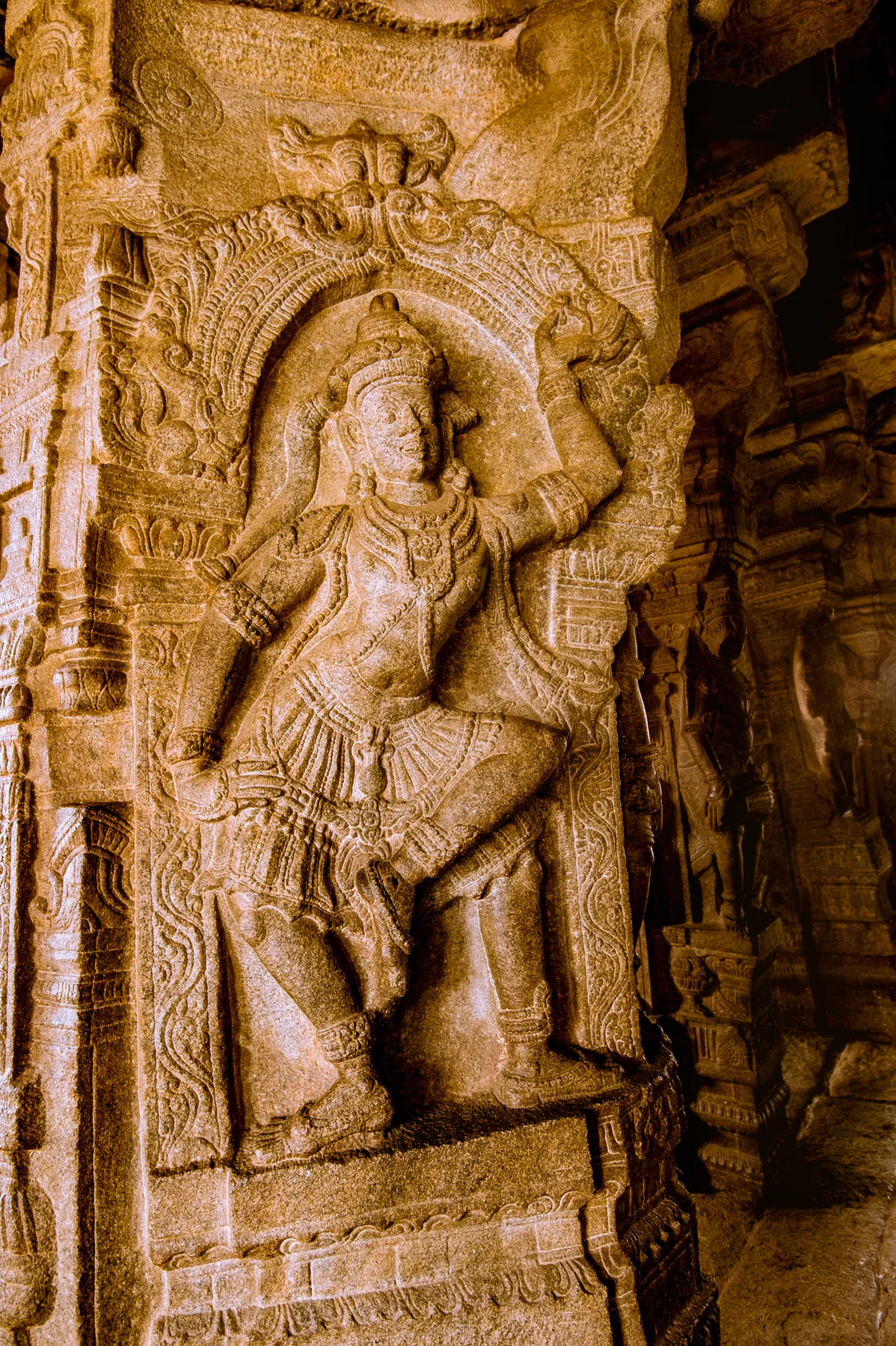
Image credit.
Bhringi at Veerabhadra Temple, Lepakshi — photograph by Bikash Raman Das (Bikashrd), Wikimedia Commons, CC BY-SA 4.0.
Original source · CC BY-SA 4.0Resized and converted to WebP for the website.
READ THE SOURCES
Texts & references.
Skanda Purana — Shiva and Parvati’s dice game
Kedara-khanda 34.96–114.
Shaiva · Translations and numbering vary by edition. Separate the primary text from its commentary.Reference overview. Consult the identified text and passage; unestablished fields are explicitly marked.