01Choosing the Forest of Austerity
Parvati explains her intention through her companions and then addresses her mother herself. Mena asks her to remain at home, where sacred places and worship are already available. Parvati nevertheless chooses the demanding path of penance. The disagreement gives the episode human feeling: maternal care and spiritual determination are both present, even when they cannot immediately be reconciled.
02The Disguised Visitor
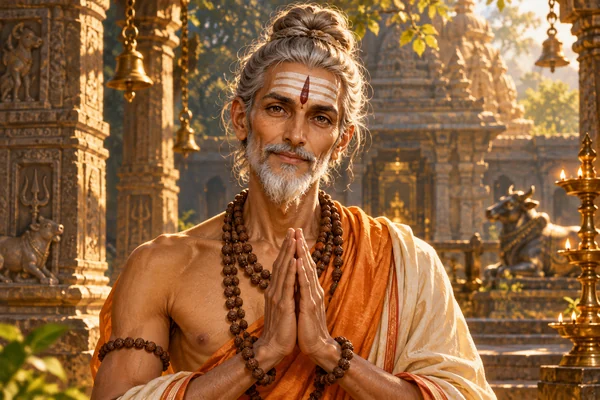
Shiva approaches the place of Parvati’s penance as an ascetic with matted hair, under the pretext of testing her. The encounter places her commitment before an unexpected challenge. Divine recognition does not come simply because a seeker has declared a wish; the story makes steadfastness and discernment part of the movement toward union.
03A Wedding Beyond Genealogy
During the wedding rites, Himavat requests the bridegroom’s lineage. The sage Narada explains why the ordinary question cannot contain Shiva’s nature: the Lord freely assumes names and forms yet exceeds a human family pedigree. The familiar ceremony asks for a lineage, but its bridegroom is described as beyond a human family pedigree. Parvati’s marriage makes the divine approachable without reducing it to the conventions of an earthly household.
04The Victorious Son Returns
After her son Kartikeya’s victory over the asura Taraka, the gods accompany him to Kailasa. He bows to Shiva and Parvati, and his return becomes a scene of family recognition and cosmic celebration. The mother who had undertaken severe austerity now appears within a household whose relationships also carry consequences for the protection of the worlds.