
THE LIVING ARCHIVE
About Asi
Asi is also a Sanskrit word for a sword. In this account it names the primordial blade whose history explains the place of armed force in maintaining dharma, the duties and order that sustain the world. The account gives this sword a particular origin and succession of keepers.
Nakula, one of the five Pandava brothers, asks the elder Bhishma why the sword matters. He points out that a warrior can still defend himself when his bow breaks or his horses fail. Bhishma answers with both a creation story and instructions about royal punishment.
More About Asi
Asi is the primordial sword of the Mahabharata’s discourse on the origin of the sword.
AT A GLANCE
Identity & Context
- Identity
- Weapon
- Form
- Sword
- Tradition
- Epic / Puranic traditions
THE STORY
Origins & Stories
ROLE & ESSENCE
Attributes & Significance
The sword's transmission gives rulers a responsibility as well as a weapon. Bhishma's account praises the power to overcome destructive opponents, then places limits on its use against subjects. Calling rebuke and fines forms of the sword makes its authority include correction that does not require a physical attack.
Weapon Type
Sword
Powers & Combat Abilities
Asi is the primordial sword of the Mahabharata’s discourse on the origin of the sword.
Tradition Notes
Names and accounts can vary by recension, region and commentary. This entry distinguishes attested details from identifications still requiring a passage-level source.
Archive Classification Notes
Original archive annotations are retained here. The current playable classification is shown in the side panel.
- Tradition Dependence
- High — compare the identified textual or regional account.
- Creator
- Not established in the passage; no additional claim is made here.
- Original Owner
- Not established in the passage; no additional claim is made here.
- Known Wielders / Association
- Not established in the passage; no additional claim is made here.
- Materials / Divine Origin
- Not established in the passage; no additional claim is made here.
- Limitations
- Not established in the passage; no additional claim is made here.
- Famous Uses
- Not established in the passage; no additional claim is made here.
- Victims / Opponents
- Not established in the passage; no additional claim is made here.
- Editorial Power Tier
- Unassigned — weapons are not placed in the 700-being ranking.
- Editorial Rarity
- Divine armament
TRADITION & MEANING
Traditions & Interpretations
The account traces the blade from a divine act of protection into human government. Each new keeper receives something whose purpose has already been stated, so possession does not by itself justify using it as the keeper wishes.
The instructions to Manu explain what restrained punishment means within the story: a ruler must consider the offence, may correct through a rebuke or fine, and must not inflict the harshest penalties for a small fault.
The praise of the sword answers Nakula's particular question about its value. It belongs beside other epic accounts that praise different weapons in their own settings.
Names and accounts can vary by recension, region and commentary. This entry distinguishes attested details from identifications still requiring a passage-level source.
From the Sacred Texts
Explore the sacred texts behind these stories in the Suvarnaveda library.
FOLLOW THE THREADS
Connected Cards
4 connected profiles. Every path leads to an original record.
The Sacred Library1

Characters & Cosmic Entities3
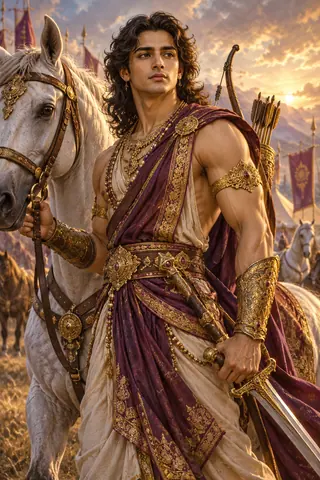
Nakula asks Bhishma about the sword’s origin and value.

Rudra receives the sword from Brahma.
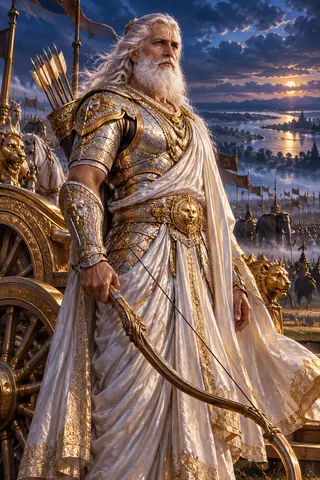
Bhishma relates the sword’s origin and transmission.