01Indra Breaks Vritra’s Obstruction
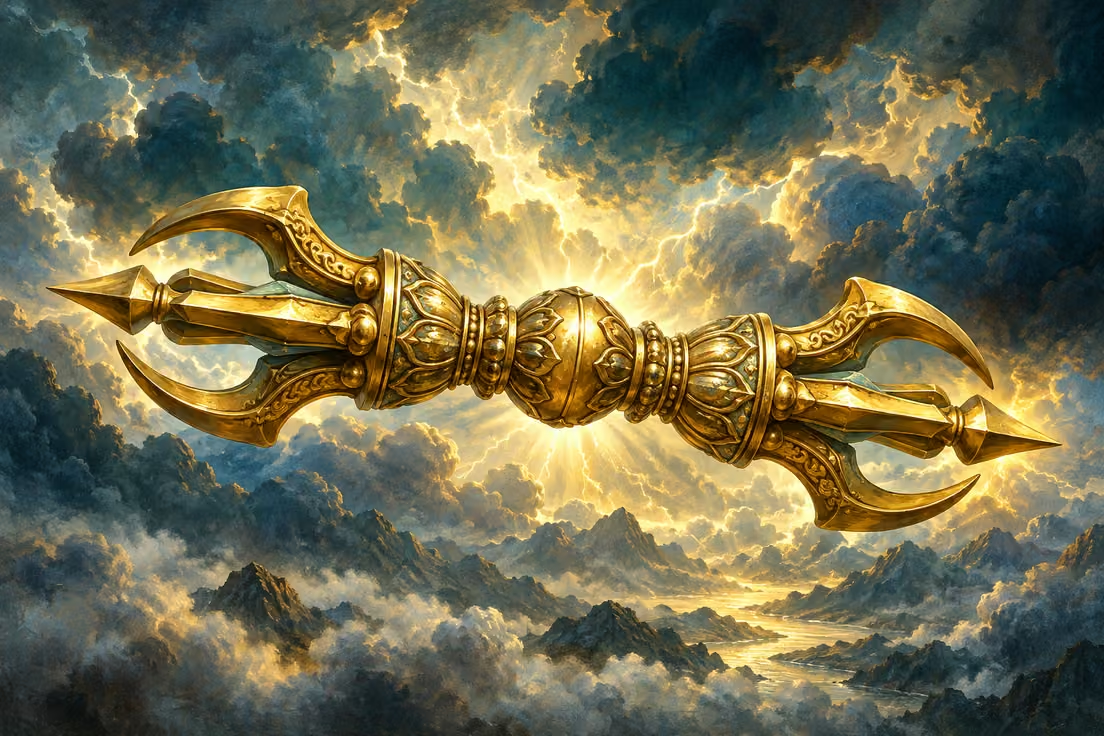
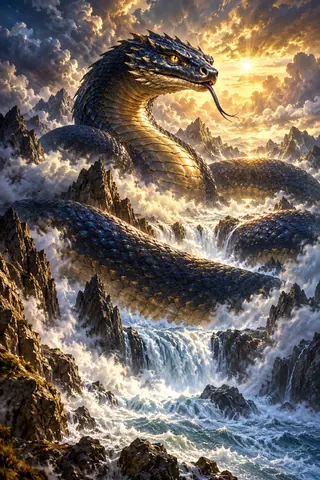
The Rigvedic hymn places the thunderbolt at the heart of Indra’s struggle with the dragon. Vritra lies across the waters; after the blow, the waters pour down toward the sea. The hymn also links the victory with the Sun, Dawn and Heaven. Its images combine battle, weather, rivers and cosmic emergence. They are poetic images joining the renewal of the world with Indra’s victory.
02Dadhichi Gives His Body
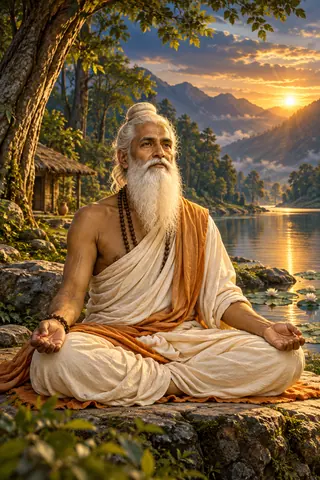
The Bhagavata Purana stages a conversation rather than an immediate surrender. Asked for his body, Dadhichi initially draws attention to the pain of death and the attachment living beings have to embodiment. The devas appeal to his compassion and to the possibility of benefiting others. He agrees, reflects on the body's eventual destruction and relinquishes it through yogic concentration. Vishvakarma prepares the thunderbolt from the bones.
The exchange gives moral weight to the weapon’s material. Dadhichi is a participant who understands and accepts the cost, rather than an anonymous supply of bones. The story’s emphasis on impermanence and service makes the preparation of the vajra an episode about the use of embodied life as well as about the equipment of the gods.
03The Wielder Can Still Falter
Later in the Bhagavata, Vritra attacks fiercely enough to make Indra drop his thunderbolt. Indra is ashamed, but his opponent tells him to take it up and continue. Vritra speaks about the dependence of living beings upon the supreme divine will and the uncertainty of victory. The fight resumes, and the vajra eventually brings about Vritra’s death. The weapon’s strength does not remove Indra’s vulnerability or make him the sole author of the outcome.
04Victory and Its Consequences
The Shanti Parva preserves another account involving Dadhichi’s bones, Vishvarupa and Vritra. Here the creation of the thunderbolt is followed by killings that expose Indra to the consequences of brahmanicide, the killing of a Brahmin, and drive him from heavenly sovereignty. Its sequence differs from the Bhagavata’s. It shows why a celebrated divine victory can also belong to a larger story of guilt, concealment and the limits of kingship.