THE LIVING ARCHIVE
About Ardhanarishvara
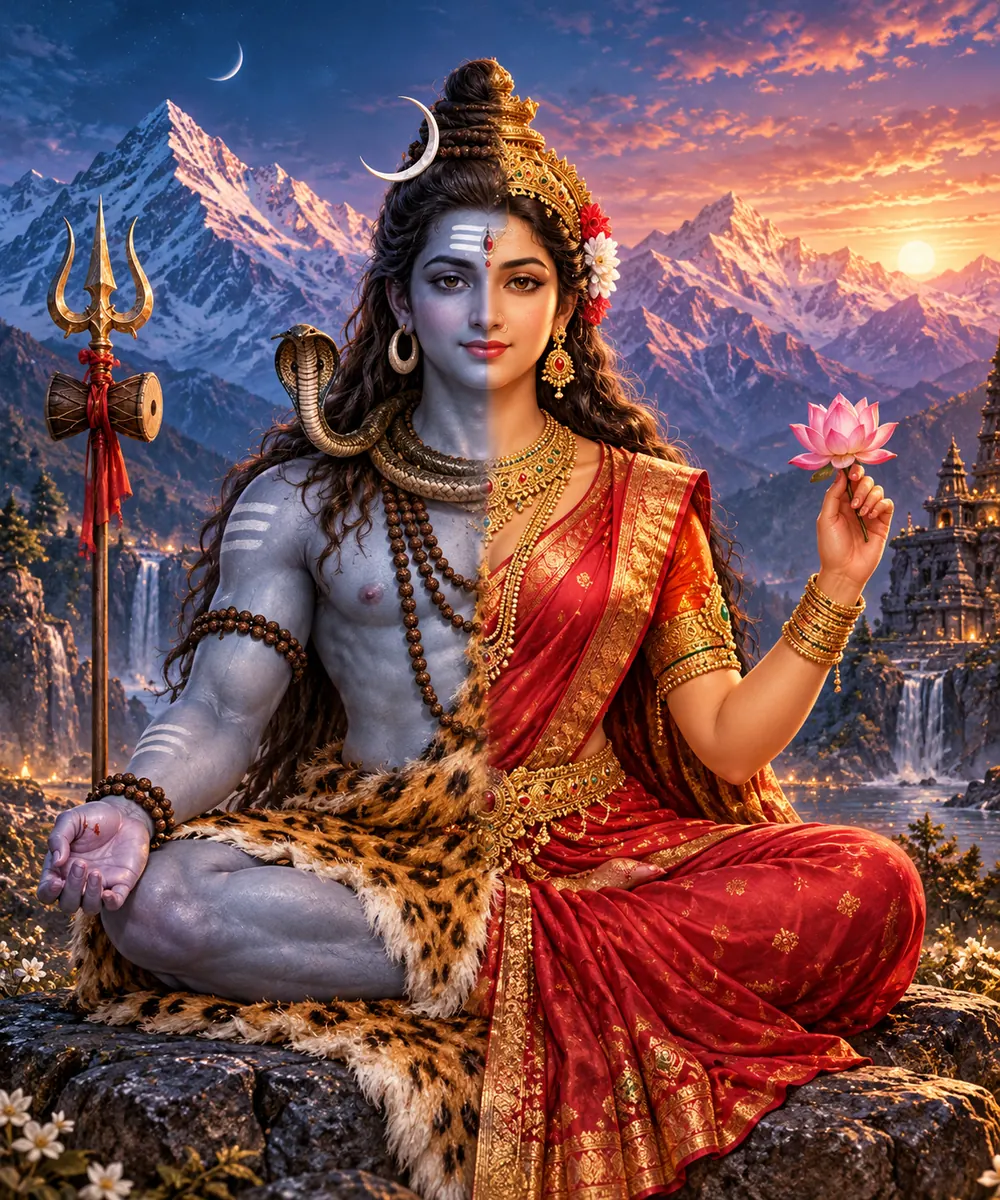
The name is commonly understood as the Lord whose half is woman. It is not a separate child born to Shiva and Parvati, nor simply two deities standing beside each other. The form makes their union bodily, giving visual shape to the dependence of manifestation on both consciousness and power.
Its meaning includes creation but is not exhausted by biological reproduction. In contemplative worship the same form becomes serene, luminous and inwardly present. The combined body can therefore signify the emergence of beings, the inseparability of divine principles and the concentrated presence on which a practitioner meditates.
AT A GLANCE
Identity & Context
- Identity
- Divine Manifestation
- Form
- Shaiva or composite manifestation
- Tradition
- Shaiva · Puranic
- Also Known As
- Ardhanārīśvara
- World & Associations
- Shaiva divine domains
Family Context
The available reference record does not establish a complete family genealogy. No parents, consorts, or descendants are inferred from the name alone.
THE STORY
Life & Stories
Story Connections
- Shaiva accounts of Shiva-Shakti unity
ROLE & ESSENCE
Attributes & Significance
Ardhanarishvara challenges the idea that divine completeness is exclusively masculine or that Shakti is an optional companion added after the world exists. The form’s distinction of halves does not abolish unity, and its unity does not make the feminine disappear. That visual tension is its particular theological strength.
Role
Composite Shiva-Shakti form expressing inseparability of masculine and feminine divinity.
Attributes & Abilities
- Integrated divine power
TRADITION & MEANING
Traditions & Interpretations
Puranic texts differ in the scene through which the united form appears and separates. These are meaningful variants, not evidence for one fixed chronological biography. Devotional readings may stress creation, Shiva-Shakti identity or the mutual dependence of principles without requiring every school to interpret the image identically.
The creation scenes allow the Goddess to appear separately and act, then preserve her unity with Shiva. The meditation places both together in one serene form. The recognizable halves give a visible shape to those connected claims.
From the Sacred Texts
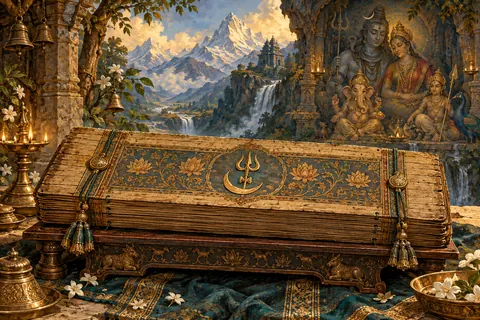
Explore the sacred texts behind these stories in the Suvarnaveda library.
Artwork & Archive Notes
Objects & Emblems
No named weapon or artifact is specified in this profile’s reference record. This does not establish that the figure never used one.
Visual Identity
Where artwork is shown, it is a contemporary illustrative interpretation. This reference record does not establish a fixed portrait, colour scheme, or complete set of iconographic attributes for this figure.
Tradition Note
The accounts belong to Shaiva / Puranic. Genealogy, theological interpretation, and portrayal can differ between texts and regional retellings.
FOLLOW THE THREADS
Connected Cards
4 connected profiles. Every path leads to an original record.
The Sacred Library1
Characters & Cosmic Entities3

The male divine half is Shiva.
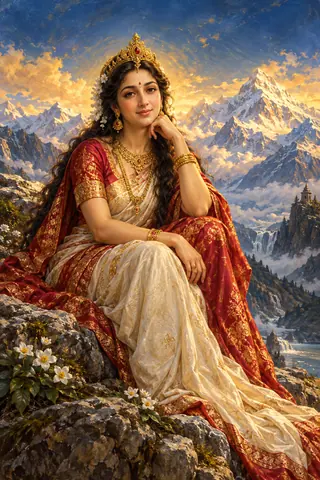
The Goddess’s union with Shiva is central to the form.
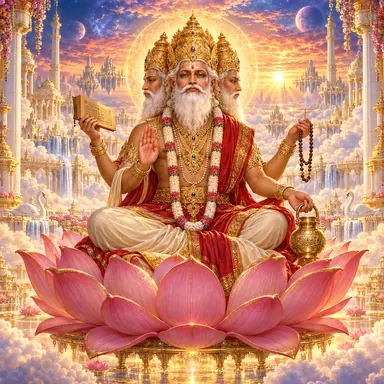
Brahma receives the power needed for continuing creation.