 Deity
The great ascetic
Shiva
Shiva is a central deity of Hindu traditions, associated with asceticism, transformation, and divine power. Shaiva traditions understand him as supreme divinity.
#19 / 929
Preparing the next part of Suvarnaveda.
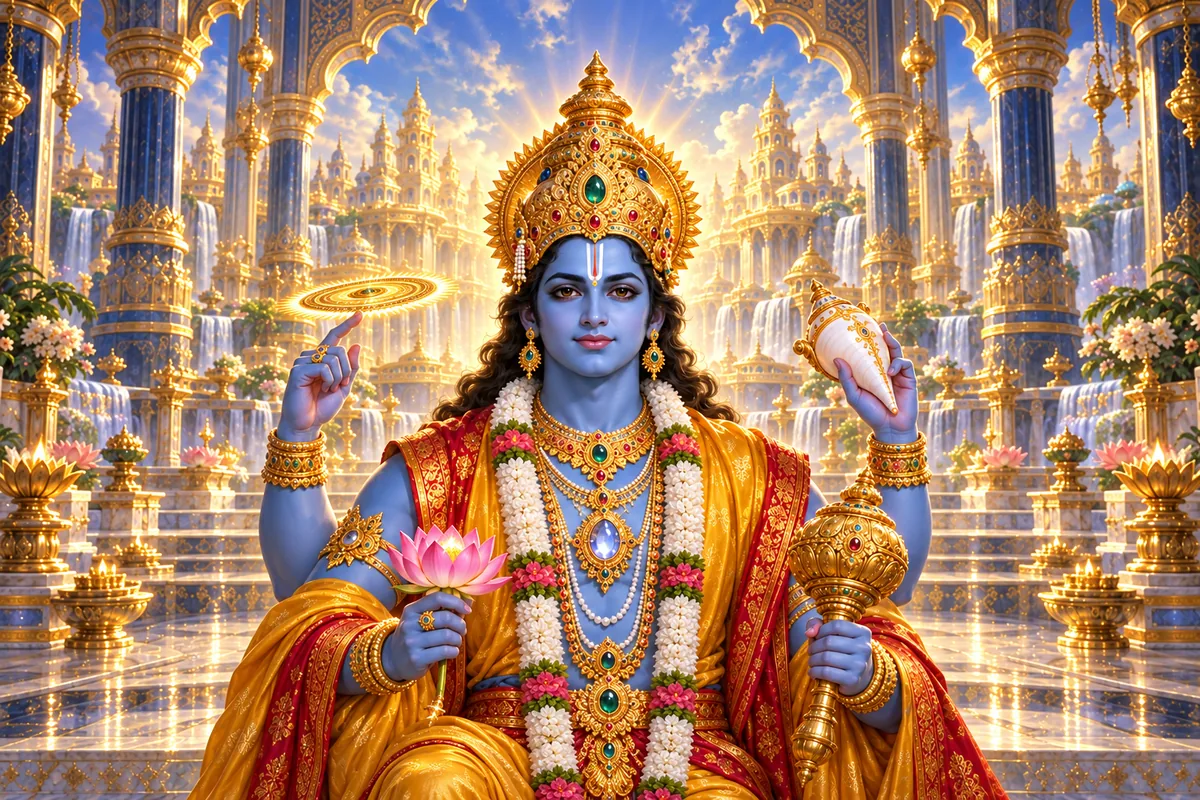 Deity
The great ascetic
Shiva is a central deity of Hindu traditions, associated with asceticism, transformation, and divine power. Shaiva traditions understand him as supreme divinity.
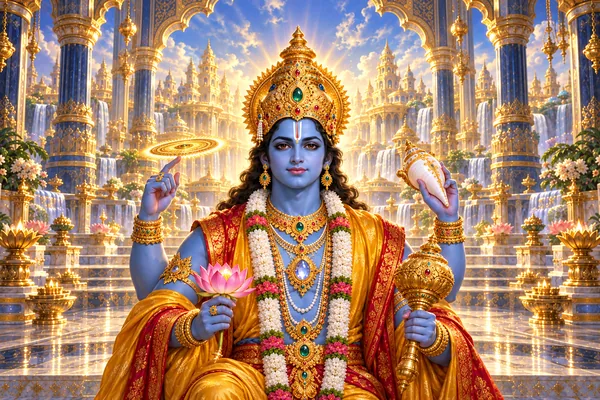 Deity
The cosmic sustainer
Vishnu is central to Vaishnava traditions. In the Vishnu Purana, he is presented as the divine ground of the universe and its preservation.
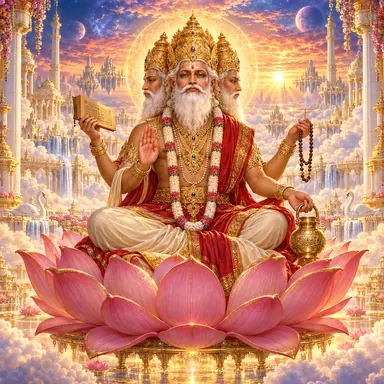 Deity
Creator deity associated with cosmic creation in Puranic traditions
Brahma is the creator deity of Puranic accounts, associated with Vedic knowledge and the unfolding of the cosmos. He is distinct from Brahman, the philosophical term for ultimate reality.
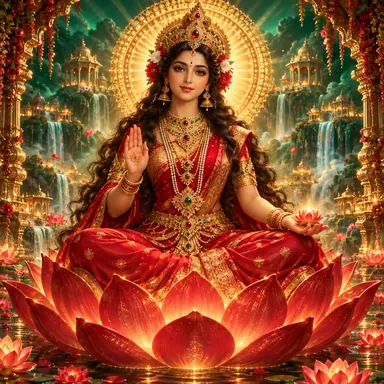 Goddess
Great Goddess encompassing or identified with many divine feminine forms
Great Goddess encompassing or identified with many divine feminine forms; supreme in Shakta traditions.
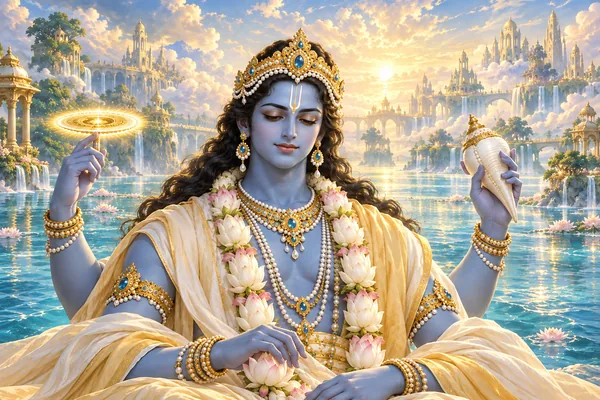 Deity
Supreme Narayana of Vaishnava theology
Narayana — Supreme Narayana of Vaishnava theology; closely identified with Vishnu.
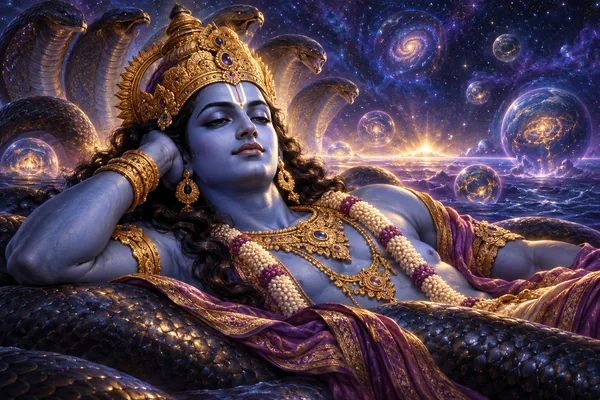 Deity
Cosmic Vishnu form
Cosmic Vishnu form, particularly elaborated in some Vaishnava cosmologies.
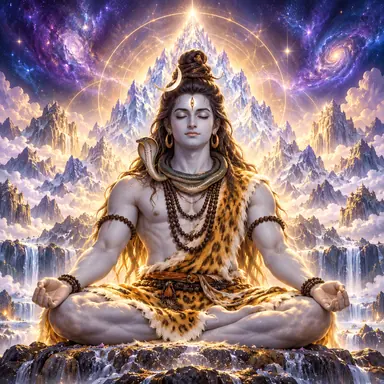 Deity
Supreme or transcendent Shiva form
Sadashiva — Supreme or transcendent Shiva form; theological descriptions differ among Shaiva systems.
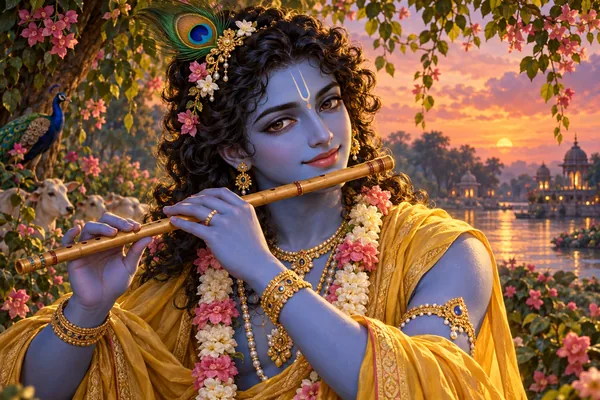 Deity
The guide of Arjuna
Krishna is the divine teacher in the Bhagavad Gita, where his dialogue with Arjuna explores action, devotion, knowledge, and duty.
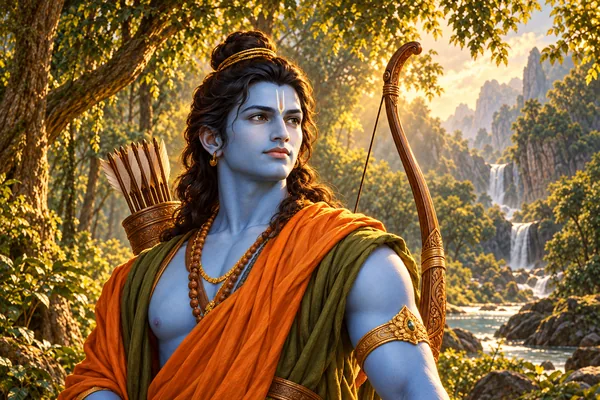 Deity
Rama is prince of Ayodhya and divine embodiment of righteous kingship
Rama — Rama is prince of Ayodhya and divine embodiment of righteous kingship, identified with Vishnu.
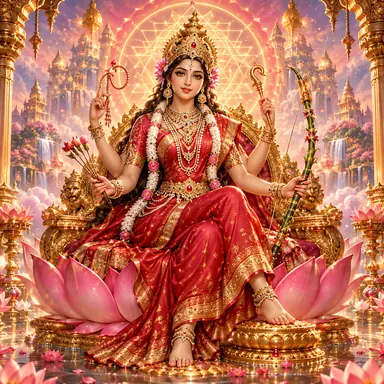 Deity
Supreme goddess of Sri Vidya
Lalita Tripurasundari — Supreme goddess of Sri Vidya, associated with beauty, consciousness, and the Sri Chakra.
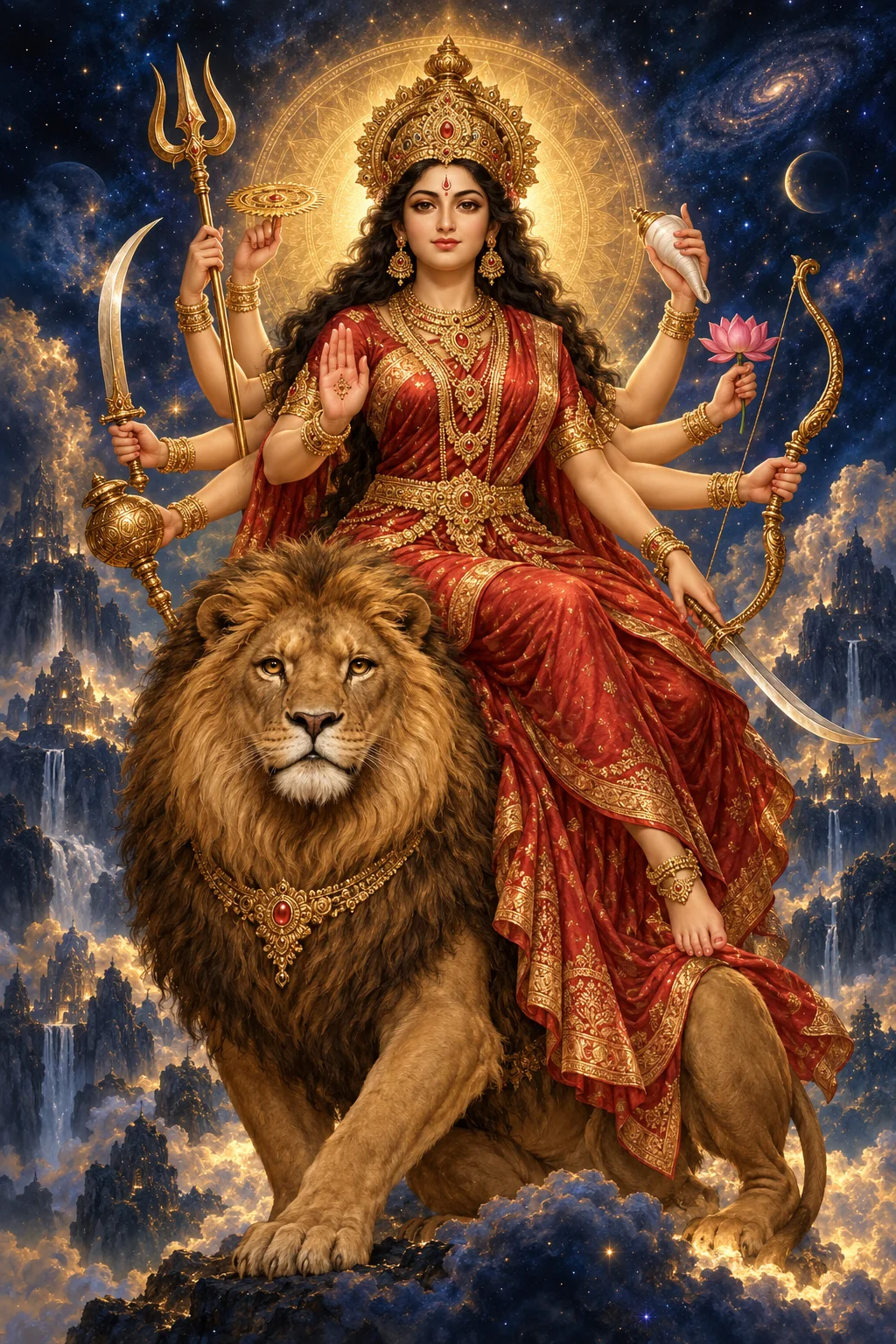 Goddess
The invincible goddess
Durga is a powerful manifestation of the Goddess. The Devi Mahatmya tells of her conflict with Mahishasura and celebrates divine feminine power.
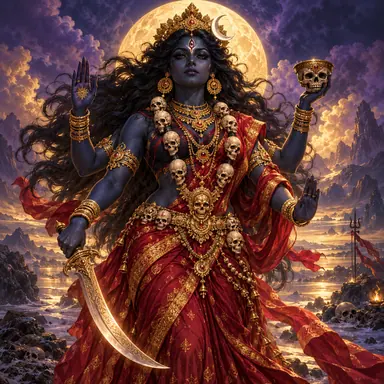 Goddess
Fierce goddess of time
Fierce goddess of time, transformation, and liberation; identities overlap with other goddess forms.
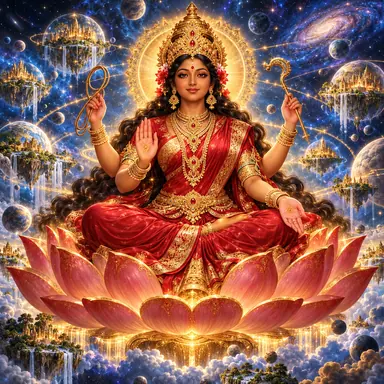 Deity
Mahavidya whose name denotes sovereignty over worlds
Mahavidya whose name denotes sovereignty over worlds; supreme in some Shakta interpretations.
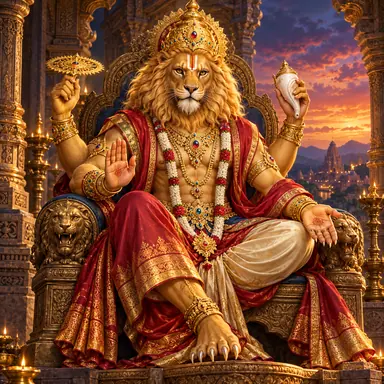 Deity
Vishnu's man-lion manifestation
Vishnu's man-lion manifestation, overcoming Hiranyakashipu's conditional protections.
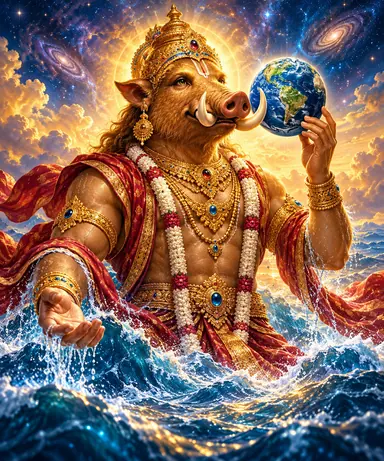 Divine manifestation
Boar manifestation of Vishnu
Boar manifestation of Vishnu, associated with recovery of the earth and Hiranyaksha's defeat.
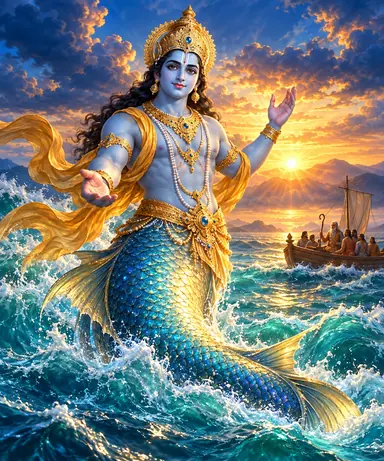
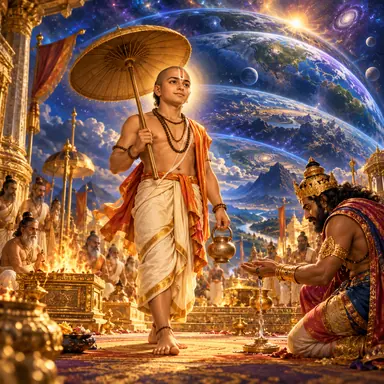 Divine manifestation
Vishnu's dwarf and world-striding manifestation
Vishnu's dwarf and world-striding manifestation.
 Divine manifestation
Fish manifestation associated with flood rescue
Fish manifestation associated with flood rescue; textual details differ.
 Divine manifestation
Tortoise manifestation supporting the churning of the ocean
Tortoise manifestation supporting the churning of the ocean.
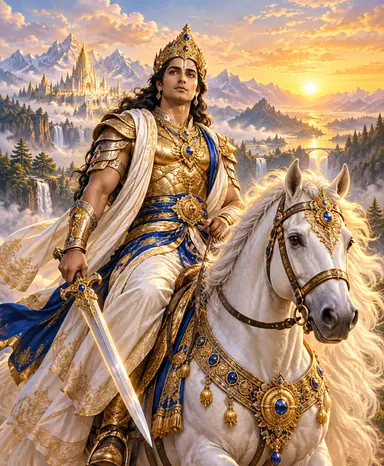 Divine manifestation
Future manifestation expected at the close of Kali Yuga in Puranic accounts
Future manifestation expected at the close of Kali Yuga in Puranic accounts.
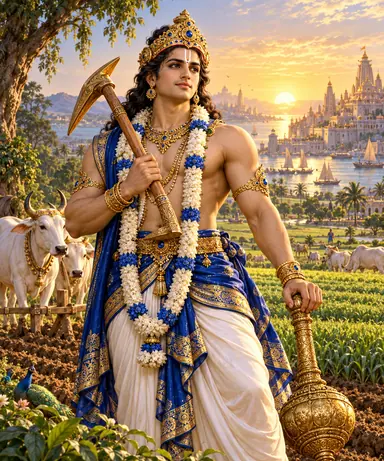
 Divine manifestation
Axe-bearing Brahmin warrior manifestation and teacher
Axe-bearing Brahmin warrior manifestation and teacher; associated with cycles of conflict with rulers.
 Divine manifestation
Krishna's elder brother
Krishna's elder brother, associated with strength, agriculture, and Shesha; avatar lists differ.
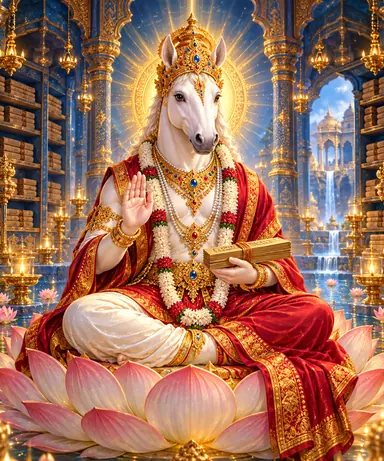 Divine manifestation
Horse-headed divine form associated with sacred knowledge
Horse-headed divine form associated with sacred knowledge; distinguish the asura namesake.
 Divine manifestation
Enchanting manifestation of Vishnu
Enchanting manifestation of Vishnu; its episodes and identities require tradition-specific context.
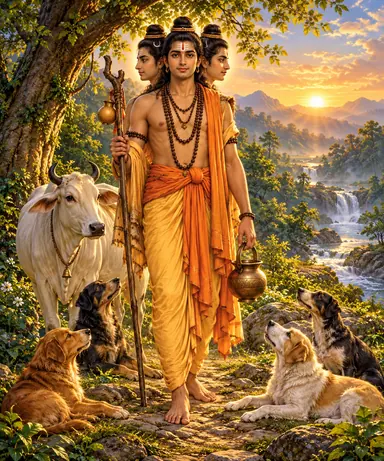 Divine manifestation
Divine sage associated with Atri and Anasuya and
Dattatreya — Divine sage associated with Atri and Anasuya and, in many accounts, the Trimurti.
 Divine manifestation
Austerities at Badarikashrama
Nara and Narayana are paired divine sages associated with austerity and sacred wisdom at Badarikashrama.
 Divine manifestation
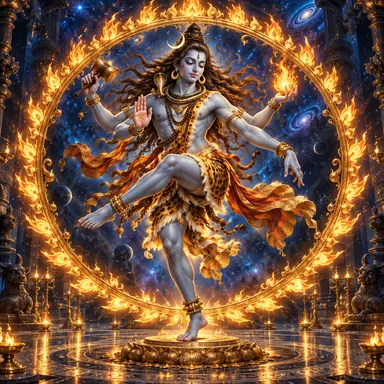
Shiva as Lord of Dance
Shiva as Lord of Dance; the dance conveys creation, preservation, concealment, dissolution, and grace in Shaiva thought.
 Divine manifestation
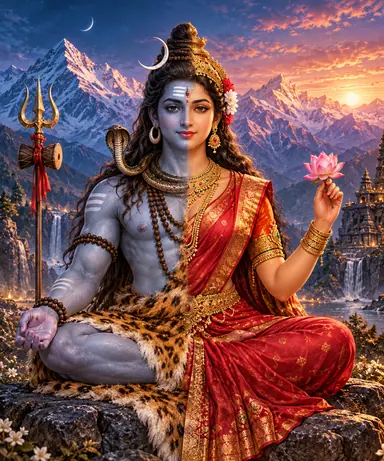
Shaiva accounts of Shiva-Shakti unity
Composite Shiva-Shakti form expressing inseparability of masculine and feminine divinity.
 Divine manifestation
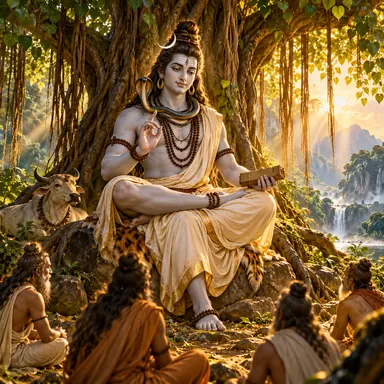
Shiva as teacher
Shiva as teacher, especially of liberating knowledge, often represented teaching sages.
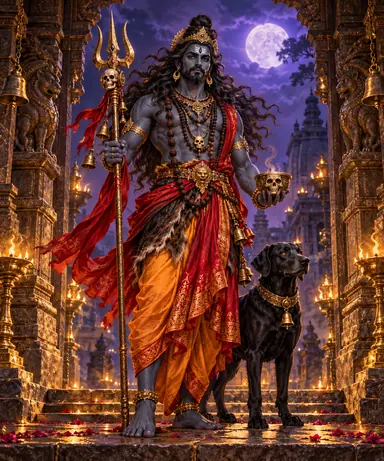 Divine manifestation
Fierce Shaiva form associated with protection
Fierce Shaiva form associated with protection, time, and sacred-space guardianship.
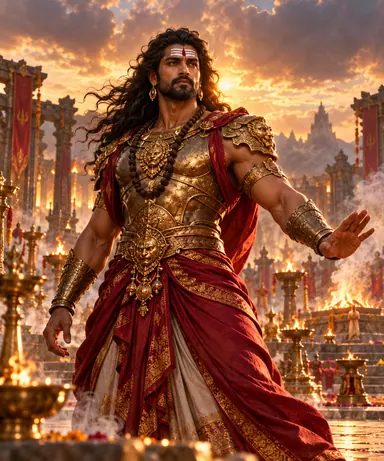 Divine manifestation
Fierce being manifested through Shiva's wrath in accounts of Daksha's sacrifice
Fierce being manifested through Shiva's wrath in accounts of Daksha's sacrifice.
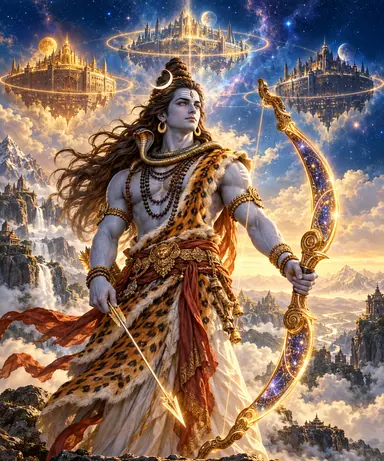 Divine manifestation
Shiva as destroyer of the three fortified cities of the Tripurasuras
Shiva as destroyer of the three fortified cities of the Tripurasuras.
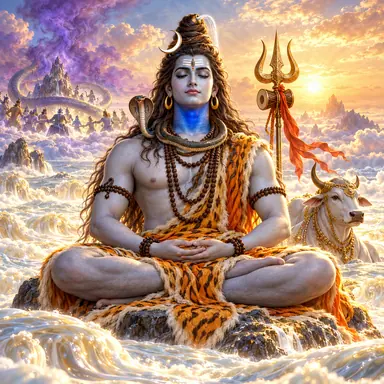 Divine manifestation
Blue-throated Shiva
Blue-throated Shiva, identified through containment of the churning poison.
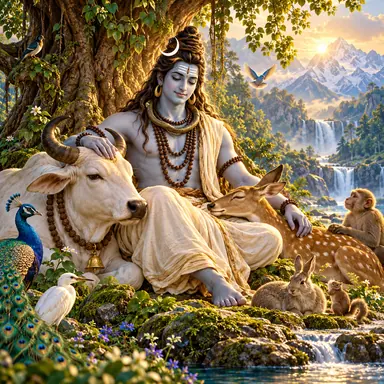 Divine manifestation
Shiva as Lord of beings or animals
Shiva as Lord of beings or animals; ritual and theological contexts vary.
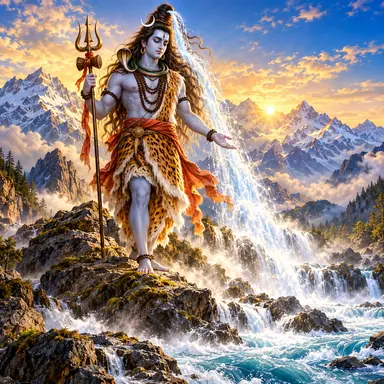 Divine manifestation
Shiva as bearer of Ganga
Shiva as bearer of Ganga, regulating her descent through his hair.
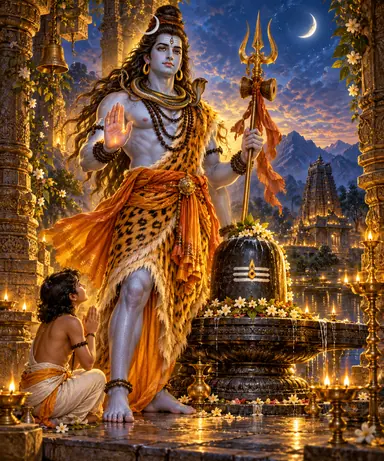 Divine manifestation
Shiva as conqueror of death in Markandeya traditions
Shiva as conqueror of death in Markandeya traditions.
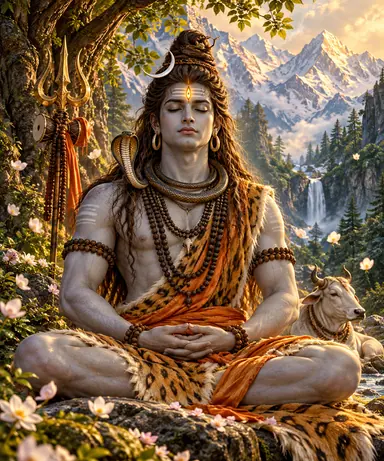 Divine manifestation
Shiva as burner of Kama during ascetic meditation
Shiva as burner of Kama during ascetic meditation.
 Divine manifestation
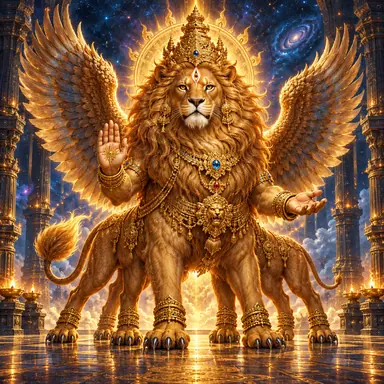
Fierce Shaiva manifestation in accounts responding to Narasimha's fury
Fierce Shaiva manifestation in accounts responding to Narasimha's fury; accepted differently across traditions.
 Divine manifestation
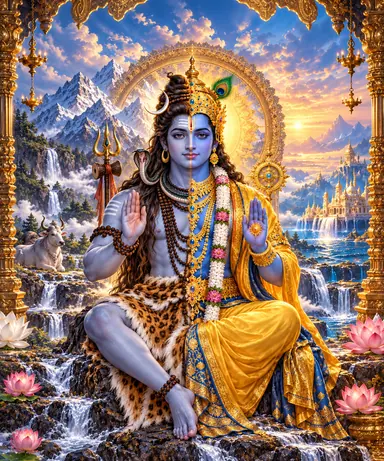
Composite Vishnu-Shiva form expressing a joined divine identity
Composite Vishnu-Shiva form expressing a joined divine identity.
 Divine manifestation
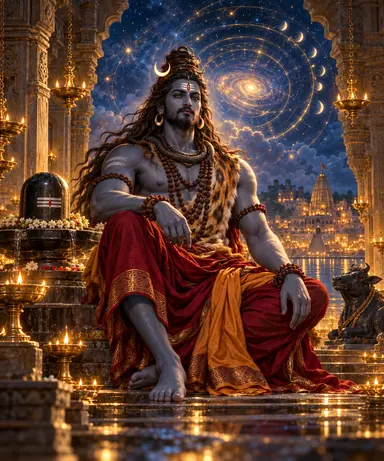
Great Time or fierce Shiva form
Great Time or fierce Shiva form; distinguish Hindu usages from Buddhist figures bearing the same name.
 Divine manifestation
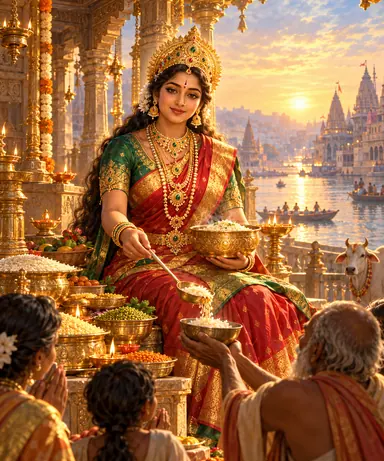
Goddess who provides nourishment
Annapurna — Goddess who provides nourishment, often identified with Parvati.
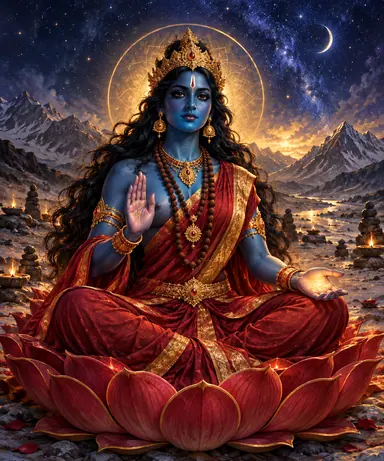 Divine manifestation
Hindu Mahavidya of protection and liberating guidance
Hindu Mahavidya of protection and liberating guidance; distinguish Buddhist Taras and the vanara queen.
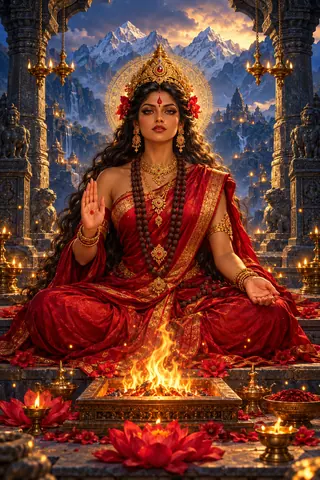 Divine manifestation
Fierce Mahavidya associated with transformative discipline
Fierce Mahavidya associated with transformative discipline.
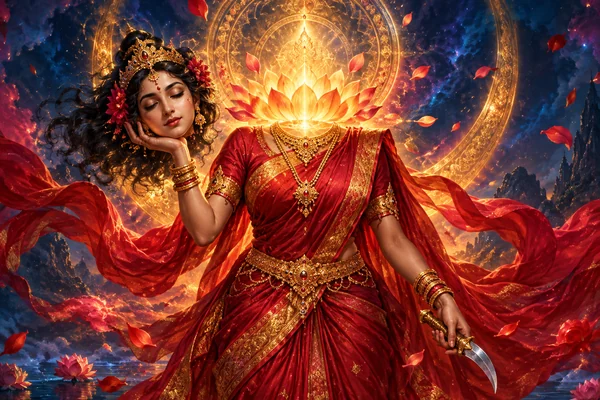 Divine manifestation
Self-decapitated Mahavidya whose imagery joins sacrifice
Self-decapitated Mahavidya whose imagery joins sacrifice, vitality, and transformation.
 Divine manifestation
Mahavidya represented as a widow
Mahavidya represented as a widow; associated with deprivation, age, and transcending conventional auspiciousness.
 Divine manifestation
Mahavidya associated with arresting hostile action and speech
Mahavidya associated with arresting hostile action and speech.
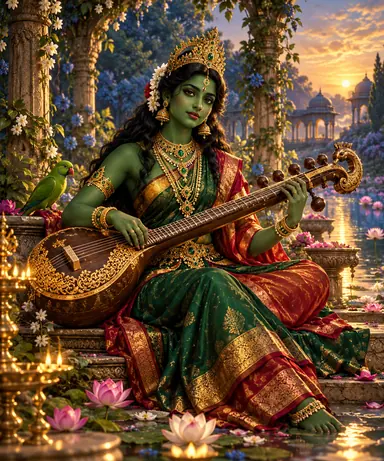 Divine manifestation
Mahavidya associated with speech
Mahavidya associated with speech, music, and boundary-transcending knowledge.
 Divine manifestation
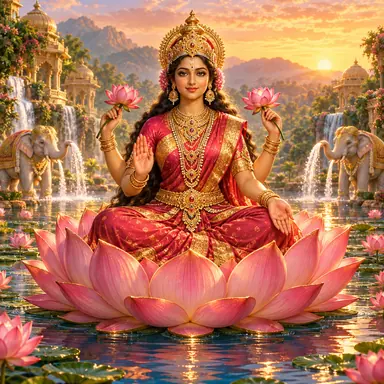
Lotus-associated Mahavidya closely connected with Lakshmi
Lotus-associated Mahavidya closely connected with Lakshmi.
 Divine manifestation
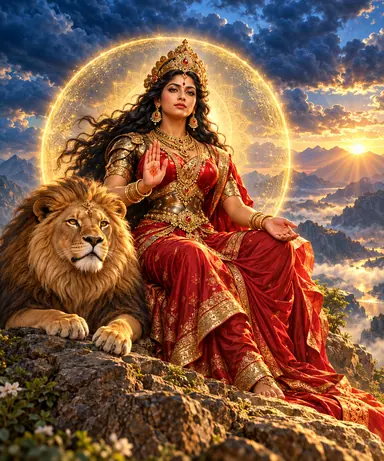
Goddess of the Devi Mahatmya's battle cycles
Chandika — Goddess of the Devi Mahatmya's battle cycles; often identified with Durga.
 Divine manifestation
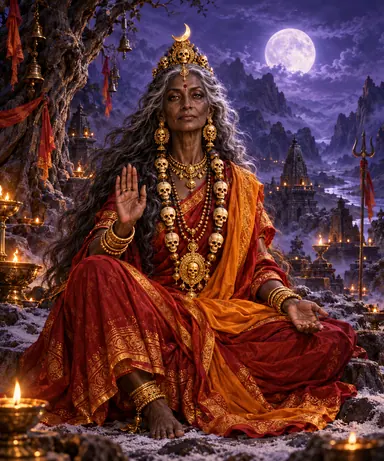
Fierce goddess named through Chanda and Munda's defeat
Fierce goddess named through Chanda and Munda's defeat; overlaps with Kali in that narrative.
 Divine manifestation
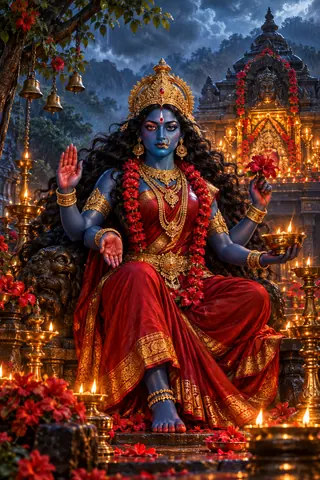
Protective fierce goddess with varied regional and textual identities
Protective fierce goddess with varied regional and textual identities.
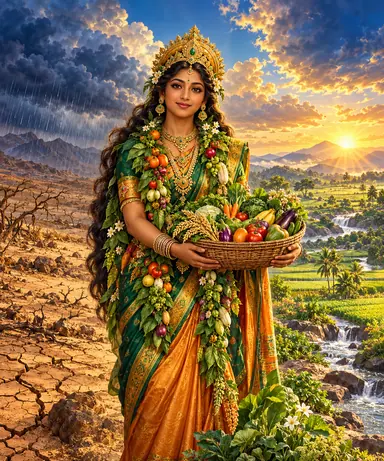 Divine manifestation
Goddess providing vegetation and food during deprivation
Shakambhari — Goddess providing vegetation and food during deprivation.
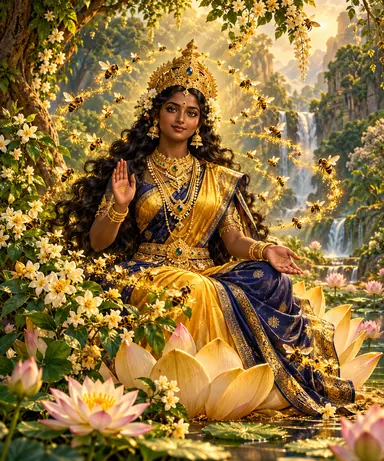 Divine manifestation
Goddess associated with bees in the Arunasura narrative
Bhramari — Goddess associated with bees in the Arunasura narrative.
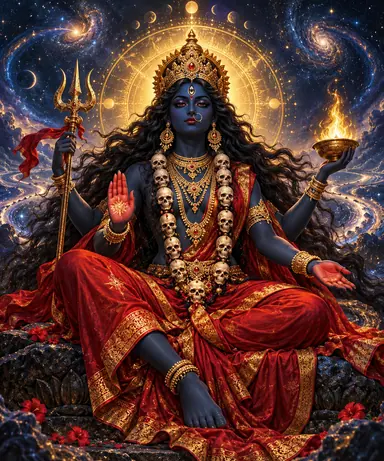 Divine manifestation
Great Kali form
Great Kali form; interpretation differs between Devi Mahatmya framing and other Shakta systems.
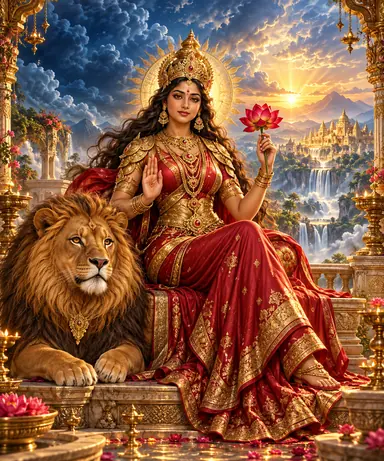 Divine manifestation
Great Lakshmi form
Great Lakshmi form; distinguish Devi Mahatmya warrior context from all ordinary Lakshmi usages.
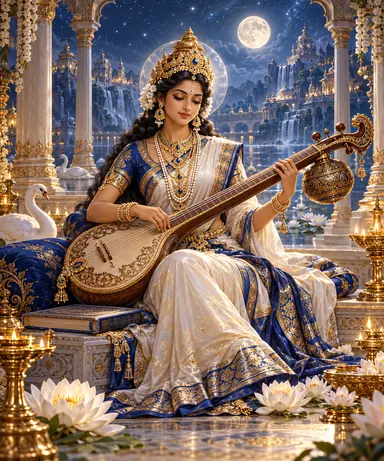 Divine manifestation
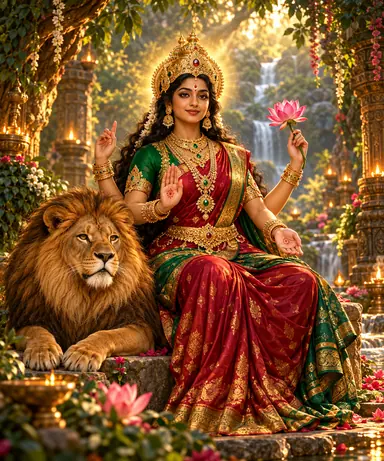 Divine manifestation
Navadurga form named for Katyayana
Navadurga form named for Katyayana; related accounts connect her with divine protection.
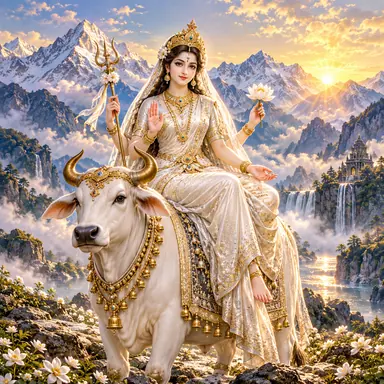 Divine manifestation
Navadurga form emphasizing radiant purity
Navadurga form emphasizing radiant purity.
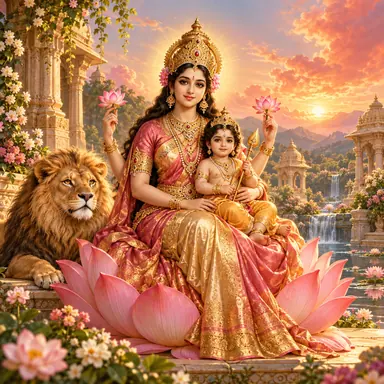 Divine manifestation
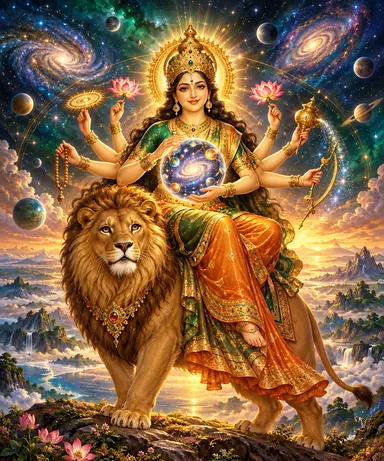
Navadurga form represented as mother of Skanda
Navadurga form represented as mother of Skanda.
 Divine manifestation
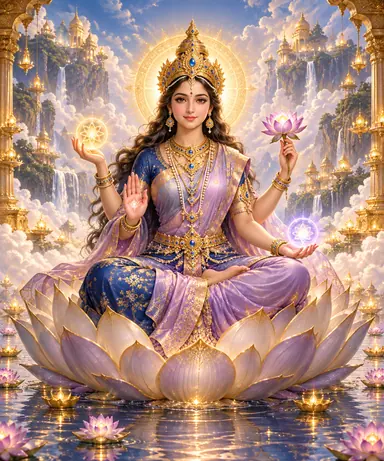
Navadurga form associated in devotional accounts with cosmic creation
Navadurga form associated in devotional accounts with cosmic creation.
 Divine manifestation
Navadurga form associated with bestowing spiritual attainments
Navadurga form associated with bestowing spiritual attainments.
 Divine manifestation
Navadurga ascetic form associated with the goddess's austerities
Navadurga ascetic form associated with the goddess's austerities.
 Divine manifestation
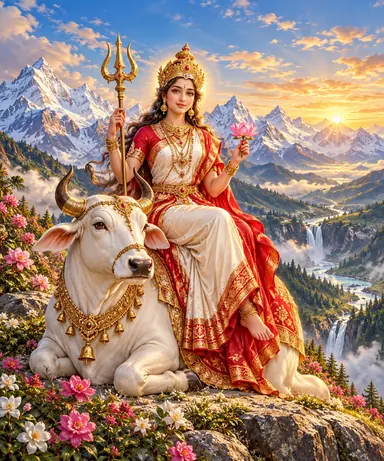
Mountain-born Navadurga form associated with Parvati
Mountain-born Navadurga form associated with Parvati.
 Divine manifestation
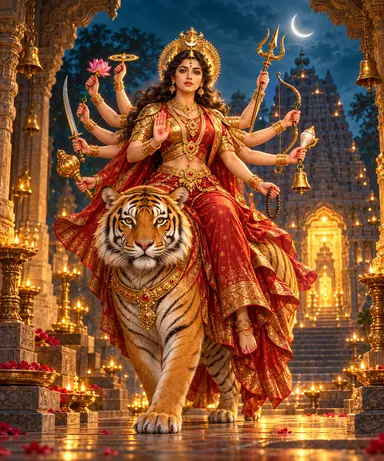
Navadurga form marked by a bell-shaped crescent
Navadurga form marked by a bell-shaped crescent.
 Divine manifestation
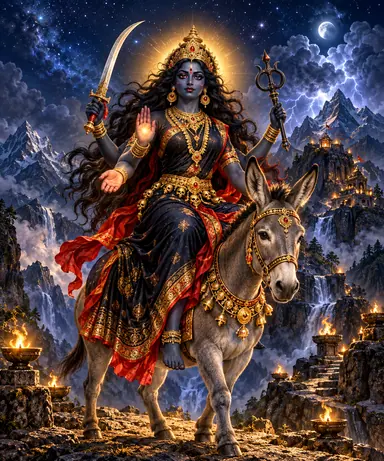
Dark and fierce Navadurga form
Dark and fierce Navadurga form; overlapping names require context.
 Divine manifestation
 Divine manifestation
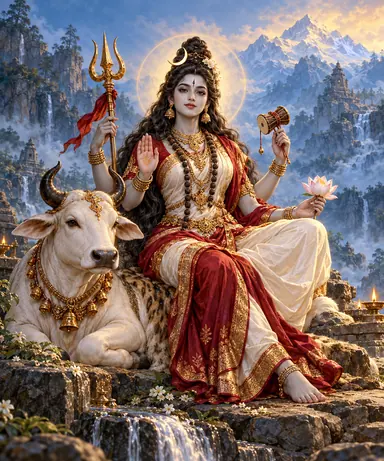
Matrika associated with Shiva's shakti
Matrika associated with Shiva's shakti; distinguish other uses of Maheshwari.
 Divine manifestation
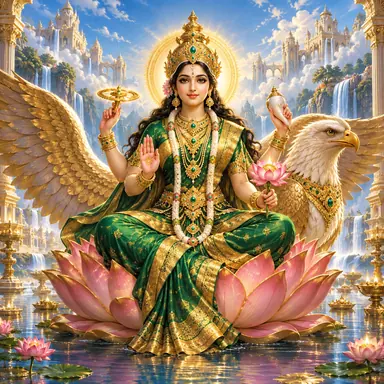 Divine manifestation
Matrika associated with Vishnu's shakti
Matrika associated with Vishnu's shakti; distinguish generic Vaishnavi usages.
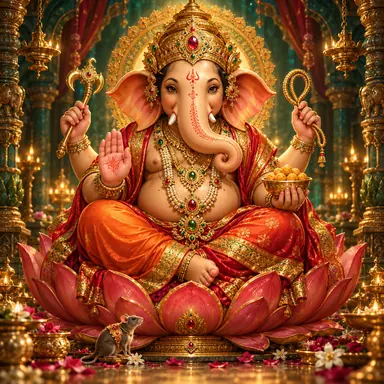 Deity
Elephant-headed deity associated with beginnings
Elephant-headed deity associated with beginnings, wisdom, and removal of obstacles.
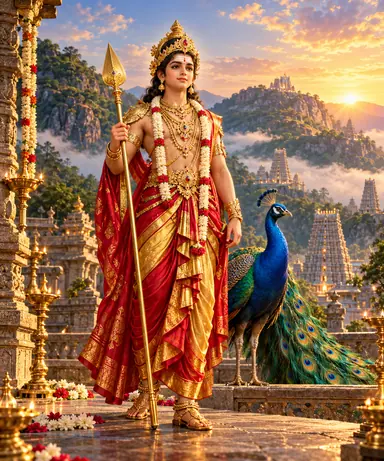 Deity
Divine warrior and leader of celestial forces
Kartikeya / Skanda — Divine warrior and leader of celestial forces; Skanda, Kartikeya, and Murugan identities vary regionally.
 Deity
Krishna's beloved and supreme goddess in several Vaishnava traditions
Krishna's beloved and supreme goddess in several Vaishnava traditions; theological status varies.
 Deity
Rama's consort
Sita — Rama's consort, daughter of Janaka through discovery in the earth, and divine figure in Vaishnava traditions.
 Deity
Vedic and Puranic ruler of the devas
Indra — Vedic and Puranic ruler of the devas; authority and vulnerabilities vary across stories.
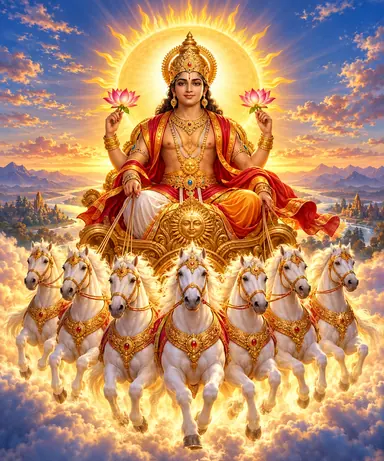 Deity
Solar deity whose identities overlap with Vivasvan and other solar names
Surya — Solar deity whose identities overlap with Vivasvan and other solar names.
 Deity
Vedic fire deity mediating sacrifice
Agni — Vedic fire deity mediating sacrifice; also appears in epic episodes.
 Deity
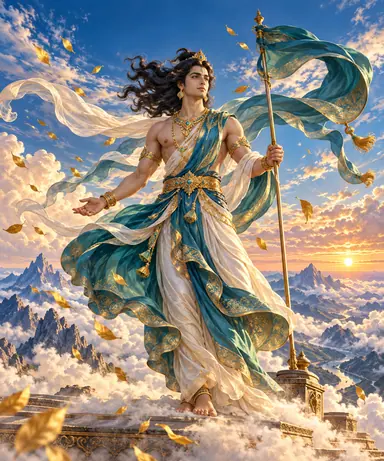
Wind deity and divine father in Hanuman and Bhima traditions
Wind deity and divine father in Hanuman and Bhima traditions.
 Deity
Vedic deity associated with order and
Varuna — Vedic deity associated with order and, in later accounts, waters and western guardianship.
 Deity
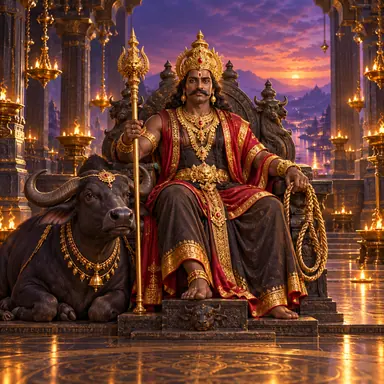
Deity of death and judgment
Yama — Deity of death and judgment; overlaps with Dharma in some contexts.
 Deity
Lord of wealth and yakshas
Lord of wealth and yakshas; a lokapala in Puranic accounts.
 Deity
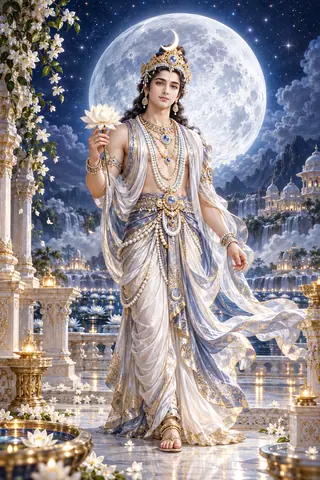
Lunar deity associated with celestial cycles and Rohini
Lunar deity associated with celestial cycles and Rohini; later identified with Soma.
 Deity
Vedic sacred drink and its deity
Soma — Vedic sacred drink and its deity; later lunar identifications overlap with Chandra.
 Deity
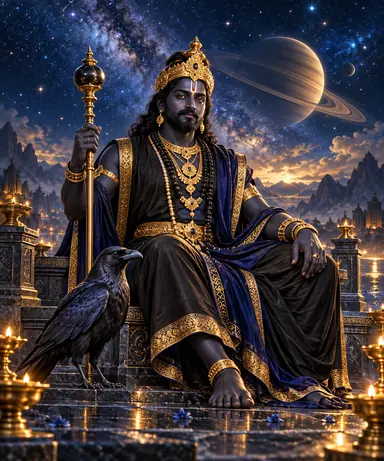
Saturn deity associated with karmic consequences and slow planetary movement
Saturn deity associated with karmic consequences and slow planetary movement.
 Deity
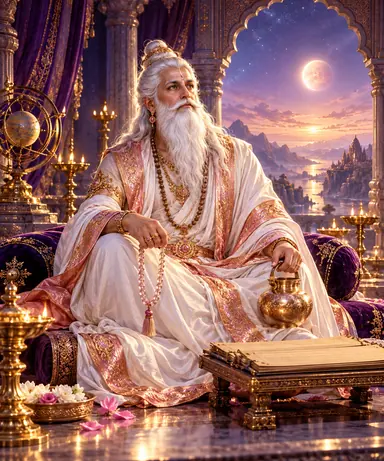
Divine priest or teacher associated with Jupiter
Brihaspati — Divine priest or teacher associated with Jupiter.
 Deity
Teacher of asuras associated with Venus
Teacher of asuras associated with Venus; different accounts identify him with Ushanas.
 Deity
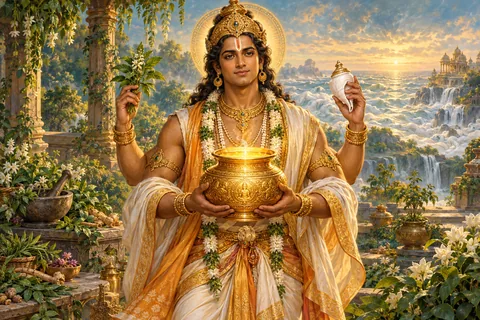
Divine physician emerging in ocean-churning accounts
Dhanvantari — Divine physician emerging in ocean-churning accounts, associated with Ayurveda.
 Deity
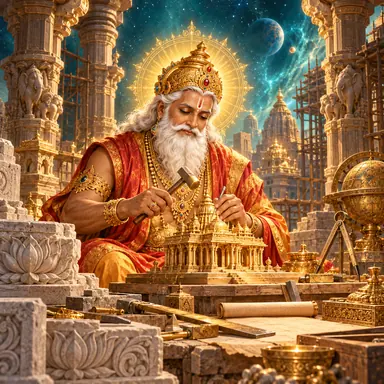
Divine craftsman and architect
Vishvakarma — Divine craftsman and architect; relationship to Tvashta varies by period and source.
 Deity
Sacred river goddess whose descent links heaven
Ganga — Sacred river goddess whose descent links heaven, Shiva, and Bhagiratha.
 Deity
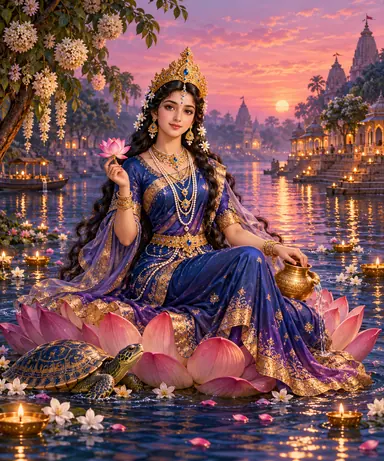
Krishna at the Yamuna
Yamuna — Sacred river goddess associated with Krishna narratives and solar-family identities.
 Deity
Serpent-associated goddess especially prominent in eastern Indian traditions
Serpent-associated goddess especially prominent in eastern Indian traditions.
 Deity
Vedic impelling solar deity
Savitr — Vedic impelling solar deity; related to but not simply interchangeable with all Surya usages.
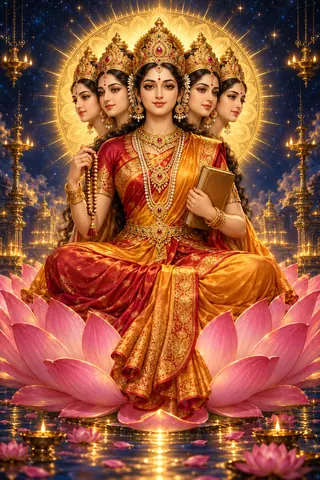 Deity
Personification of a sacred meter and prayer in later worship
Personification of a sacred meter and prayer in later worship; relations to Savitr and Saraswati vary.
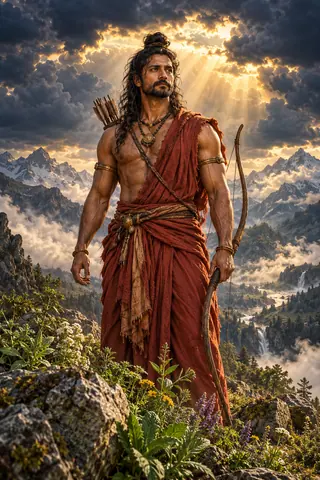 Deity
Rudra in Vedic hymns
Rudra in Vedic hymns; related to later Shiva without collapsing historical textual contexts.
 Deity
Eclipse-associated figure
Eclipse-associated figure, frequently identified with Svarbhanu's severed head.
 Deity
Eclipse/descending-node figure
Eclipse/descending-node figure; identification with a severed body is a later interpretive context.
 Deity
Principal queen of Krishna
Principal queen of Krishna, daughter of Bhishmaka, frequently identified with Lakshmi.
 Deity
Krishna's queen and Satrajit's daughter
Krishna's queen and Satrajit's daughter, important in Syamantaka and Parijata narratives.
 Deity
One of the paired Ashvins
One of the paired Ashvins; individual naming and identification vary across texts.
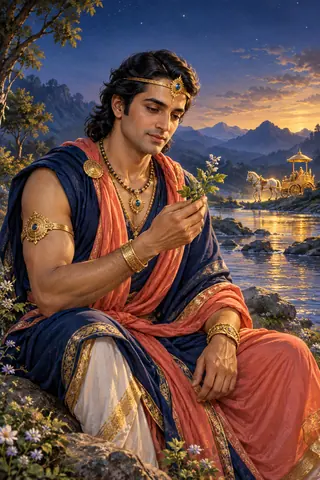 Deity
One of the paired Ashvins
One of the paired Ashvins; the twins share many narratives and deeds.
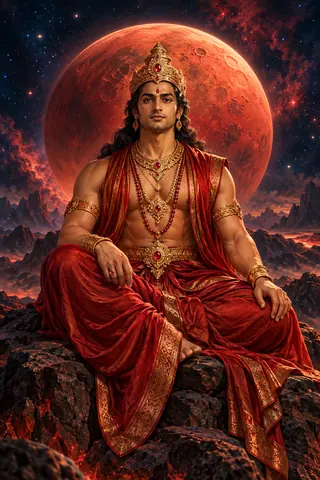 Deity
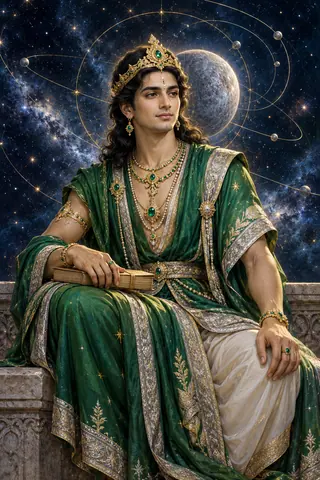 Deity
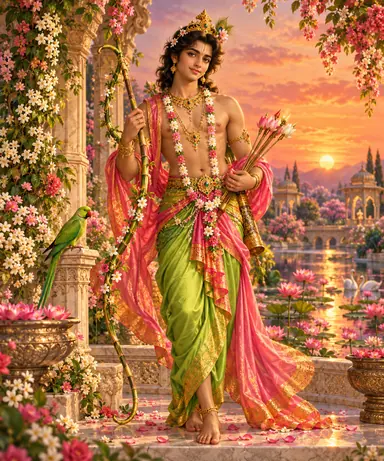 Deity
 Deity
Sacred Narmada river personified as a goddess
Narmada — Sacred Narmada river personified as a goddess, prominent in regional sacred geography.
 Deity
River-personification entry for Saraswati
Saraswati River Goddess — River-personification entry for Saraswati; distinguish river, Vedic deity, and later goddess-of-learning contexts.
 Deity
Earth personified as a goddess
Earth personified as a goddess; identities overlap with Bhudevi in later traditions.
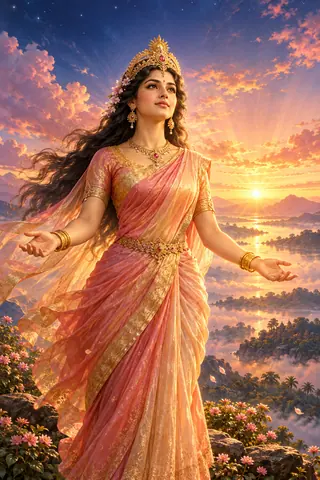 Deity
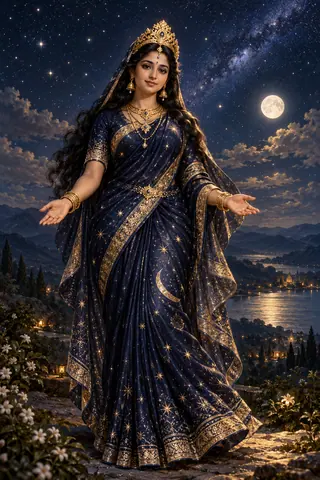 Deity
Vedic night goddess
Ratri — Vedic night goddess; distinguish broader goddess-night identifications.
 Deity
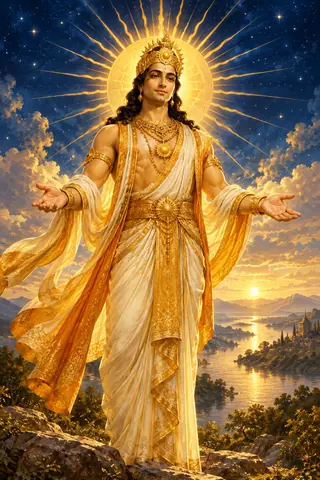
Vedic deity associated with covenants
Mitra — Vedic deity associated with covenants, friendship, and order, often paired with Varuna.
 Deity
Aditya associated with social bonds and hospitality in Vedic contexts
Aditya associated with social bonds and hospitality in Vedic contexts.
 Deity
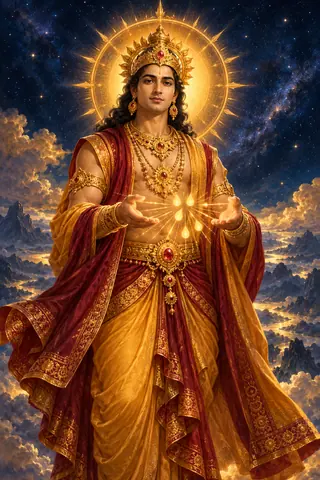
Vedic deity associated with allotment and share
Bhaga — Vedic deity associated with allotment and share, included among Adityas in later lists.
 Deity
Vedic pastoral and path-guiding deity
Pushan — Vedic pastoral and path-guiding deity.
 Deity
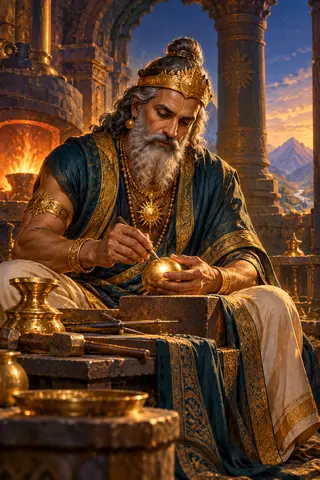
Vedic fashioner and artisan deity
Tvashta — Vedic fashioner and artisan deity; distinguish source-specific overlaps with Vishvakarma.
 Deity
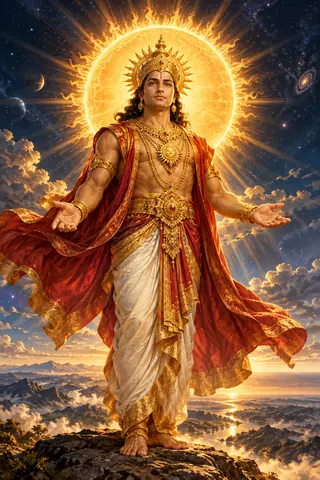
Solar figure commonly identified with Surya
Vivasvan — Solar figure commonly identified with Surya, father of Vaivasvata Manu in Puranic accounts.
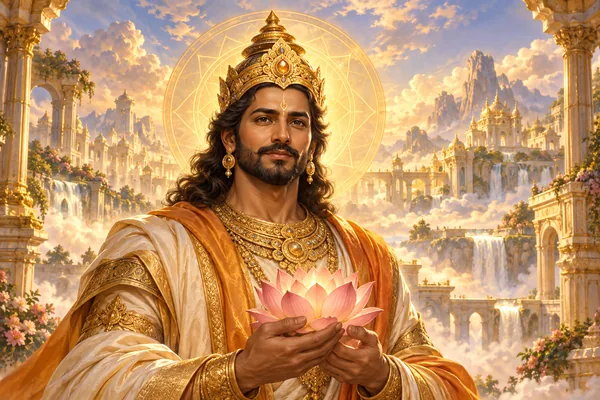 Deity
Divine establisher or fashioner represented in varying genealogical lists
Dhatri — Divine establisher or fashioner represented in varying genealogical lists.
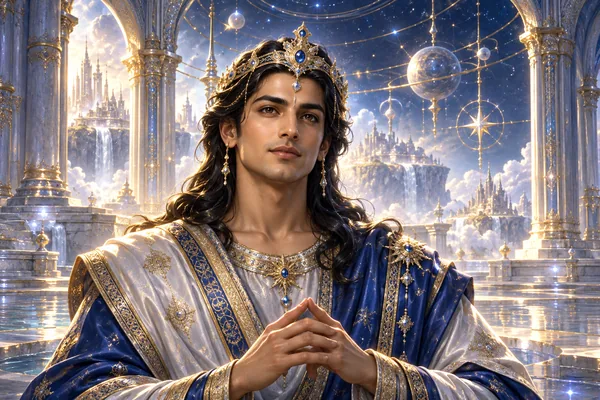 Deity
Divine ordainer represented in varying Puranic genealogies
Vidhatri — Divine ordainer represented in varying Puranic genealogies; distinguish Dhatri.
 Deity
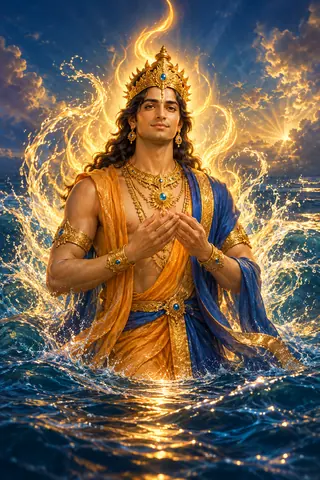 Deity
Vedic deity whose name denotes offspring of the waters
Apam Napat — Vedic deity whose name denotes offspring of the waters, with fire associations.
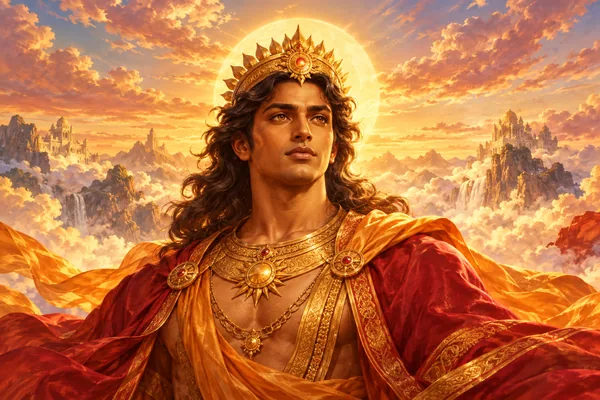 Deity
Aditya name associated with a share or portion
Aditya name associated with a share or portion; individual biography is limited.
 Deity
Shaiva lordship name and directional aspect found in some Rudra lists
Shaiva lordship name and directional aspect found in some Rudra lists.
 Deity
One-footed divine name in Vedic and Rudra traditions
One-footed divine name in Vedic and Rudra traditions; possibly overlaps with Ajapada.
 Deity
Serpent-of-the-depths divine name in Vedic and later Rudra contexts
Serpent-of-the-depths divine name in Vedic and later Rudra contexts.
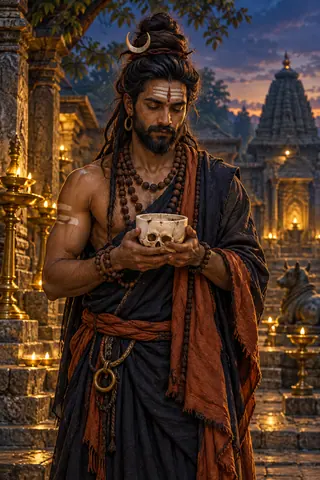 Deity
Rudra/Shaiva name associated with skull-bearing
Rudra/Shaiva name associated with skull-bearing; this entry's exact list needs edition review.
 Deity
Name in a Rudra grouping
Pingala — Name in a Rudra grouping; distinguish other persons and symbolic uses named Pingala.
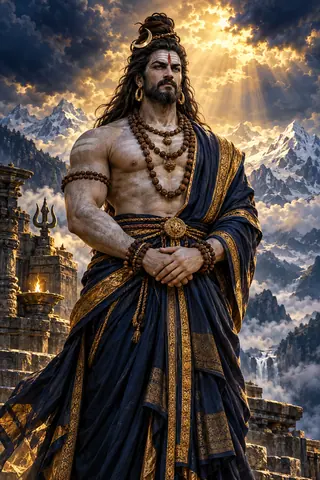 Deity
 Deity
Rudra name often understood as varied-eyed
Rudra name often understood as varied-eyed; distinguish the asura namesake.
 Deity
Rudra name associated with reddish coloration in some lists
Rudra name associated with reddish coloration in some lists.
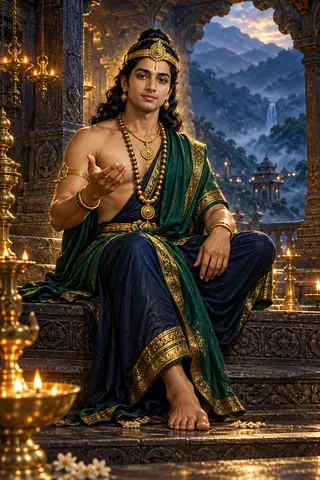 Deity
Rudra in the Divine Battle
divine entry with ambiguous identification: Shasta traditions and the previous Rudra grouping require reconciliation.
 Deity
A Name in the Rudra Traditions
Ajapada is a Rudra-associated name whose relationship to Ajaikapada remains uncertain. Its place is best understood through the Vedic invocations and later Rudra traditions, without treating similar spellings as proof of separate divine beings.
 Deity
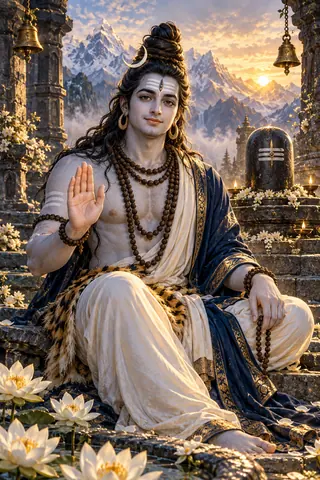
Auspicious Shaiva name appearing as a distinct Rudra entry
Auspicious Shaiva name appearing as a distinct Rudra entry.
 Deity
 Deity
Shaiva divine name appearing in Vedic and later Rudra lists
Shaiva divine name appearing in Vedic and later Rudra lists.
 Deity
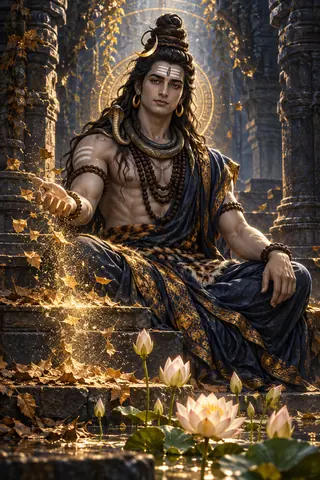
Shaiva name associated with removal or destruction
Shaiva name associated with removal or destruction; distinguish Danava namesakes.
 Deity
Rudra/Shaiva name denoting many forms
Rudra/Shaiva name denoting many forms; exact list membership depends on source.
 Deity
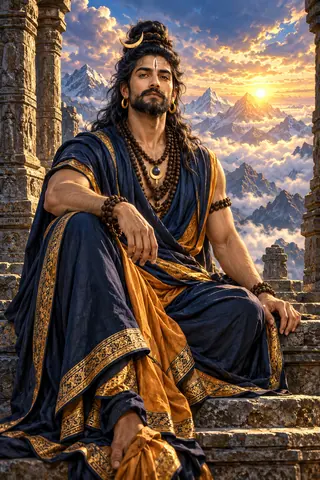
Three-eyed Shaiva divine name
Three-eyed Shaiva divine name, also prominent in the Tryambaka mantra.
 Deity
Unconquered Rudra-name entry
Unconquered Rudra-name entry; distinguish other figures called Aparajita.
 Deity
Water-associated Vasu entry
Water-associated Vasu entry; Vasu lists and spellings vary.
 Deity
 Deity
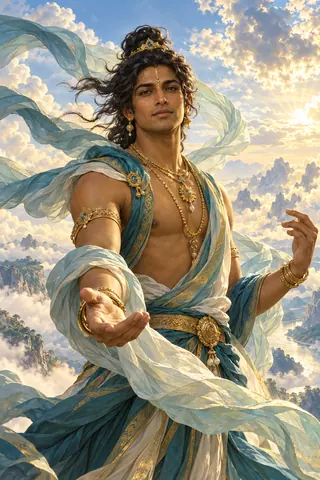
Vasu associated with support or earth in some lists
Vasu associated with support or earth in some lists.
 Deity
Wind-associated Vasu
Wind-associated Vasu; overlap with wind divinity is source-dependent.
 Deity
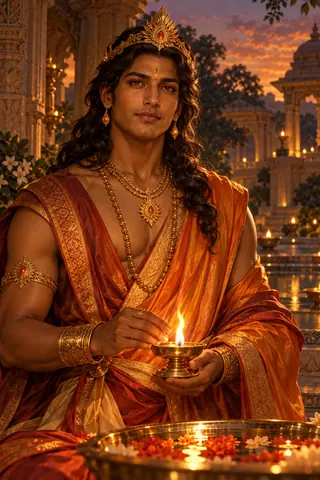
Fire-associated Vasu
Fire-associated Vasu; overlap with Agni is source-dependent.
 Deity
 Deity
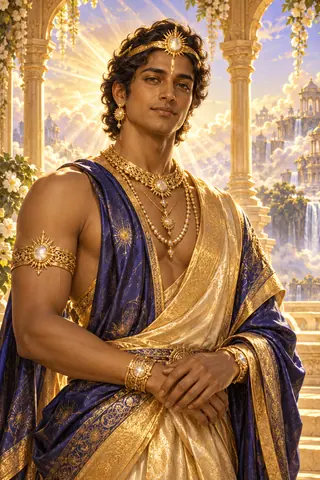
Radiance-associated Vasu in a common list
Radiance-associated Vasu in a common list; some accounts link him with Vishvakarma's ancestry.
 Deity
Sacred basil personified
Tulasi — Sacred basil personified; narratives of Vrinda/Tulasi differ and should not be automatically merged.
 Deity
Daughter of Shiva and Parvati in particular later accounts
Ashokasundari — Daughter of Shiva and Parvati in particular later accounts, associated with Nahusha.
 Deity
Murugan's consort in Tamil traditions
Murugan's consort in Tamil traditions; origin and marriage stories vary.
 Deity
Skanda's consort
Skanda's consort, associated with celestial lineage in particular accounts.
 Celestial being
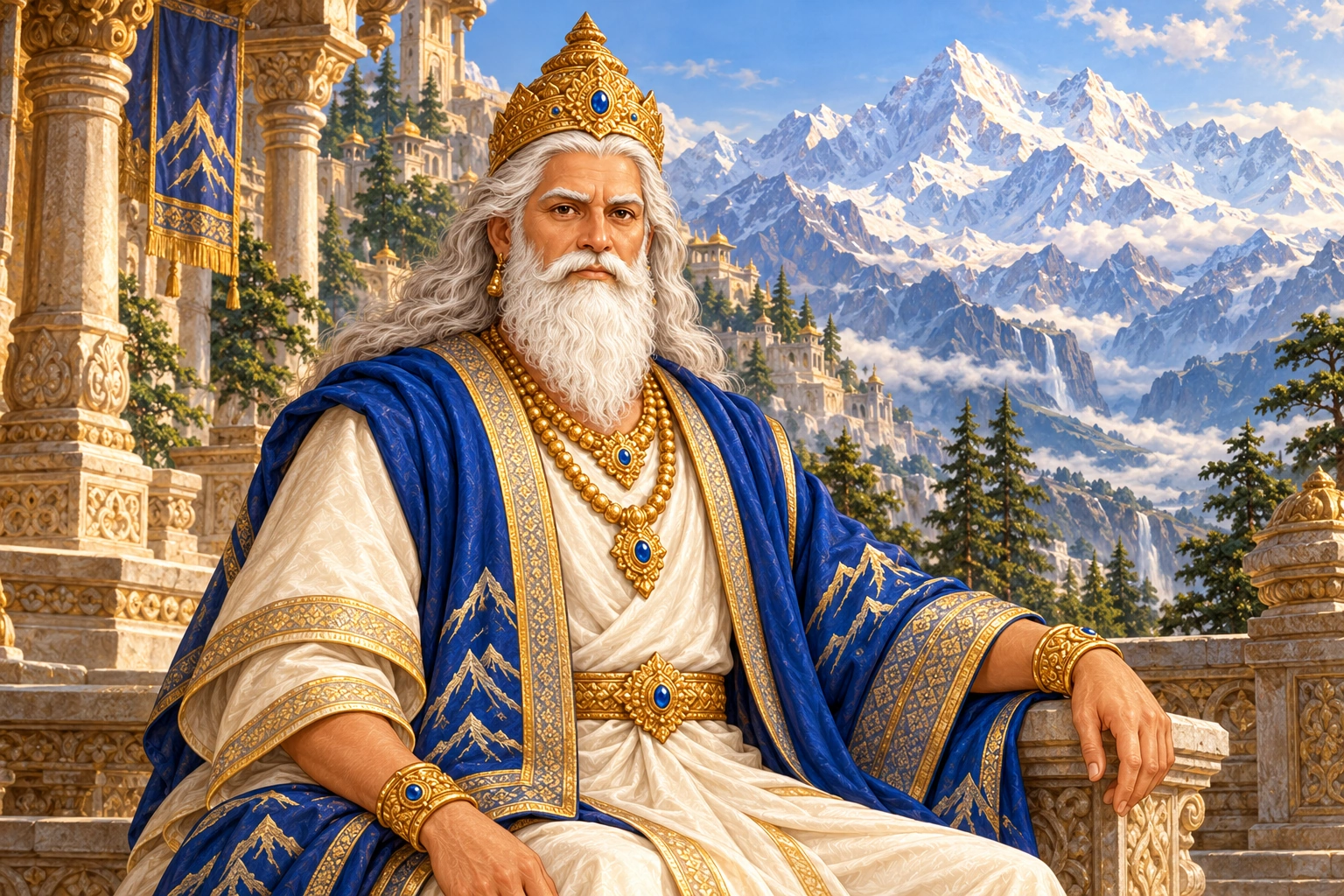
Lord of the Himalaya and Father of Parvati
Himavat is the divine lord of the Himalaya, the husband of Mena and the father of Parvati. His story joins the sacred mountain landscape with a living royal household that welcomes the goddess and celebrates her marriage to Shiva.
 Deity
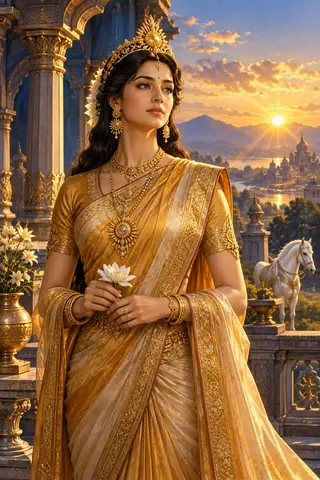
Solar consort in accounts involving Surya and the Ashvins
Sanjna — Solar consort in accounts involving Surya and the Ashvins; daughter of Vishvakarma in a Bhagavata account.
 Deity
Sanjna's substitute
Shadow-associated solar consort whose children include Shani and Tapati in a Bhagavata account.
 Deity
Yama's twin in Vedic usage
Yama's twin in Vedic usage, identified with Yamuna in later contexts.
 Deity
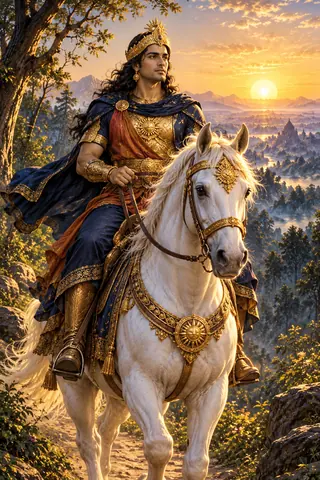
Solar-family narratives
Revanta — Solar-associated equestrian deity prominent in some Puranic and regional accounts.
 Deity
Solar daughter and consort of Samvarana in epic narrative
Tapati — Solar daughter and consort of Samvarana in epic narrative.
 Deity
Indra's consort
Indra's consort, also named Indrani; distinguish specific Matrika use of Aindri.
 Deity
Personified sacrificial utterance
Swaha — Personified sacrificial utterance, associated with Agni as consort.
 Deity
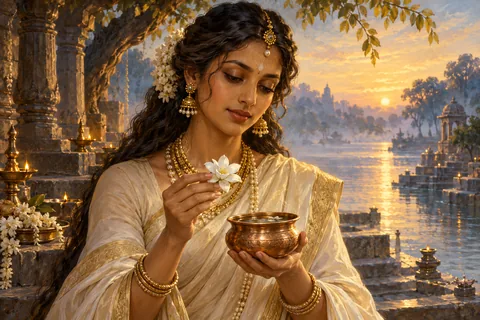
Personified ancestral-offering utterance
Svadha — Personified ancestral-offering utterance, associated with the Pitrs.
 Deity
Goddess associated with wine and churning accounts
Varuni — Goddess associated with wine and churning accounts; some contexts connect the name with Varuna.
 Deity
 Deity
Sacred river-name entry with several geographical uses
Mandakini — Sacred river-name entry with several geographical uses; exact intended Mandakini needs clarification.
 Celestial being
Mother of Budha and Consort of Brihaspati
Tara is Brihaspati’s wife and the mother of Budha in the divine origins of Chandra Vansh. Soma’s seizure of her brings rival divine alliances into conflict; her identification of Budha’s father later settles a dispute over the child.
 Celestial being
Queen of the Himalaya and Mother of Parvati
Mena is Himavat’s wife and the mother of Parvati in the divine mountain family. Her sustained devotion leads to the goddess’s promise to become her daughter, making motherhood and worship closely connected parts of her story.
 Celestial being
Prajapati and Father of Siddhi and Buddhi
Vishvarupa is the Prajapati whose daughters Siddhi and Buddhi marry Ganesha in the Shiva Purana. His place in this account is that of the father of the brides and Ganesha’s father-in-law.
 Celestial being
Son of Ganesha and Siddhi
Kshema is the son of Ganesha and Siddhi in the Shiva Purana’s account of Ganesha’s marriage and family. Labha, born to Ganesha’s other wife Buddhi, is his paternal half-brother.
 Deity
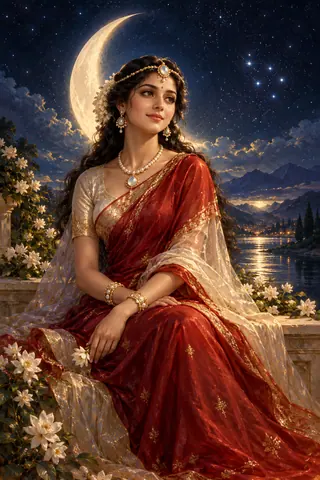
Lunar consort and nakshatra personification in this entry
Lunar consort and nakshatra personification in this entry; this identity differs from Rohini, Balarama’s mother.
 Deity
Sacred Godavari river personified in regional accounts
Godavari — Sacred Godavari river personified in regional accounts.
 Deity
Sacred Kaveri river personified in southern traditions
Kaveri — Sacred Kaveri river personified in southern traditions.
 Deity
Sindhu river divinity or personification
Sindhu river divinity or personification; context may be Vedic hymn or later river theology.
 Deity
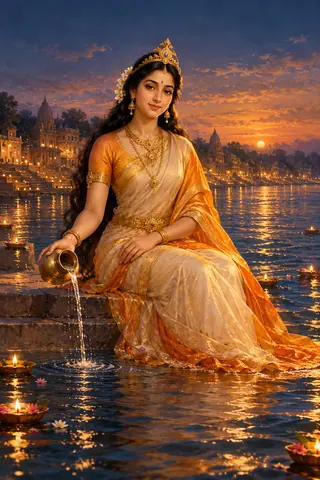
Sarayu river personification connected with Ayodhya's sacred geography
Sarayu river personification connected with Ayodhya's sacred geography.
 Deity
Ganga under a name associated with Bhagiratha and an actual headstream
Ganga under a name associated with Bhagiratha and an actual headstream; not automatically a separate goddess.
 Deity
Sacred Ganga headstream personified
Alaknanda — Sacred Ganga headstream personified; separate river entry.