THE LIVING ARCHIVE
About Lalita Tripurasundari
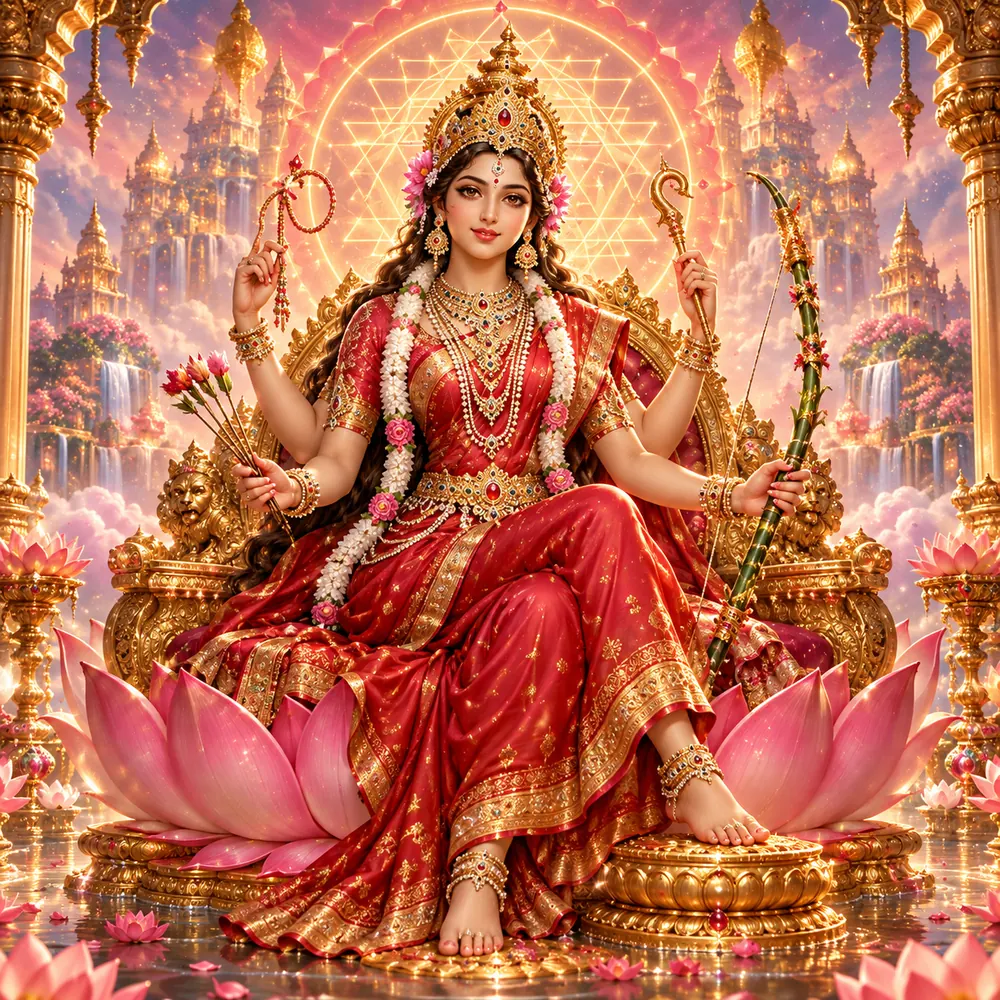
Her thousand names begin with motherhood, queenship, and the splendid throne, followed by emergence from the fire of consciousness. The image is both tender and authoritative. Four hands bear a noose, goad, sugarcane bow, and five arrows, making a distinctive sacred form rather than the equipment of an ordinary earthly monarch.
The Lalitopakhyana sets her appearance within a crisis that the gods cannot solve through their existing strength. The sage Narada urges Indra, ruler of the gods, to seek the supreme Shakti, the Goddess as divine power. The radiant Goddess who appears is described through beauty and compassion as well as immense power. The narrative refuses to separate gracious presence from the capacity to answer danger.
AT A GLANCE
Identity & Context
- Identity
- Deity
- Form
- Supreme devotional form
- Tradition
- Shakta · Puranic · Tantric
- Also Known As
- Lalita · Tripurasundari · Rajarajeshwari
- World & Associations
- Sripura / Manidvipa in associated traditions
Family Context
The available reference record does not establish a complete family genealogy. No parents, consorts, or descendants are inferred from the name alone.
Mahadevi
An association within Shakta traditions; practices and textual interpretations differ.
THE STORY
Life & Stories
Story Connections
- Bhandasura narrative
- Lalita Sahasranama
ROLE & ESSENCE
Attributes & Significance
Lalita’s narrative and sacred names connect beauty with consciousness, devotion, and sovereign agency. Her weapons can be approached through the contemplative meanings preserved in her names, while the battle emphasizes the overcoming of darkness and confusion. The result is a vision of divine power that is neither merely decorative nor reducible to aggression. Grace and command express the same encompassing queenship.
Role
Supreme goddess of Sri Vidya, associated with beauty, consciousness, and the Sri Chakra.
Attributes & Abilities
- Cosmic sovereignty
- Grace
Objects & Emblems
- Sugarcane bow
- Flower arrows
- Noose
- Goad
TRADITION & MEANING
Traditions & Interpretations
Sri Vidya associates Tripurasundari with mantras, sacred sounds used in worship, and the Sri Chakra, a diagram used in meditation. Her relationship with other divine forms belongs to this Goddess-centred setting. Her royal beauty is part of a divine identity that also includes consciousness, motherhood and power.
The contrast between Bhanda’s dismissiveness and Lalita’s effective command is central to her story. Divine beauty becomes a reason to look beyond superficial judgments, not a substitute for understanding her role as the conscious source and ruler of sacred powers.
Sri Vidya identity and iconographic details require the selected source.
Artwork & Archive Notes
Visual Identity
Where artwork is shown, it is a contemporary illustrative interpretation. This reference record does not establish a fixed portrait, colour scheme, or complete set of iconographic attributes for this figure.
FOLLOW THE THREADS
Connected Cards
7 connected profiles. Every path leads to an original record.
Realms & Cosmic Worlds1

Characters & Cosmic Entities5

Sri Vidya devotion identifies the central Kamakshi with Tripurasundari.

Advises Indra to seek the supreme Shakti before Lalita’s manifestation.

Leads the gods’ appeal to the Goddess.
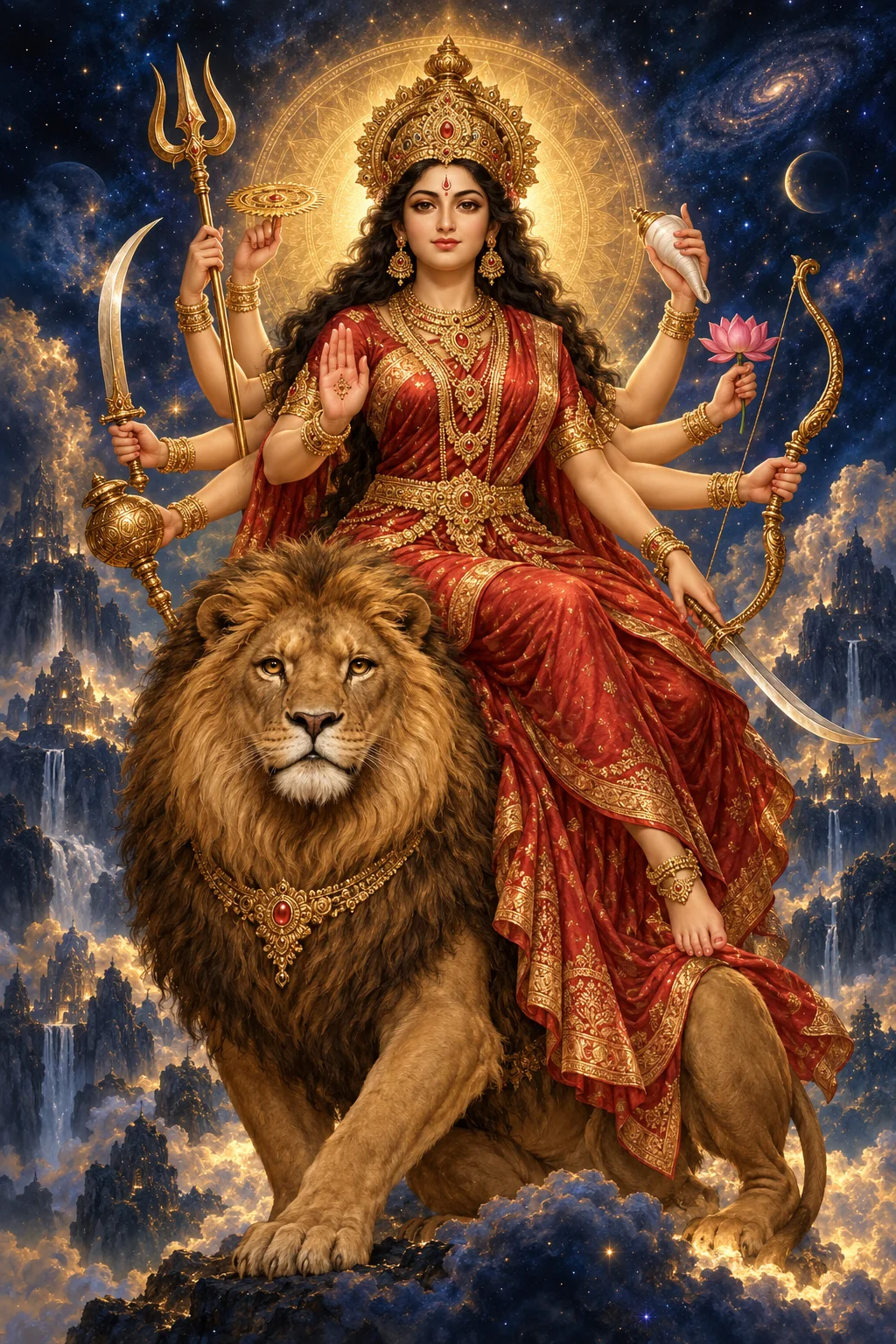
Appears within Lalita’s battle in this Shakta narrative.
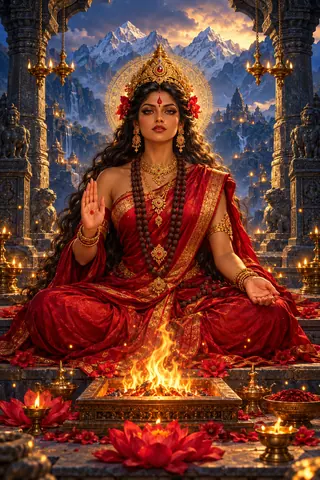
Tripurasundari and Tripura Bhairavi are related goddess forms with distinct names and contemplative identities.