
THE LIVING ARCHIVE
About Tripura Bhairavi
Bhairavi is a distinct goddess form in this devotional setting. She is different from Tripurasundari and from the male deity Bhairava, despite the related names. Her hymns describe her as the source in which the world arises, continues and finally dissolves.
AT A GLANCE
Identity & Context
- Identity
- Divine Manifestation
- Form
- Goddess / Mahavidya manifestation
- Tradition
- Shakta · Puranic · Tantric
- Also Known As
- Bhairavi
- World & Associations
- Shakta sacred domains
Family Context
The available reference record does not establish a complete family genealogy. No parents, consorts, or descendants are inferred from the name alone.
Mahadevi
An association within Shakta traditions; practices and textual interpretations differ.
THE STORY
Life & Stories
Story Connections
- Mahavidya traditions
ROLE & ESSENCE
Attributes & Significance
Names such as Yoga-mata, Mother of Yoga, connect Bhairavi with disciplined transformation. Her thousand-name praise includes terrible forms, truth, mercy, beauty and the removal of fear. Such combinations prevent fierceness from being understood as a simple temperament: it belongs to the power that exposes and overcomes limitation.
Role
Fierce Mahavidya associated with transformative discipline.
Attributes & Abilities
- Transformative spiritual power
TRADITION & MEANING
Traditions & Interpretations
The book and rosary connect her fierce image with learning and sustained spiritual practice. The hands offering gifts and freedom from fear explain how worshippers approach the same goddess whose garland recalls mortality. Her symbols place knowledge, protection and a fearsome appearance together.
Bhairavi’s hymns identify her with Gauri, Sarasvati and other goddess forms in expressions of divine unity. Their meditation passages describe more than one appearance, including a red solar form and a pale form associated with letters and learning. These are distinct contemplative descriptions within the praises.
Artwork & Archive Notes
Objects & Emblems
No named weapon or artifact is specified in this profile’s reference record. This does not establish that the figure never used one.
Visual Identity
Where artwork is shown, it is a contemporary illustrative interpretation. This reference record does not establish a fixed portrait, colour scheme, or complete set of iconographic attributes for this figure.
Tradition Note
The accounts belong to Shakta / Puranic / Tantric. Genealogy, theological interpretation, and portrayal can differ between texts and regional retellings.
FOLLOW THE THREADS
Connected Cards
7 connected profiles. Every path leads to an original record.
The Sacred Library1

Characters & Cosmic Entities6
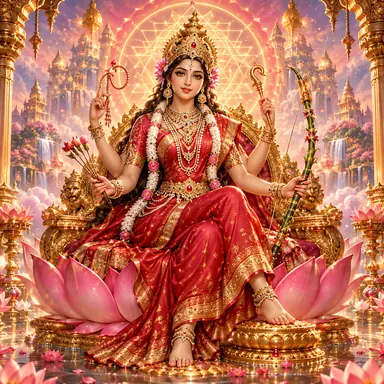
Tripurasundari and Tripura Bhairavi are related goddess forms with distinct names and contemplative identities.

Bhairavi’s praise identifies her with the source of speech and invokes Sarasvati.

Mahakala Bhairava introduces her thousand-name praise.

Bhairavi asks for Dhumavati’s praise in the thousand-name hymn’s framing dialogue.

Bhairavi is invoked within Bagalamukhi’s expansive goddess praise.
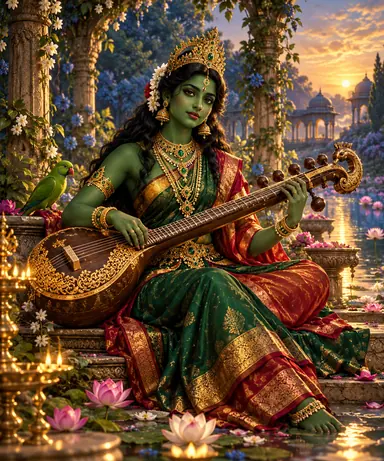
Bhairavi’s concern for beings frames the Matangi Hridaya.