01The Light That Measures the Days
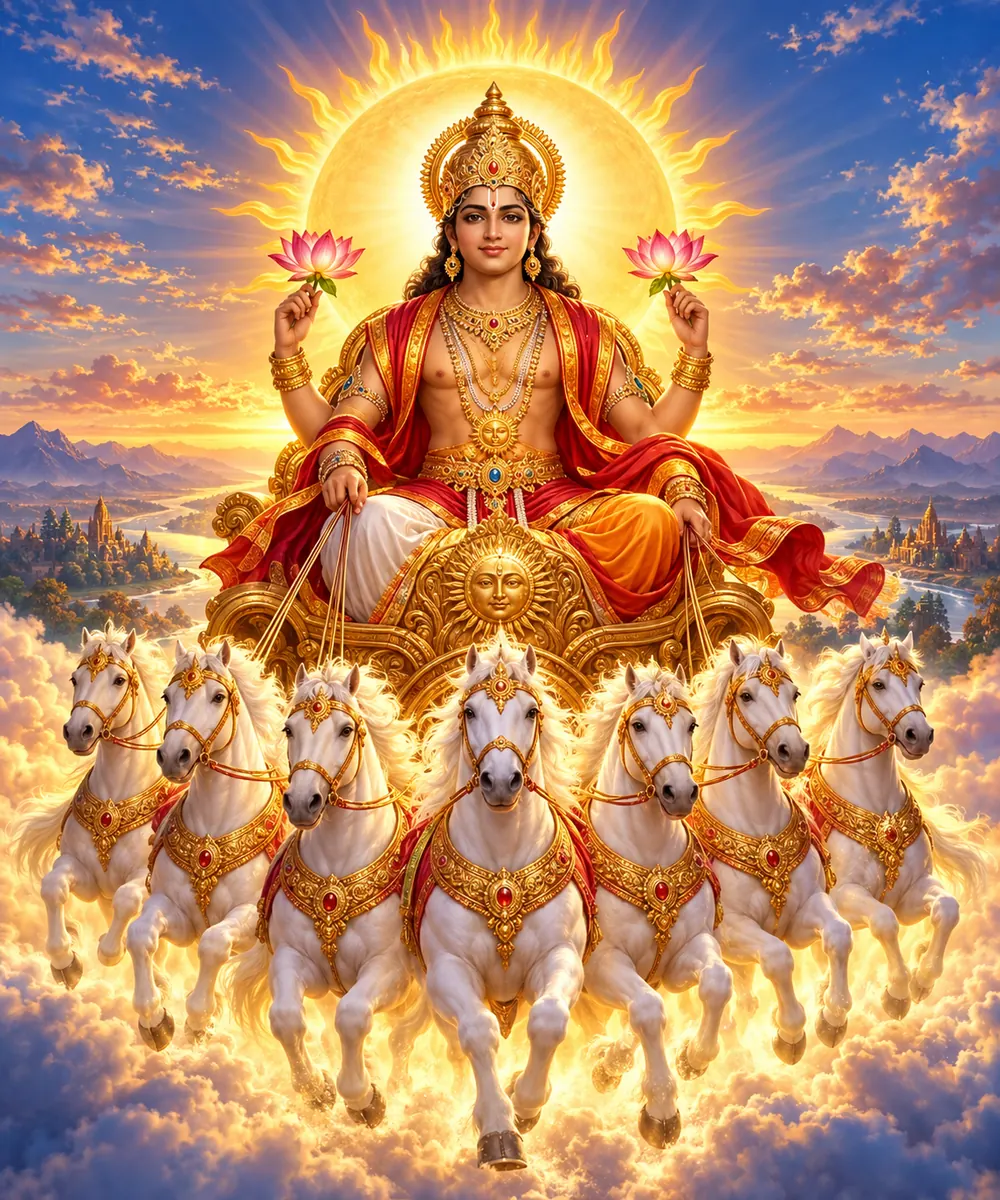
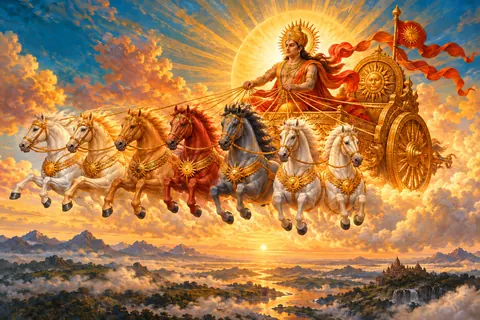
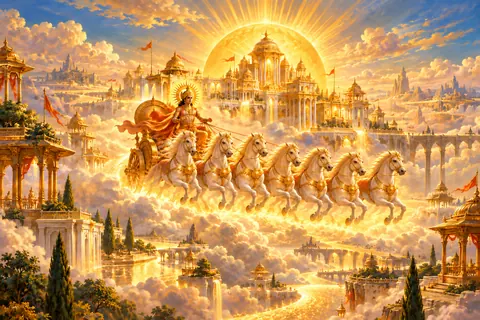
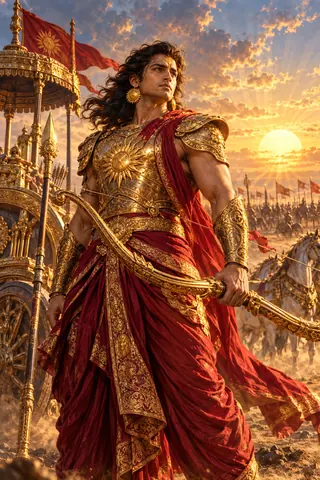
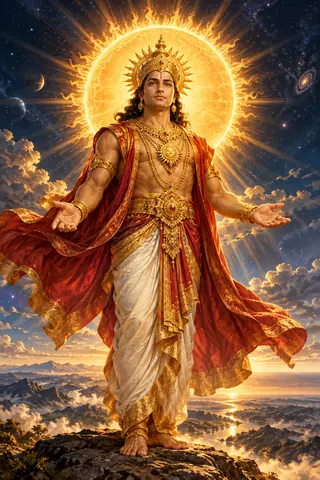
The Rigvedic hymn describes Surya’s movement across the sky as making the day visible and marking its passage. Rays, the disappearance of stars and the chariot’s seven horses give form to the arrival of light. The poem addresses him as a divine presence before gods and human beings. Its horses belong to that sacred poetic image rather than to the physical Sun’s anatomy.
02Food for the Exiled Pandavas
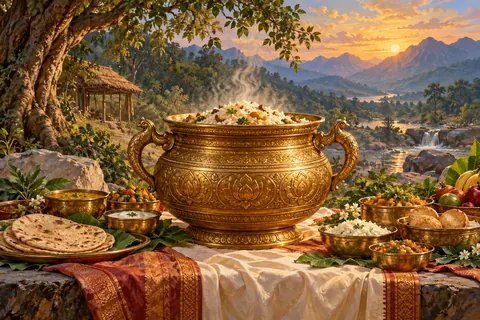
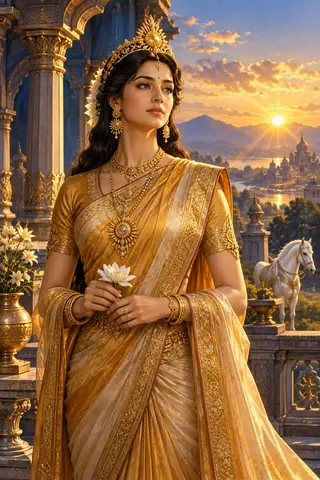
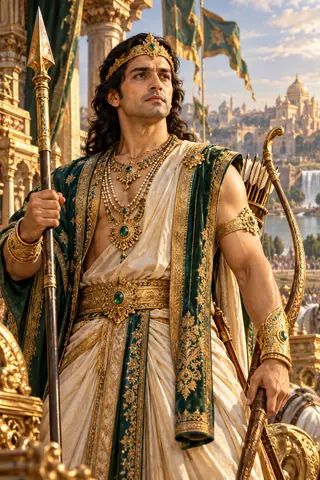
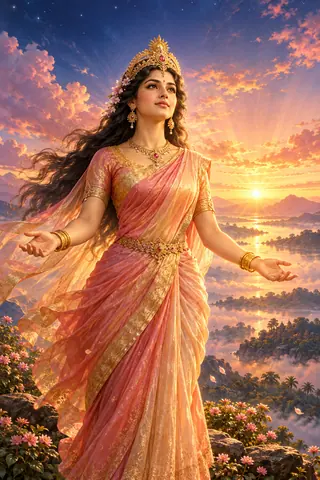
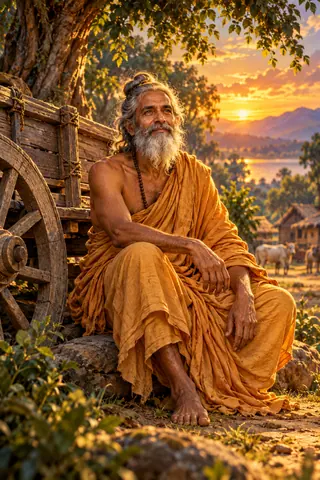
At the beginning of the Pandavas’ forest exile, Yudhishthira must feed people who have chosen to accompany him. Guided by Dhaumya, he worships the Sun and receives a copper vessel. Its food remains inexhaustible while Draupadi has not yet eaten. The gift answers the practical burden of hospitality during dispossession. Surya’s life-giving role becomes visible through the ability to sustain a community, and Draupadi’s daily participation is essential to the boon’s stated condition.
03Rama Receives the Aditya Hridaya
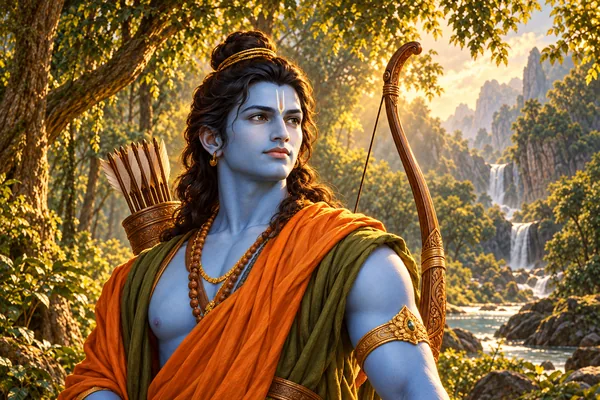
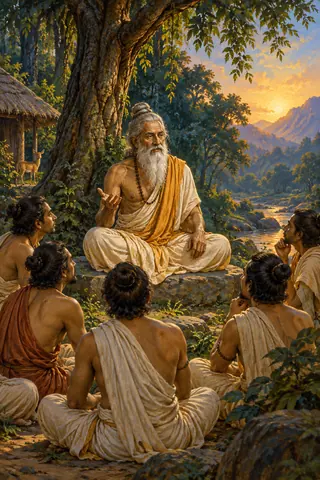
Before the final struggle with Ravana, an exhausted Rama is approached by Agastya. The sage teaches him a hymn to Aditya, praising the radiant source of light and the power sustaining many divine activities. Rama turns his attention toward the Sun, recites the praise and returns to battle with renewed purpose. The scene joins worship with recollection and steadiness at a moment of strain. Its emphasis is the restoration of a warrior’s resolve, not the replacement of action by a spell that makes effort unnecessary.