THE LIVING ARCHIVE
About Kamakhya
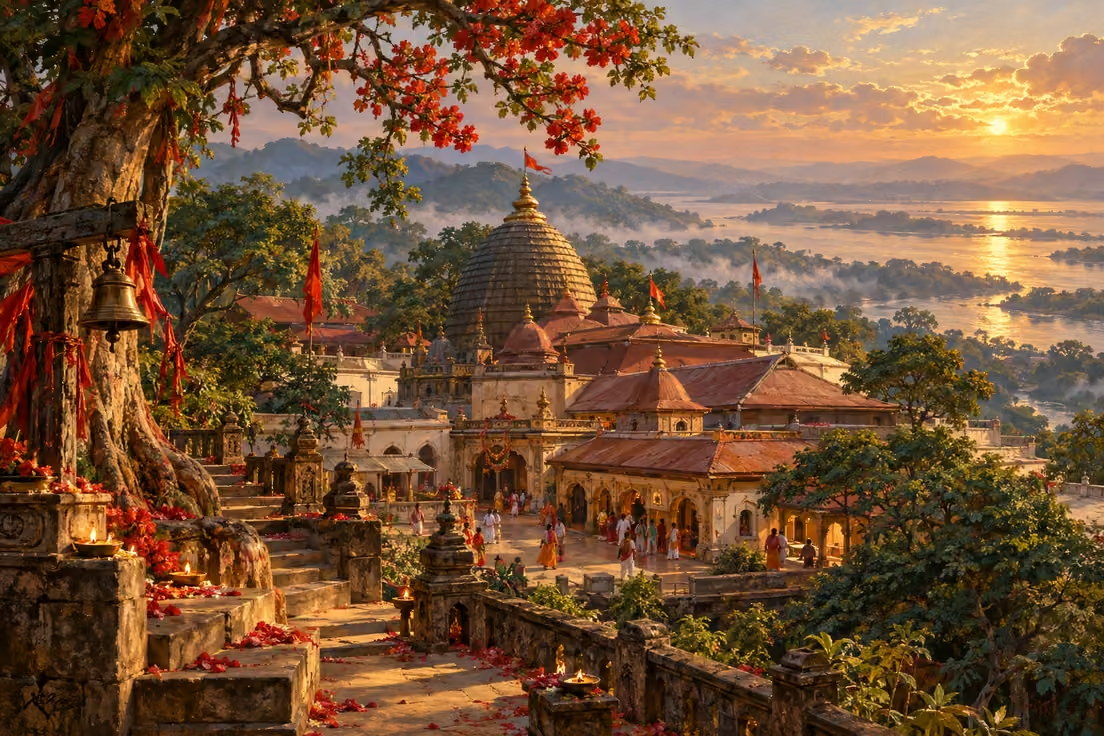
The sacred form is understood as a yoni, the female generative organ, connecting the site with creation and fertility. Local tradition identifies it with the place where Sati’s reproductive organ fell after her death. The Devi Bhagavata also praises Kamakhya’s yonimandala as the dwelling of Tripurabhairavi and Mahamaya, names of the supreme Goddess.
More About Kamakhya
The Nilachal hill shrine is a major Shakta sacred centre with distinctive local ritual traditions.
AT A GLANCE
Identity & Context
- Identity
- Location
- Form
- Living sacred geography
- Tradition
- Hindu religious traditions
THE STORY
Origins & Stories
ROLE & ESSENCE
Attributes & Significance
Ambubachi Mela, a principal festival of the living shrine, celebrates the Goddess’s annual menstruation. Its religious meaning is tied to the fertility and generative power expressed by the sanctuary itself. Other Goddess and Shiva shrines within the complex make Nilachal a larger field of worship around that central sacred form.
Ancient / Sacred Name
Kamakhya
Modern Identification
Guwahati, Assam, India
Identification Confidence
Confirmed physical location
Country / Region
Guwahati, Assam, India
Associated Figures
Mahadevi; Kali; Kalika Purana
Sacred Significance & Narrative
The Nilachal hill shrine is a major Shakta sacred centre with distinctive local ritual traditions.
Events / Battles
See the linked narrative records.
Historical / Archaeological Evidence
This overview does not identify a site-specific excavation report. A living physical place does not prove every event traditionally associated with it.
Textual Geography Notes
Ancient regions, literary geography and modern pilgrimage identifications are distinguished.
Tradition Notes
Names and accounts can vary by recension, region and commentary. This entry distinguishes attested details from identifications still requiring a passage-level source.
Archive Classification Notes
Original archive annotations are retained here. The current playable classification is shown in the side panel.
- Tradition Dependence
- High — compare the identified textual or regional account.
- Kingdom / Dynasty
- Not established in the passage; no additional claim is made here.
TRADITION & MEANING
Traditions & Interpretations
The Sati tradition, the Puranic praise of the yoni seat and the Siddhanatha story illuminate different aspects of Kamakhya. One explains the place through the Goddess’s body, another praises her enduring presence, and another connects it with spiritual accomplishment. These accounts belong beside the physical hill, spring and temple without turning every detail into one narrative.
Names and accounts can vary by recension, region and commentary. This entry distinguishes attested details from identifications still requiring a passage-level source.
From the Sacred Texts
Explore the sacred texts behind these stories in the Suvarnaveda library.
FOLLOW THE THREADS
Connected Cards
8 connected profiles. Every path leads to an original record.
The Sacred Library3

Kamakhya is the sacred seat through which the text connects the Goddess with the Nilakuta landscape.


The text names and praises Kamakhya’s yonimandala.
Characters & Cosmic Entities5
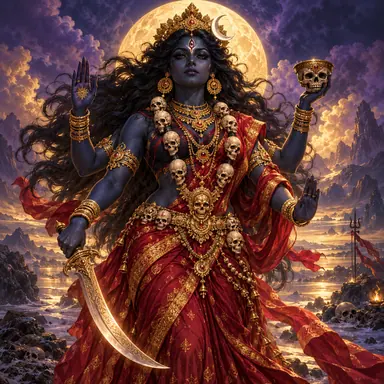

Local tradition associates the sanctuary with the fall of Sati’s reproductive organ.

Shiva teaches Uma in the Siddhanatha account attached to Kamaksha.
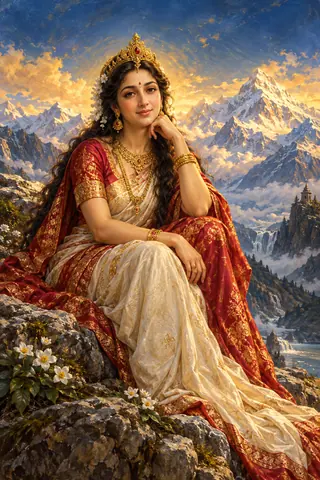
Uma hears Shiva’s teaching and adopts the boy who becomes Siddhanatha.