THE LIVING ARCHIVE
About Matsya / Viratanagara
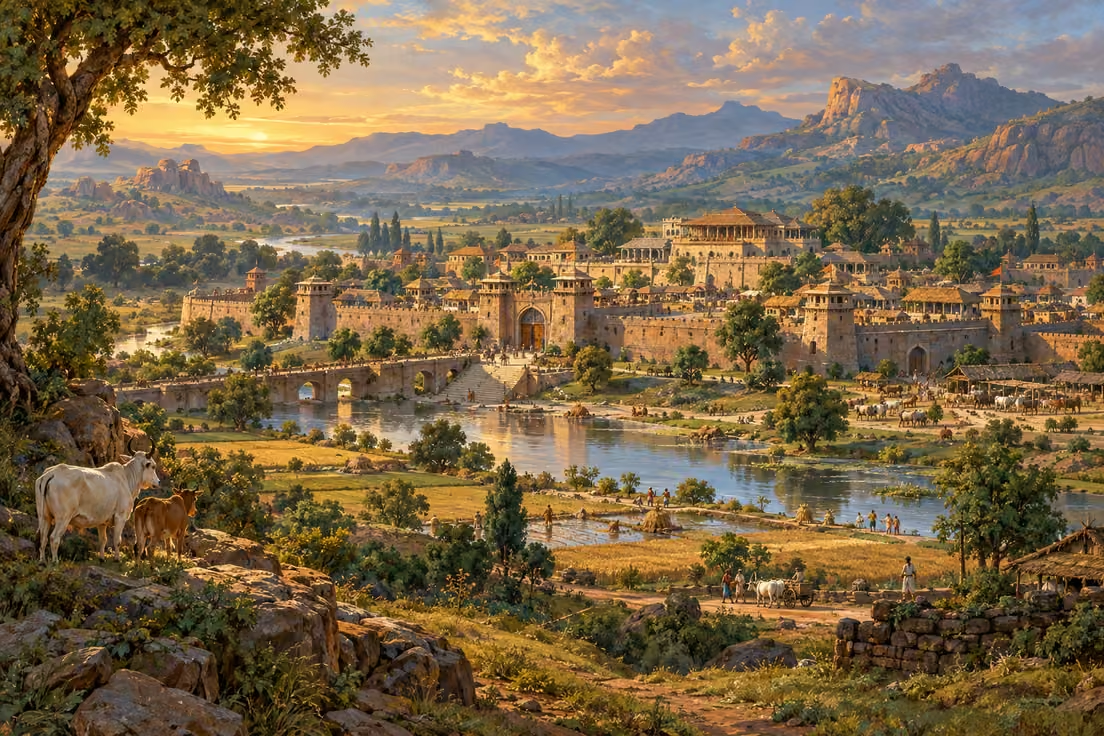
Yudhishthira chooses Matsya after the brothers discuss several possible refuges. He trusts Virata because the king is described as charitable, respected, powerful and friendly towards the Pandavas. They nevertheless plan to enter his service without revealing who they are, since discovery would threaten the completion of their exile.
Matsya is the country; Virata’s city and palace are its royal centre. The story also concerns the wider kingdom, especially its cattle and the armies that threaten them. This distinction explains why events in the royal household and fighting outside the city are both parts of the same episode.
More About Matsya / Viratanagara
The kingdom of Virata shelters the Pandavas during their concealed year; several identifications require care.
AT A GLANCE
Identity & Context
- Identity
- Location
- Form
- Mahabharata geography
- Tradition
- Hindu religious traditions
- Also Known As
- Matsya · Viratanagara
THE STORY
Origins & Stories
ROLE & ESSENCE
Attributes & Significance
Matsya provides the refuge needed to complete the Pandavas’ exile and becomes an important setting for their return to acknowledged public life. Its story connects royal hospitality with reciprocal protection: the visitors depend upon the kingdom, and their abilities help defend it.
Ancient / Sacred Name
Matsya / Viratanagara
Modern Identification
Rajasthan traditions, India
Identification Confidence
Traditional identification
Country / Region
Rajasthan traditions, India
Associated Figures
Sacred Significance & Narrative
The kingdom of Virata shelters the Pandavas during their concealed year; several identifications require care.
Events / Battles
See the linked narrative records.
Historical / Archaeological Evidence
This overview does not identify a site-specific excavation report. A living physical place does not prove every event traditionally associated with it.
Textual Geography Notes
Ancient regions, literary geography and modern pilgrimage identifications are distinguished.
Tradition Notes
Names and accounts can vary by recension, region and commentary. This entry distinguishes attested details from identifications still requiring a passage-level source.
Archive Classification Notes
Original archive annotations are retained here. The current playable classification is shown in the side panel.
- Tradition Dependence
- High — compare the identified textual or regional account.
- Kingdom / Dynasty
- Not established in the passage; no additional claim is made here.
TRADITION & MEANING
Traditions & Interpretations
The epic’s Virata city has been associated with more than one modern location. Its narrative does not by itself settle every proposed archaeological identification or the precise boundaries of ancient Matsya.
The concealed year also reveals the brothers outside their usual royal roles. Cooking, teaching, entertaining and serving in another household become essential to their survival, making Matsya one of the epic’s clearest settings for the experience of living without an acknowledged title.
Names and accounts can vary by recension, region and commentary. This entry distinguishes attested details from identifications still requiring a passage-level source.
From the Sacred Texts
Explore the sacred texts behind these stories in the Suvarnaveda library.
FOLLOW THE THREADS
Connected Cards
4 connected profiles. Every path leads to an original record.
Characters & Cosmic Entities3
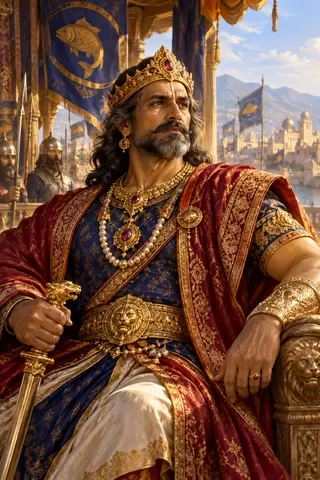
Virata rules Matsya and receives the disguised Pandavas.
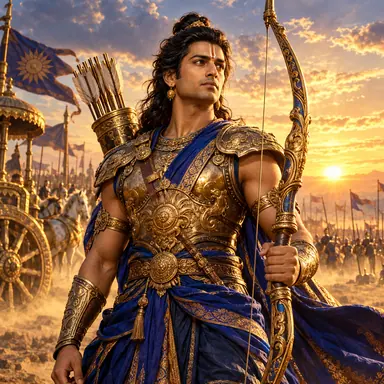
Arjuna recovers Matsya’s cattle from the invading Kurus.
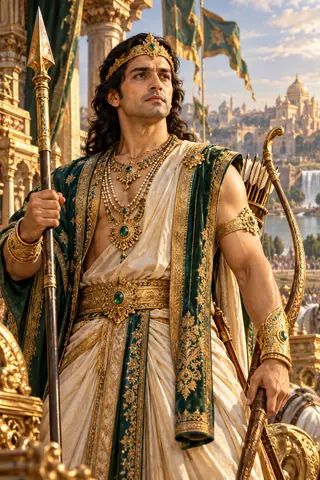
Yudhishthira plans the identity Kanka.
