THE LIVING ARCHIVE
About Rama Setu
The bridge belongs to the campaign to recover Sita from Ravana. Its narrative function is practical as well as extraordinary: an entire allied force needs to cross the sea, not only the exceptional heroes capable of leaping it. Construction makes a shared advance possible.
Nala is identified as Vishvakarma’s son, possessing his father’s skill. The Ocean directs attention to his ability and agrees to support the structure. This recognition places a builder’s expertise at the centre of an episode often remembered only through the power of warriors.
More About Rama Setu
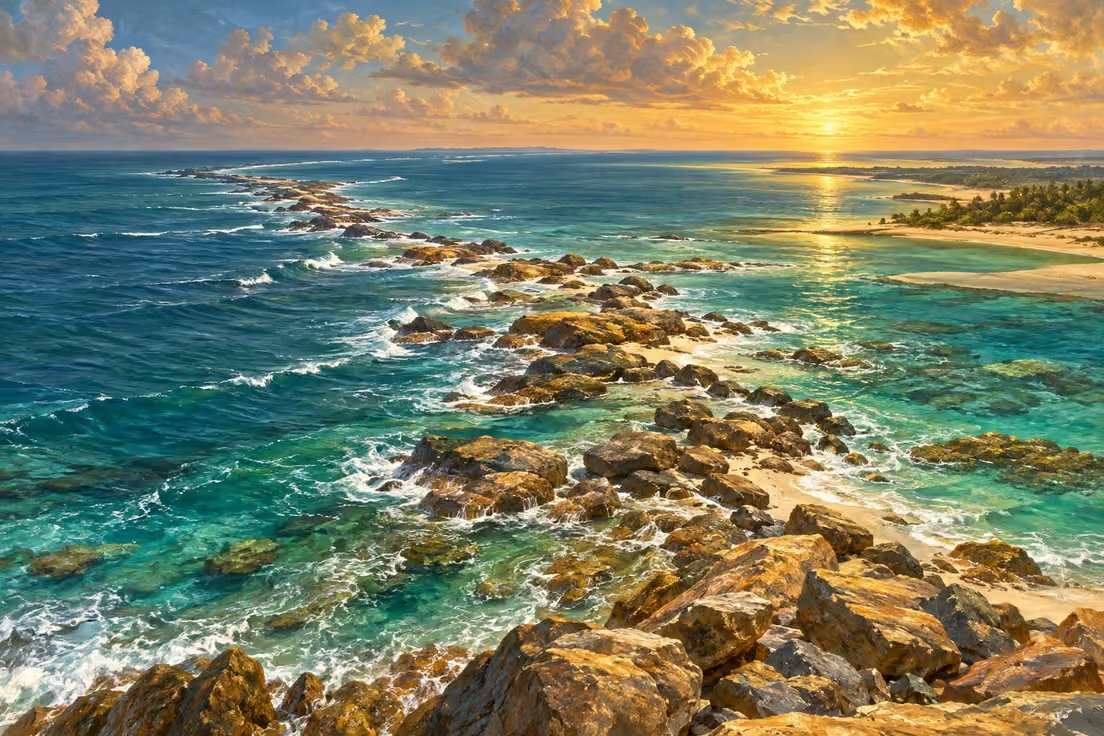
The physical shoal chain is associated with the epic bridge tradition. That association does not establish a human construction date.
AT A GLANCE
Identity & Context
- Identity
- Location
- Form
- Ramayana geography
- Tradition
- Hindu religious traditions
THE STORY
Origins & Stories
ROLE & ESSENCE
Attributes & Significance
The bridge allows the whole army to cross a barrier that only a few exceptional beings could otherwise pass. Nala’s expertise, the Vanaras’ work and the Ocean’s cooperation each have a specific role. The episode gives builders and supporting workers an important place beside the better-known warriors.
Ancient / Sacred Name
Rama Setu
Modern Identification
Shoal chain between India and Sri Lanka
Identification Confidence
Confirmed physical location
Country / Region
Shoal chain between India and Sri Lanka
Sacred Significance & Narrative
The physical shoal chain is associated with the epic bridge tradition. That association does not establish a human construction date.
Events / Battles
See the linked narrative records.
Historical / Archaeological Evidence
This overview does not identify a site-specific excavation report. A living physical place does not prove every event traditionally associated with it.
Textual Geography Notes
Ancient regions, literary geography and modern pilgrimage identifications are distinguished.
Tradition Notes
Names and accounts can vary by recension, region and commentary. This entry distinguishes attested details from identifications still requiring a passage-level source.
Archive Classification Notes
Original archive annotations are retained here. The current playable classification is shown in the side panel.
- Tradition Dependence
- High — compare the identified textual or regional account.
- Kingdom / Dynasty
- Not established in the passage; no additional claim is made here.
TRADITION & MEANING
Traditions & Interpretations
Later devotional accounts add details to the construction. These should not be silently inserted into every version. Epic measurements and sacred geography also need to be distinguished from modern geological descriptions or claims that a particular date has been scientifically established.
The completed crossing lets Sugriva organize the army on the opposite shore, where it can camp with access to roots, fruit and water. The bridge solves the problem of reaching Lanka while also allowing the allied force to prepare for the campaign ahead.
Names and accounts can vary by recension, region and commentary. This entry distinguishes attested details from identifications still requiring a passage-level source.
From the Sacred Texts
Explore the sacred texts behind these stories in the Suvarnaveda library.
FOLLOW THE THREADS
Connected Cards
7 connected profiles. Every path leads to an original record.
Earthly Sacred Locations3
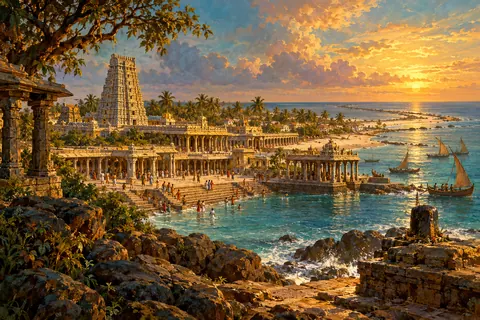

Dhanushkodi belongs to the Rameswaram coast associated with Rama Setu.
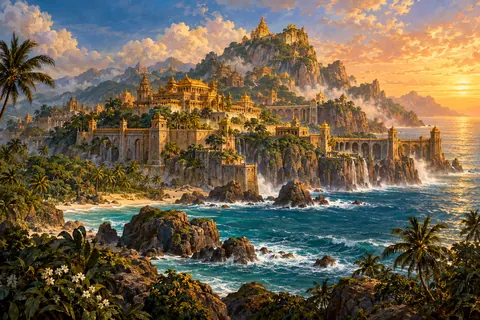
The bridge permits the allied army to reach Lanka.
Characters & Cosmic Entities4
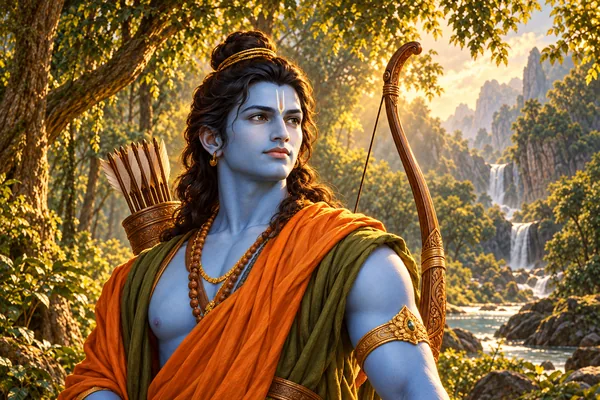
The bridge enables Rama’s expedition towards Lanka.
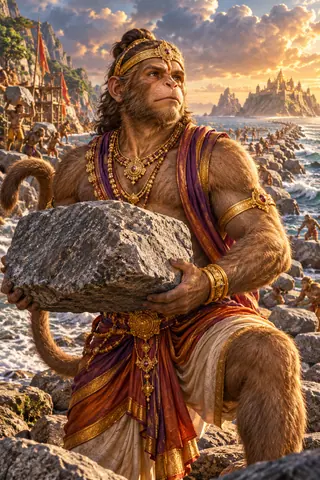
Nala directs the construction using Vishvakarma’s inherited skill.

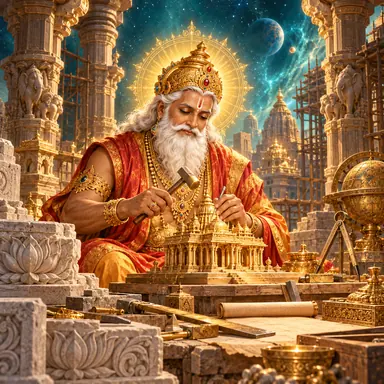
Vishvakarma is identified as Nala’s father.