THE LIVING ARCHIVE
About Shringaverapura
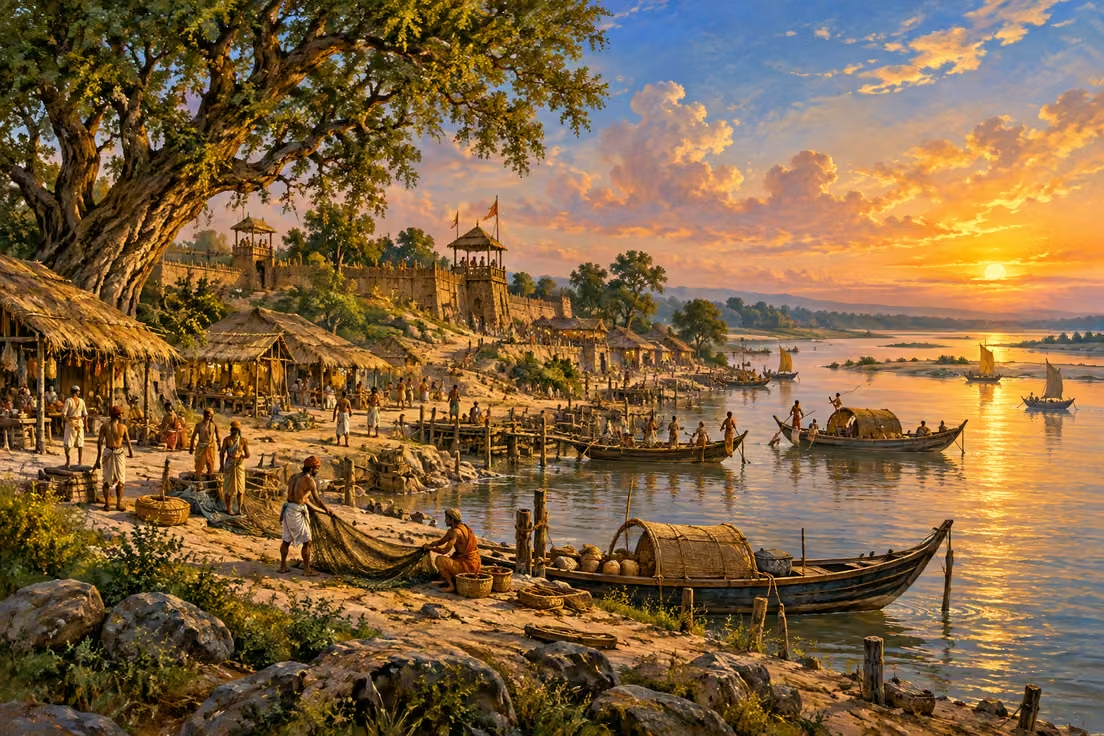
The place is associated with Guha’s people and the bank of Ganga, not with a second capital of Rama’s own house. Guha meets the exiles as a sovereign friend, offering help from his own country and household.
The important setting includes the riverside halt, the tree beneath which the travellers rest and the landing from which a boat is prepared. It is both a place of hospitality and a practical crossing-point on the route.
AT A GLANCE
Identity & Context
- Identity
- Location
- Form
- Ramayana geography
- Tradition
- Hindu religious traditions
THE STORY
Origins & Stories
ROLE & ESSENCE
Attributes & Significance
Shringaverapura marks an important change in the journey. The exiles leave their royal chariot behind and depend on Guha's local help to cross the Ganga. His welcome establishes a friendship beyond the court: a ruler from another community gives practical support to Rama when he has lost the comforts of kingship.
Ancient / Sacred Name
Shringaverapura
Modern Identification
Singraur region, Uttar Pradesh, India
Identification Confidence
Traditional identification
Country / Region
Singraur region, Uttar Pradesh, India
Associated Figures
Sacred Significance & Narrative
The settlement associated with Guha and Rama’s crossing of the Ganga during exile.
Events / Battles
See the linked narrative records.
Historical / Archaeological Evidence
This overview does not identify a site-specific excavation report. A living physical place does not prove every event traditionally associated with it.
Textual Geography Notes
Ancient regions, literary geography and modern pilgrimage identifications are distinguished.
Tradition Notes
Names and accounts can vary by recension, region and commentary. This entry distinguishes attested details from identifications still requiring a passage-level source.
Archive Classification Notes
Original archive annotations are retained here. The current playable classification is shown in the side panel.
- Tradition Dependence
- High — compare the identified textual or regional account.
- Kingdom / Dynasty
- Not established in the passage; no additional claim is made here.
TRADITION & MEANING
Traditions & Interpretations
In this account, Guha is a Nishada ruler who receives Rama as a friend and supplies the crossing. Other devotional tellings elaborate the boat episode in different ways.
Two departures take place at the river. Sumantra returns to Ayodhya to report to Dasharatha, while Rama, Sita and Lakshmana cross in the boat Guha provides. The settlement is consequently remembered both for Guha's hospitality and for the separation of Rama from his faithful charioteer.
Names and accounts can vary by recension, region and commentary. This entry distinguishes attested details from identifications still requiring a passage-level source.
From the Sacred Texts
Explore the sacred texts behind these stories in the Suvarnaveda library.
FOLLOW THE THREADS
Connected Cards
4 connected profiles. Every path leads to an original record.
Characters & Cosmic Entities2
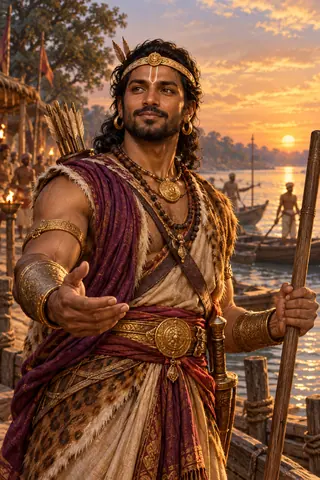
Guha receives the exiles and provides their crossing.
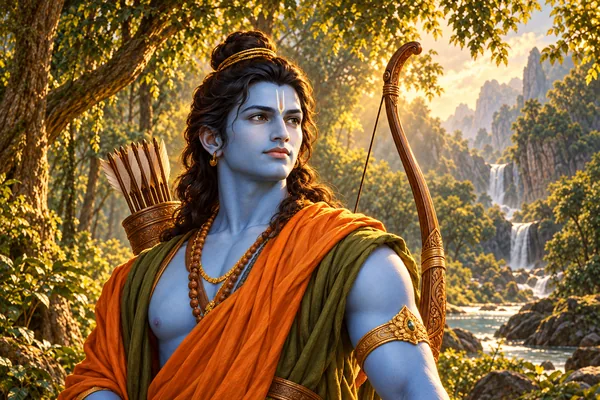
Rama rests beside Ganga before continuing on foot.
Earthly Sacred Locations2

The Ganga crossing defines this stage of the route.
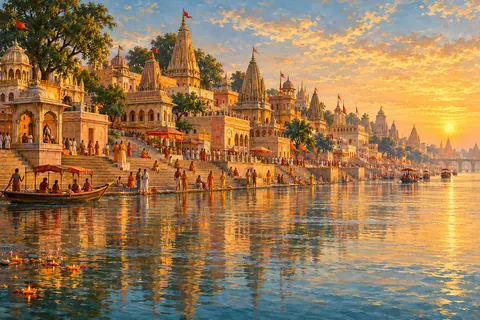
The journey away from Ayodhya reaches Guha’s country beside Ganga.