THE LIVING ARCHIVE
About Ganga
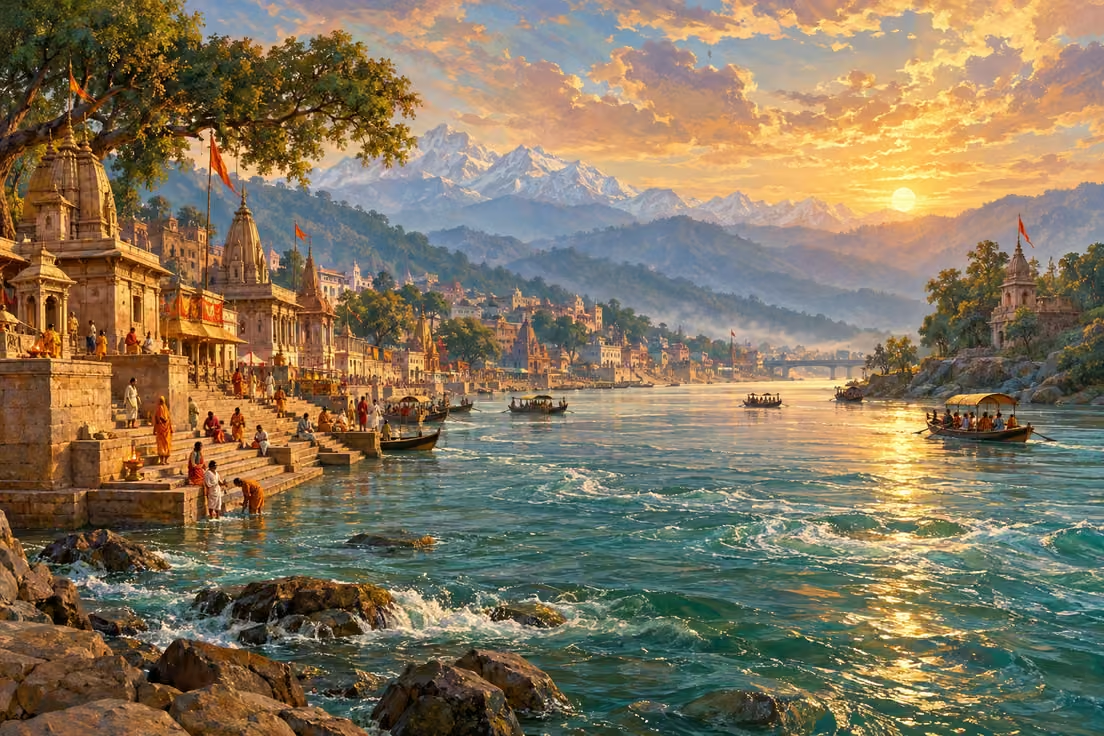
Ganga is honoured both as a river and as a goddess. The descent account describes her responding and moving as a divine being, while also following her waters through the landscape. The same presence can therefore be encountered through a personified sacred story, a river crossing or an offering made in flowing water.
Brahma calls her Bhagirathi in recognition of Bhagiratha’s effort to bring her down. She is also called Tripathaga, the one who travels three paths, because she sanctifies the heavenly, earthly and lower regions. The names preserve the river’s sacred journey and the relationships established through it.
AT A GLANCE
Identity & Context
- Identity
- Location
- Form
- Mahabharata geography
- Tradition
- Hindu religious traditions
- Also Known As
- Ganga river
The river and sacred landscape; the personified goddess has a separate linked Character entry.
THE STORY
Origins & Stories
ROLE & ESSENCE
Attributes & Significance
Ganga’s descent connects sacred water with ancestral responsibility and deliverance. Bhagiratha’s long effort ends when the river reaches those for whom he sought her. Offerings made in her waters preserve that connection between the living, their ancestors and a divine presence approached through the river.
Ancient / Sacred Name
Ganga — Sacred River
Modern Identification
Northern Indian river system
Identification Confidence
Confirmed physical location
Country / Region
Northern Indian river system
Associated Figures
Sacred Significance & Narrative
The river Ganga is a physical river and sacred narrative landscape, distinct from the goddess Ganga’s being record.
Events / Battles
See the linked narrative records.
Historical / Archaeological Evidence
This overview does not identify a site-specific excavation report. A living physical place does not prove every event traditionally associated with it.
Textual Geography Notes
Ancient regions, literary geography and modern pilgrimage identifications are distinguished.
Tradition Notes
Names and accounts can vary by recension, region and commentary. This entry distinguishes attested details from identifications still requiring a passage-level source.
Archive Classification Notes
Original archive annotations are retained here. The current playable classification is shown in the side panel.
- Tradition Dependence
- High — compare the identified textual or regional account.
- Kingdom / Dynasty
- Not established in the passage; no additional claim is made here.
TRADITION & MEANING
Traditions & Interpretations
Sacred accounts of divine origin and ancestral deliverance belong to religious narrative and practice. They should remain distinct from modern hydrological explanations, while different epic tellings retain their individual details.
The conclusion explains why Bhagiratha’s achievement matters beyond the arrival of a new stream. His ancestors are delivered, his pledge is fulfilled and Brahma directs him to complete the water offerings. The river’s sacred names preserve the memory of this relationship.
Names and accounts can vary by recension, region and commentary. This entry distinguishes attested details from identifications still requiring a passage-level source.
From the Sacred Texts
Explore the sacred texts behind these stories in the Suvarnaveda library.
FOLLOW THE THREADS
Connected Cards
8 connected profiles. Every path leads to an original record.
Characters & Cosmic Entities3

The sacred river is inseparable from Ganga’s divine identity.
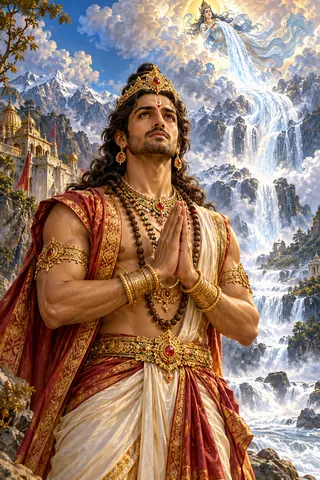

Shiva bears and releases the descending waters.
Earthly Sacred Locations5
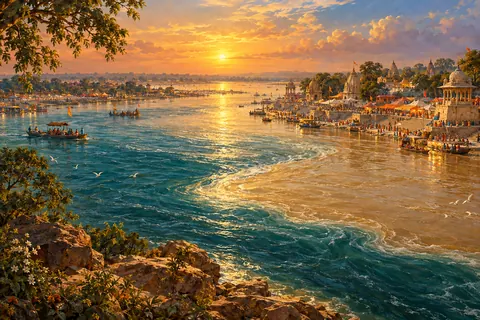
Ganga joins Yamuna at Prayaga.
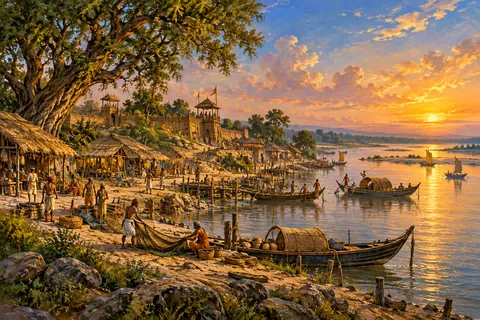
The Ganga crossing defines this stage of the route.
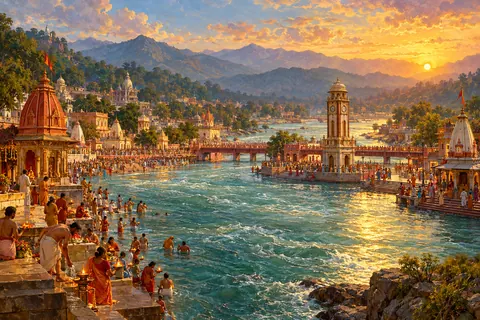
The city’s bathing places and pilgrimage accounts centre on the Ganga.
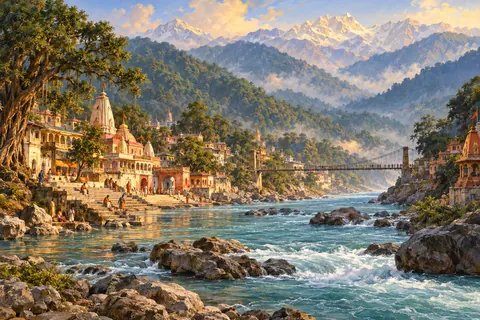

The temple stands beside the Bhagirathi within Ganga’s Himalayan pilgrimage landscape.