
THE LIVING ARCHIVE
About Mena
Mena belongs to Himavat’s royal household, where the sacred Himalaya is also represented by a living family. Her marriage is celebrated in the presence of gods and sages. She later appears beside Himavat in the rites of Parvati’s wedding, giving her a continuing role beyond the birth of her daughter.
The name also occurs in the form Menaka, but this mountain queen is not the Apsara Menaka associated with Vishvamitra. Her identity here is established by her husband Himavat, her worship of the goddess and her children, including Parvati and Mainaka.
AT A GLANCE
Identity & Context
- Identity
- Celestial Being
- Form
- Queen of the Himalaya and Mother of Parvati
- Tradition
- Puranic and Epic Traditions
- Also Known As
- Menā
THE STORY
Life & Stories
ROLE & ESSENCE
Attributes & Significance
Her story makes Parvati’s appearance more than an isolated divine birth. Mena desires, worships, receives a promise and becomes a mother. The goddess is welcomed through a relationship that combines reverence with parental affection.
TRADITION & MEANING
Traditions & Interpretations
These family episodes belong to the Shiva Purana’s account of Parvati. They explain this Mena through her own household and actions, without requiring her to share the biography or role of a similarly named celestial dancer.
From the Sacred Texts
Explore the sacred texts behind these stories in the Suvarnaveda library.
FOLLOW THE THREADS
Connected Cards
3 connected profiles. Every path leads to an original record.
Characters & Cosmic Entities3

Himavat and Mena are the parents in Parvati’s birth account.
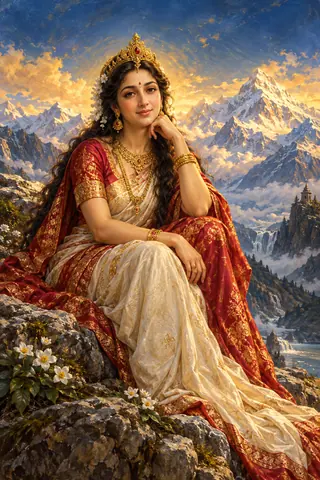
Parvati is the daughter whose birth fulfills the goddess’s promise.

Mainaka is named as her son in the mountain-family account.