
THE LIVING ARCHIVE
About Bagalamukhi
Bagalamukhi belongs to the Mahavidyas, the wisdom goddesses of Shakta worship. Pitambari, meaning the Yellow-Clad One, is a principal name of this form. Yellow clothes, ornaments and flowers recur in her image. Stambhana names her power to halt hostile movement or speech, including an adversary’s attempt to argue or command.
AT A GLANCE
Identity & Context
- Identity
- Divine Manifestation
- Form
- Goddess / Mahavidya manifestation
- Tradition
- Shakta · Puranic · Tantric
- Also Known As
- Baglamukhi
- World & Associations
- Shakta sacred domains
Family Context
The available reference record does not establish a complete family genealogy. No parents, consorts, or descendants are inferred from the name alone.
Mahadevi
An association within Shakta traditions; practices and textual interpretations differ.
THE STORY
Life & Stories
Story Connections
- Bagalamukhi traditions
ROLE & ESSENCE
Attributes & Significance
Her hundred-name praise begins with Brahmastra-rupini, the form of the irresistible divine weapon, but immediately adds consciousness, knowledge and the giver of spiritual bliss. It also identifies her through names of other goddesses. The arresting power is one expression of a divinity understood to be wider than a single battlefield action.
Role
Mahavidya associated with arresting hostile action and speech.
Attributes & Abilities
- Stambhana in associated ritual symbolism
Objects & Emblems
- Club in common iconography
TRADITION & MEANING
Traditions & Interpretations
Her hand seizing the tongue makes restraint visible: the hostile speaker is stopped before continuing an attack through words. The club supplies a second sign of force. Alongside these gestures, the hymn calls her mother and asks for a compassionate response to danger and obstacles.
Stambhana is a technical term in Tantric ritual traditions for arresting or restraining a hostile force. The meditation image and promises made in the hymns describe this religious understanding of protection. They do not provide a general rule that every person worshipping the goddess can immobilize an opponent.
Artwork & Archive Notes
Visual Identity
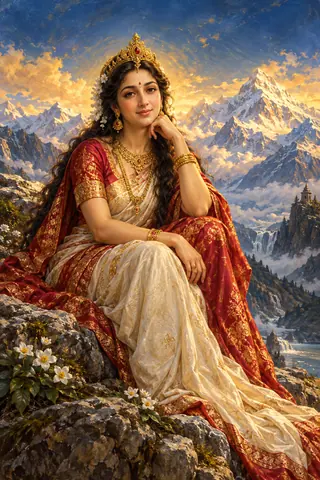
Where artwork is shown, it is a contemporary illustrative interpretation. This reference record does not establish a fixed portrait, colour scheme, or complete set of iconographic attributes for this figure.
Tradition Note
The accounts belong to Shakta / Puranic / Tantric. Genealogy, theological interpretation, and portrayal can differ between texts and regional retellings.
FOLLOW THE THREADS
Connected Cards
3 connected profiles. Every path leads to an original record.
The Sacred Library1

Characters & Cosmic Entities2

Bhairavi is invoked within Bagalamukhi’s expansive goddess praise.
Her name-hymn identifies the goddess with Parvati and Uma.