
THE SACRED LIBRARY
About Bhagavad Gita
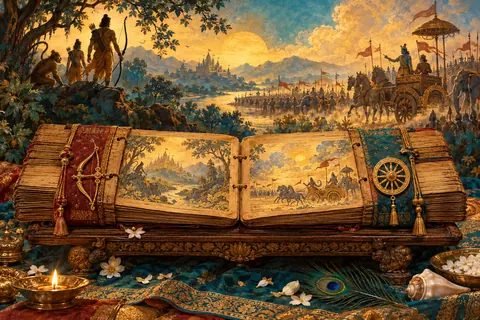
The Bhagavad Gita takes place within the Mahabharata’s account of the war at Kurukshetra. Dhritarashtra, the Kuru king, asks his adviser Sanjaya what the assembled armies are doing. Sanjaya’s report contains the conversation between Arjuna and Krishna, who is driving his chariot. The teaching is therefore part of a battlefield story as well as a work of religious philosophy.
The dialogue is arranged in eighteen chapters. Arjuna begins by questioning whether he should fight the people before him. Krishna answers through teachings on the enduring self, duty, disciplined action, devotion and his own divine nature. Near the conclusion he asks Arjuna to reflect and decide how to act. The exchange develops through questions and explanations rather than ending with a single command.
More About Bhagavad Gita
The Bhagavad Gita is a dialogue between Krishna and Arjuna within the Mahabharata. Arjuna’s uncertainty on the battlefield becomes the setting for teachings on action, knowledge, devotion, discipline, and spiritual realization.
Hindu commentarial schools interpret the relationship between these teachings in different ways. Read the Sanskrit text together with an identified translation or commentary, and distinguish the verse from the interpreter’s explanation.
AT A GLANCE
Identity & Context
- Identity
- Text
- Form
- Itihasa
- Tradition
- Itihasa / philosophical traditions
INSIDE THE TEXT
Stories & Teachings
ROLE & ESSENCE
Themes & Meaning
The Gita describes devotion through conduct as well as worship. Its portrait of a devotee includes friendliness toward living beings, compassion, freedom from possessiveness and ego, self-control and steadiness through pleasure and pain. These qualities connect religious understanding with everyday treatment of others.
Near the end, Krishna asks Arjuna to consider the teaching fully and then act according to his choice. The invitation follows a long conversation in which Arjuna has raised doubts and received explanations. Reflection and decision are part of the dialogue’s conclusion.
Library Category
Form / Textual Family
Embedded philosophical dialogue
Traditional Attribution
An inherited textual tradition; no single historical author is established here.
Subject & Teachings
Krishna’s dialogue with Arjuna considers action, knowledge, devotion, discipline and spiritual realization on the battlefield.
Structure
Eighteen chapters within the Bhishma Parva of the Mahabharata.
Associated Deities / Figures
Textual Relationships
Historical Context
Composition, transmission and redaction must be distinguished; no unsupported exact date is assigned.
Reading Notes
Read the Sanskrit with an identified translation. Commentary is presented by its own school, not as the only interpretation.
Tradition Notes
Names and accounts can vary by recension, region and commentary. This entry distinguishes attested details from identifications still requiring a passage-level source.
Archive Classification Notes
Original archive annotations are retained here. The current playable classification is shown in the side panel.
- Tradition Dependence
- High — compare the identified textual or regional account.
TRADITION & MEANING
Traditions & Interpretations
Arjuna’s distress determines the form of the teaching. The discussion moves from his fear of killing relatives to questions of identity, duty and devotion, then returns to the action he must choose. Its spiritual instruction remains connected to the person asking for help.
Hindu philosophical and devotional traditions differ in how they explain the relationships among the self, divine reality, action and devotion. These remain connected subjects within the Gita itself: Krishna develops his answers in response to Arjuna’s questions and changing understanding.
Names and accounts can vary by recension, region and commentary. This entry distinguishes attested details from identifications still requiring a passage-level source.
From the Sacred Texts
Explore the sacred texts behind these stories in the Suvarnaveda library.
FOLLOW THE THREADS
Connected Cards
25 connected profiles. Every path leads to an original record.
Characters & Cosmic Entities13
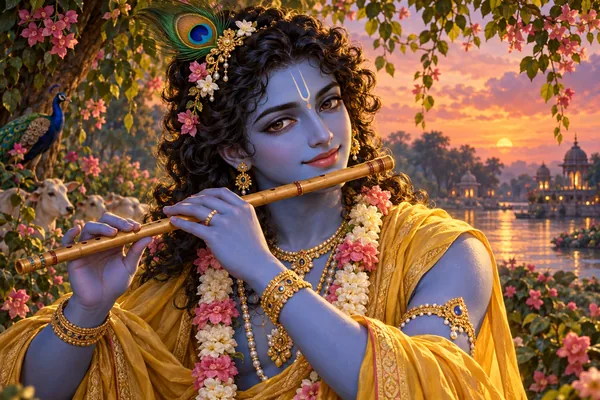
Krishna is the dialogue’s teacher and Arjuna’s charioteer.
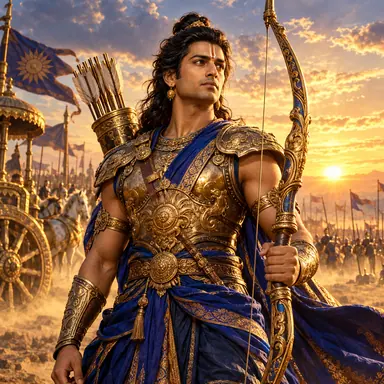
Arjuna’s questions and decision give the teaching its immediate narrative setting.


Develops the inward witness and equal divine presence.


Discusses purusha, prakriti and attachment.

Develops eightfold nature and the three qualities.

Its final teaching connects Ishvara and refuge.



Named by Krishna as foremost among lordly elephants in the teaching on divine splendor.
Artifacts, Divine Treasures & Relics6




The Sacred Library2

The dialogue belongs to the Mahabharata’s Bhishma Parva; it is not a separate sequel to the war.
Earthly Sacred Locations1

Kurukshetra is the battlefield setting of the opening dialogue.
Stories & Events2


The battlefield dialogue between Krishna and Arjuna is the narrative setting of the Bhagavad Gita.
Weapons1
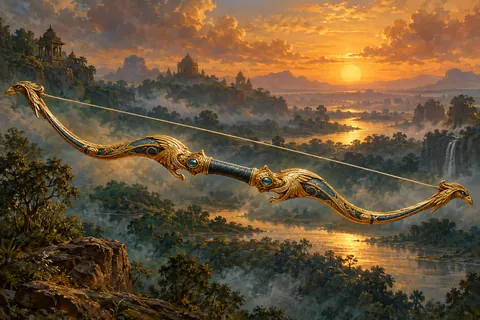
Arjuna names Gandiva in the dialogue’s opening account of his distress.